

After 5 August last year, many people in Bangladesh breathed a sigh of relief. When the interim government led by Nobel Laureate Muhammad Yunus took office, there was widespread belief that the state would, at the very least, respect citizens’ fundamental rights. The government’s pledges on freedom of expression, in particular, reassured the public that the dark days of authoritarian rule witnessed under Sheikh Hasina would not return. Unfortunately, it did not take long for that hope to fade.
Those of us working in the media often told one another that the culture of repression, intimidation and human rights violations seen under the previous government would not be repeated under a Yunus-led administration headed by a Nobel Peace Prize laureate. Yet, as time passed, a painful reality became increasingly clear. The very government that promised press freedom has gradually retreated from that commitment. This retreat is not simply a shift in political posture; it represents a stark breach of trust and sworn assurances.
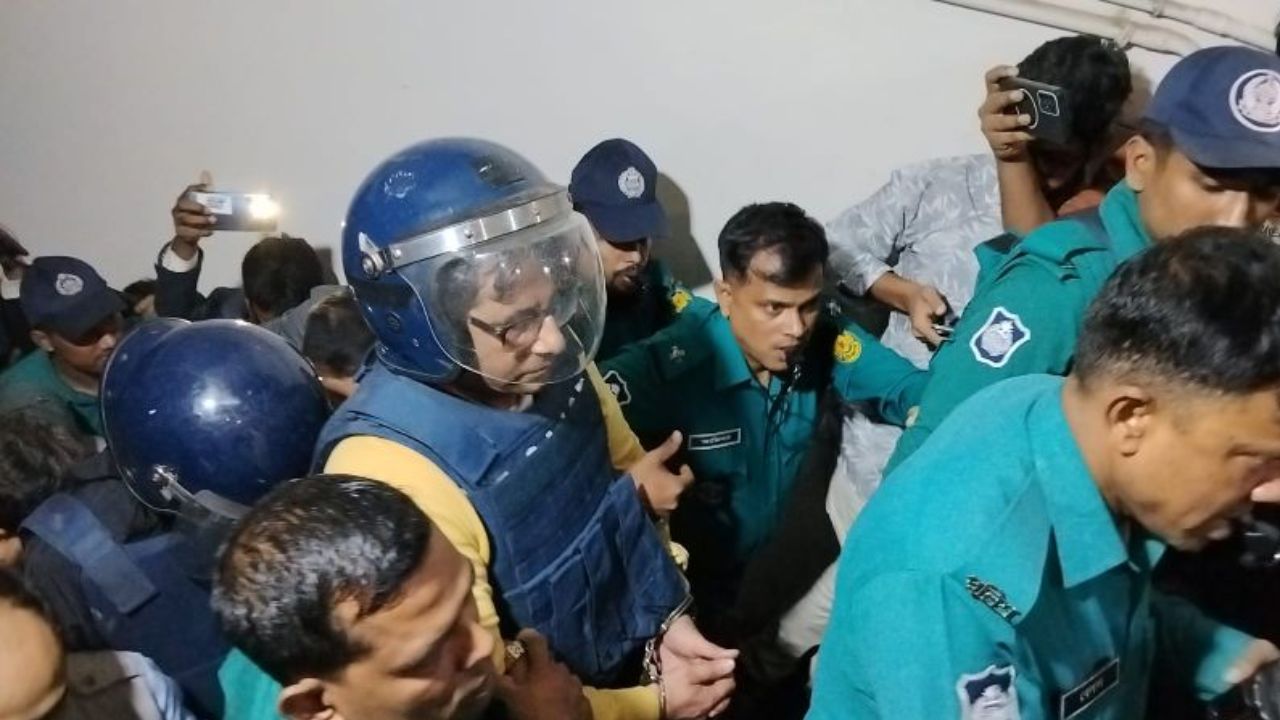
Officially, the government maintains that the media are free and journalists can work without obstruction. The reality, however, tells a different story. Cases, arrests and harassment of journalists continue much as before, following a familiar authoritarian playbook. The case of senior journalist Anis Alamgir has laid this reality bare. What has happened to him is not merely a personal ordeal; it is a warning signal for the entire journalistic community and, indeed, for the nation as a whole. It raises an unavoidable question: what path is the state now taking?
The interim government once spoke of justice and fairness. Today, it is using the machinery of the state to foster a culture of fear. This fear is not abstract. It is manifested through arrests, remand and criminal cases. History shows that when governments seek to rule through fear, the footsteps of authoritarianism are never far behind. Journalists are almost always among its first targets.
Anis Alamgir is a well-known journalist whose views many may disagree with, which is entirely normal in a democracy. But detaining him for holding dissenting opinions, placing him under remand and implicating him in cases under draconian anti-terror laws will remain a troubling precedent for what is supposed to be a new Bangladesh. In this country, the meaning of remand is well understood. It carries a long and well-documented history of physical and psychological abuse in the name of interrogation, something the state itself cannot plausibly deny.
If a journalist can be picked up simply for criticising a political force, party or ideology, what message does that send? When the state deploys law and administration to silence dissent, it can no longer be described as good governance. It instead resembles a form of modern authoritarianism, where dissent is treated as a criminal offence.
What Anis Alamgir said in court was a straightforward assertion of a journalist’s identity. He said his job is to question power, something he has done for more than two decades. His views have been expressed openly, including on social media. There was nothing hidden or unpublished. They were political analysis and opinion. The question that now haunts society is stark: should such opinions lead to imprisonment?
Despite everything, many Bangladeshis have not abandoned hope. They want to believe that the interim government will ultimately step away from repression and uphold media freedom, precisely because that was the promise on which it assumed office. Yet recent developments have fuelled deep public suspicion. Is this government genuinely committed to returning the country to democracy through elections, or is it seeking to extend its tenure through procedural manoeuvres?
In personal terms, both Anis Alamgir and filmmaker Mostofa Sarwar Farooki are known to the writer. Their political positions are different, even opposing. Still, respecting dissent is the hallmark of a civilised society. When the state obstructs Farooki’s films, protest is necessary; when it arrests Anis Alamgir, protest is equally necessary. There can be no double standards when fundamental rights are at stake.
If the government truly intends to step aside after elections in February, it must demonstrate now that it respects public opinion. No outgoing government earns respect in history by suffocating the media. The question remains whether this administration is, perhaps unwittingly, pushing itself towards a darker chapter in the country’s political record.
In today’s Bangladesh, freedom of expression, free thought and media freedom are inseparably linked. Sending a journalist to jail for expressing an opinion signals that the state no longer trusts its own people. This is not a sign of strength; it is a manifestation of weakness.
Today, journalists and citizens alike are asking the same question: does the government led by Muhammad Yunus truly believe in human rights and fundamental freedoms, or is it sowing the seeds of a new authoritarian reality? The answer will have to come not through words, but through actions.
