

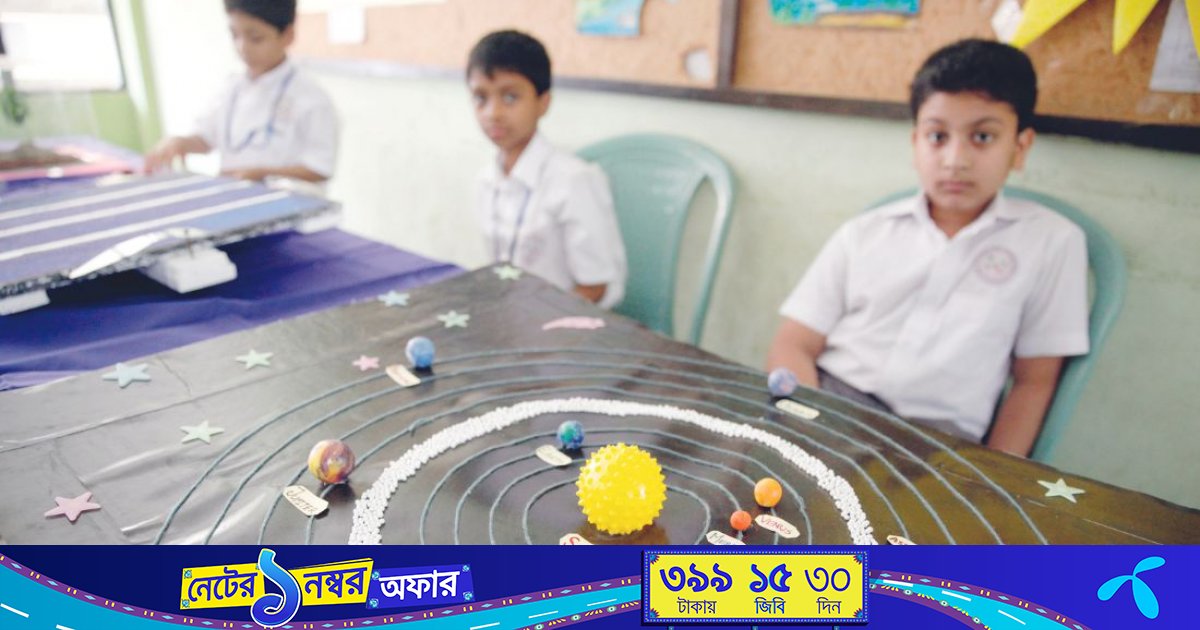
As Bangladesh approaches its second century of independence, the future of its education system presents both significant opportunities and challenges. Over the past few decades, the nation has made remarkable progress in increasing access to education at all levels. However, the road ahead requires a visionary strategy to leverage demographic shifts, technological advancements, and sustainable development goals. With a population ranked 8th globally, Bangladesh is currently benefiting from a demographic dividend, with 65.6% of its citizens being of working age. To convert this demographic advantage into a valuable asset, Bangladesh must prioritize investment in its people, especially through vigorous educational initiatives.
Current scenario
Bangladesh has made significant strides in increasing access to primary education. The Annual Primary School Census 2021 reports that nearly 98% of primary-school-aged children are enrolled in school, indicating near-universal access to primary education. Additionally, Bangladesh has achieved gender parity in primary and secondary schools, with 49.5% of girls enrolled in primary and 54.92% in secondary schools. However, the trend of students dropping out at secondary and tertiary levels is a significant concern. According to the Bangladesh Education Statistics 2021 report, there was a 6% decrease in secondary school completion rates for girls and a corresponding increase in dropout rates from 2020 to 2021. Additionally, a report by the University Grants Commission indicates that 249,000 university students have dropped out in recent years.
Quality of education
While Bangladesh features a literacy rate of 74.91%, a report by UNICEF (2022) shows that only 34% of third graders in the country can read proficiently, and only 18% can do basic math. Private universities have played a crucial role in producing graduates with the necessary skills and competencies. However, recent complaints have surfaced, indicating that graduates are struggling to secure employment, with employers voicing dissatisfaction over the lack of suitably skilled candidates.
The quality of education is intrinsically linked to the quality of the learning environment. While public universities have historically been renowned for producing well-educated individuals, factors such as politicization, haphazard expansion, and inadequate facilities have led to a decline in the standard of these institutions.
As Bangladesh stands on the brink of the 4th Industrial Revolution (4IR), it calls for its citizens to possess diverse skills, including digital literacy, ICT knowledge, emotional intelligence, and analytical thinking, to compete in the global economy. To fully participate in this revolution, the country must re-evaluate its education system to meet 4IR demands.
Demographic dynamics
By mid-century, Bangladesh’s population is projected to stabilize around 250 million. This demographic landscape, with a significant youth bulge transitioning into adulthood, underscores the urgent need for universal access to quality education. The foundation of this vision lies in reinforcing the principles of inclusivity and equity across all educational domains. Primary education, mandated and fully accessible, will form the cornerstone of a comprehensive educational framework. Every child, regardless of socio-economic background or geographical location, will have access to modern educational facilities. The eradication of illiteracy will be a national priority achieved through targeted interventions in early childhood education, ensuring that every citizen masters essential literacy and numeracy skills.
Technological integration
The 21st century has been marked by rapid technological advancement, and Bangladesh’s education system will fully embrace digital integration across all levels. From interactive digital classrooms in rural primary schools to state-of-the-art virtual laboratories in tertiary institutions, technology will democratize access to knowledge. Coding and digital literacy will be fundamental components of the curriculum from early childhood onwards, preparing students not just to consume technology but to innovate and lead in a global digital economy. Artificial intelligence and machine learning will augment personalized learning experiences, adapting educational content to individual student needs and promoting creativity and critical thinking.
Environmental education
Bangladesh, vulnerable to the impacts of climate change, will embed environmental education deeply within its curriculum. From sustainable agriculture practices taught in rural schools to advanced climate science studies at universities, students will be equipped to understand, mitigate, and adapt to environmental challenges. Schools will serve as hubs for community resilience, with students engaging in projects that promote eco-friendly practices and biodiversity conservation. Environmental stewardship will be a national ethos, preparing future generations to lead in sustainable development and advocate for global climate action.
Skills for the future
The educational landscape will diversify to cater to evolving societal needs and economic demands. Vocational training institutes will flourish alongside traditional academic institutions, offering specialized courses in emerging fields such as renewable energy, biotechnology, and advanced manufacturing. Technical and vocational education and training (TVET) will receive enhanced investment, bridging the gap between education and employment readiness. Apprenticeships and industry partnerships will provide students with practical experience, ensuring they enter the workforce equipped with relevant skills and competencies.
Governance and financing
Effective governance and sustainable financing will underpin Bangladesh’s education system in the next century. A decentralized approach will empower local communities to manage and innovate within their educational institutions, nurturing a culture of continuous improvement and responsiveness to local needs. Public investment in education will increase substantially as a percentage of GDP, reflecting its critical role in driving economic growth and social development. Innovative funding models, including public-private partnerships and philanthropic contributions, will supplement government allocations to ensure equitable access and quality outcomes.
Cultural and social integration
Bangladesh’s rich cultural diversity will be celebrated and integrated into its education system, developing national unity while respecting regional identities and languages. Multilingual education will be promoted, allowing students to learn in their mother tongue while acquiring proficiency in Bengali and English, the languages of national and global communication. Social inclusion will be prioritized, with educational policies designed to eliminate gender disparities and empower marginalized communities. Schools and universities will be safe, inclusive spaces where diversity is embraced, and all students have equal opportunities to excel academically and socially.
In the next 100 years, Bangladesh’s education system will not only reflect its aspirations for progress but also serve as a beacon of hope and opportunity for generations to come. The country will position itself as one of the global leaders in education and human development. The journey towards this vision will require steadfast commitment from policymakers, educators, communities, and stakeholders across all sectors. Investing in education is investing in the future. As we stand on the brink of a new century, let us seize this opportunity to reimagine and reshape the education system in Bangladesh, ensuring that every child, youth, and adult has access to quality education and the tools they need to succeed in a rapidly changing world. Together, we can build an education system that empowers every individual to realize their full potential, contribute meaningfully to society, and navigate the complexities of the 21st century with confidence and resilience. The future of education in Bangladesh is not just a goal; it is a promise of a brighter, more equitable, and sustainable future for all.
H M Nazmul Alam, Lecturer, Department of English and Modern Languages, International University of Business, Agriculture and Technology
