

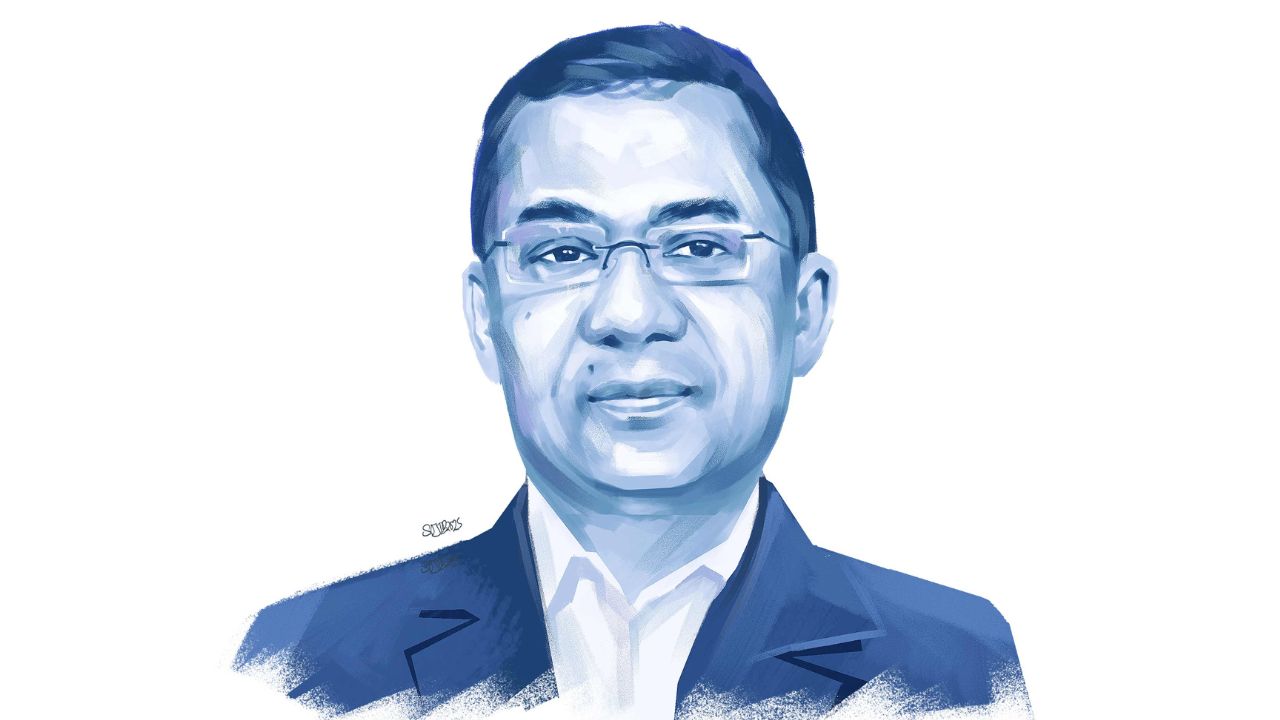
Ending all speculation, Tarique Rahman has touched down in Dhaka—an arrival that his party BNP and many citizens see not as a routine homecoming, but as the opening chapter of a long-awaited new beginning.
Since 5 August last year, his return has dominated political discussion, expectation and anticipation. With his landing on Thursday, 25 December, a prolonged chapter of absence has formally closed, and a new phase for BNP has begun.
For party leaders and activists, this moment carries emotional and political depth. After more than 17 years in exile, Tarique’s return symbolises continuity restored and leadership reclaimed.
It is a moment that blends memory with momentum: memory of a party that once stood unified and electorally strong, and momentum for rebuilding that strength through renewed direction and purpose.
His return reflects a pledge to move beyond stagnation and to reintroduce a politics shaped by experience, restraint and recalibration.
When Tarique left for London on 11 September, 2008, he was BNP’s senior joint secretary general. He now returns as the acting chairman and the party’s de facto leader at a time when BNP stands at a crossroads.
Years of repression, organisational decay and enforced distance from the political field have weakened party structures and morale. Grassroots networks have survived, but often without coordination or confidence.
His physical presence in the country offers BNP something it has lacked for years: central leadership on the ground.
That leadership has become even more crucial as BNP Chairperson Khaleda Zia remains seriously ill and under treatment. In this reality, Tarique Rahman has already been functioning as the party’s principal decision-maker.
With the 12 February parliamentary election approaching, BNP is effectively entering the contest under his command. His return, therefore, is not ceremonial, it is strategic. It provides the party with a focal point for unity, mobilisation and message discipline at a decisive moment.
The broader political environment further underlines the significance of this return. Following the political shift on 5 August, Bangladesh’s electoral field has been reshaped.
With Awami League barred from participation, the space for others is no longer uncontested. Jamaat-e-Islami and an electoral alliance of Islamist parties have emerged as direct competitors for influence and votes.
In such a fragmented landscape, BNP’s ability to assert itself as the principal national alternative depends heavily on leadership clarity and organisational revival, both of which Tarique’s return could catalyse.
The elaborate preparations to welcome him, including a mass reception in Purbachal, are expressions of hope as much as celebration. They reflect the belief that his return can reignite grassroots energy and renew faith in the party’s symbol, the sheaf of paddy.
Whether this moment truly becomes a “new beginning” will depend on what follows.
Tarique now faces the challenge of unifying factions, enforcing discipline, articulating a credible vision and reconnecting BNP with a broader electorate seeking stability and democratic renewal. The opportunity is historic. Turning it into lasting renewal is the task ahead.
