

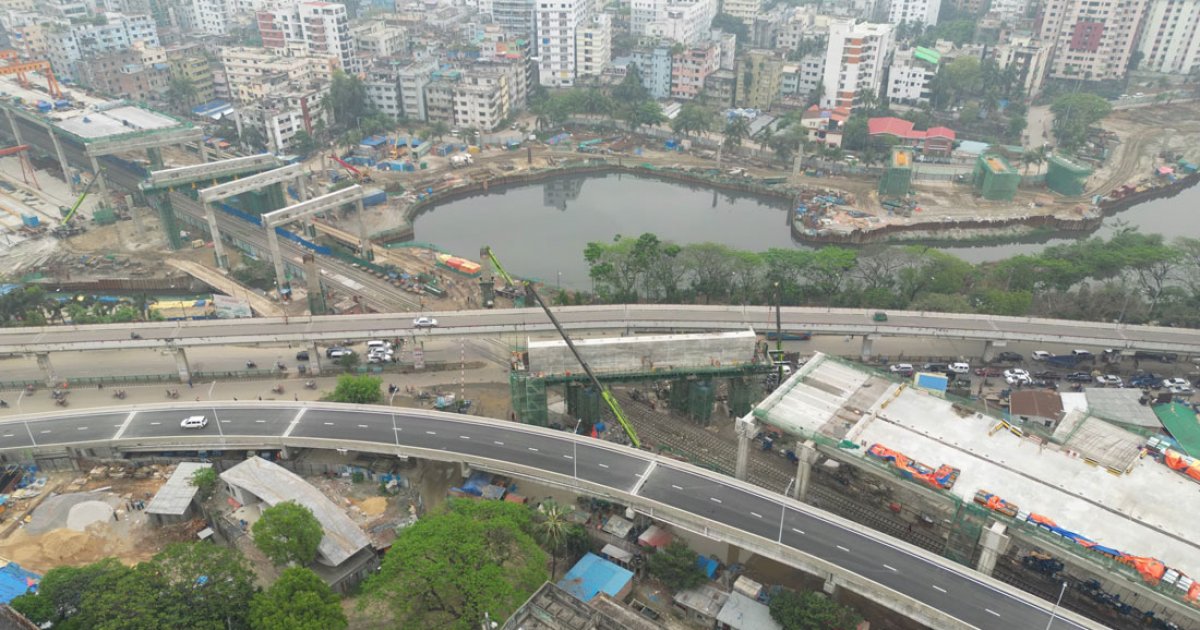
From 1971 to 2024, Bangladesh has witnessed 53 years of remarkable transformation since its independence. From using landline telephones to fifth generation mobile networks, from horse-drawn carriages to metro rail, it has been a rollercoaster ride. Changes are certain, and so is rapid development. But if we want to envision how Bangladesh might look in 2124, we must first understand the upgrades and downgrades we have experienced over the past 50 years. This exploration can be seen as a case study, offering predictions that could become reality over the next century.
Starting with education, which is considered as the pillar of a nation. We have undergone significant experimentation with our educational system over the years. Regrettably, the substantial improvements we hoped for have not fully materialized, and the quality of education has, in many cases, degraded. Over the last few decades, private educational institutions have risen to prominence, engaging in a tug-of-war with government and public institutions. Public universities continue to be quite popular as of 2024, with the majority of applicants to higher education selecting them first. Nevertheless, if current trends continue, private educational institutions will likely dominate the scenario by 2124, similar to the situation in the USA and other developed countries.
Moving to the technological advancements, which have been the biggest shot made during the last 50 years in Bangladesh. We have entered the era of Digital Bangladesh, with approximately 131 million people having internet access and nearly 200 million people using mobile phones, a figure close to the entire population of the country. This dramatic change denotes the intense possibility of a technological boost in Bangladesh in the next hundred years. Additionally, The rate of adoption of artificial intelligence (AI) and automation will likely play a crucial role in shaping various sectors, from education to industry. Like many other nations, Bangladesh has become more and more dependent on the application of AI since its introduction. The majority of sectors will probably rely on artificial intelligence as it develops further. This does not, however, imply that employment will be in jeopardy. By 2134, artificial intelligence (AI) is predicted to handle dangerous occupations, like those in nuclear power facilities like Rooppur and others that are yet to be made, protecting human jobs while improving efficiency and safety.
In recent years, Bangladesh’s economy has encountered some of its most difficult times. Unprecedented difficulties have been brought about by the shrinkage of national reserves, a consecutive rise in the dollar rate, and skyrocketing inflation. Still, plans are being made to deal with these problems. Bangladesh is predicted to continue to dominate the ready-made garment (RMG) industry and has the geographic advantage to sustain its dominance in exporting items like frozen fish and jute for the next century. On a different economic layer, remittances, which primarily originate from Middle Eastern nations, make a significant contribution to our economy. Improving access to vocational education may offer a way to boost productivity in the labor force both domestically and abroad. Educational institutions are probably going to concentrate more on that by 2124 to provide quality human resources.
Predicting the future urbanization model of Bangladesh is the easiest task so far, as the government is already trying to overcome the situation with planned city development. Nonetheless, the efforts might not be sufficient yet. Bangladesh, at this very point, needs to be decentralized. Following the last development process such as the way highway in Dhaka Chittagong route, extending rail line to Cox’s Bazar, and lastly, the building of Padma Bridge has connected distinct divisions to the capital. By 2124, the divisional zones will likely be well-established, guaranteeing a suitable decentralized organization that assures sufficient development throughout the nation. Every divisional and regional area in Bangladesh has unique multifaceted significance. By utilizing them to their best advantage, Bangladesh will be capable of developing such a decentralized model within 100 years.
Geopolitically, Bangladesh has a significant dependency on its neighbouring countries for raw materials and essential commodities. However, by 2124, Bangladesh aims to become self-reliant. The government’s focus on renewable energy sources, such as nuclear, solar, and wind power, aims to achieve energy independence. Furthermore, maintaining secure supply chains and reducing geopolitical risks can be achieved by cultivating strong economic and diplomatic relations with a variety of nations. Long-term plans, such as adherence to the Belt and Road Initiative, are expected to come to fruition in the next 50 years, opening the gateway for intra-continental trade and bolstering Bangladesh’s economic position within the next century.
Considering the fact into count that Bangladesh faces numerous challenges, the potential for growth and development over the next100 years is immense. By focusing on education, embracing technological advancements, addressing economic challenges, ensuring balanced urbanization, and reducing geopolitical dependencies, Bangladesh can become a prosperous and dynamic nation by 2124.
ASM Kamrul Islam is a Lecturer at Green University of Bangladesh; Email: [email protected].
