

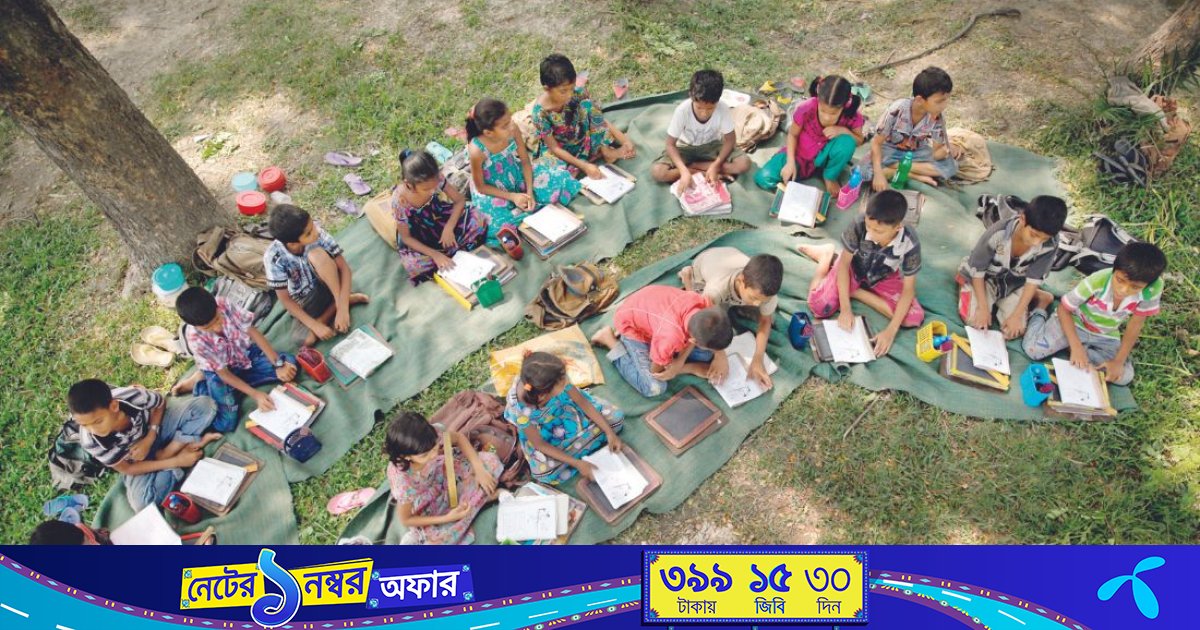
One major reason why education holds a prominent position in Bangladesh is that it is among the most significant determinants of its future. The base upon which we establish a fair, rich, and inclusive society is education. It is also the cornerstone of development and the means to prepare human potential. When we consider our existing successes and challenges, we provide a vision for Bangladesh’s educational future that promises transforming development and unmatched possibilities for all.
In the last 15 years themselves, Bangladesh has achieved great progress in the field of education. The literacy rate has increased sharply due to the efforts of government, non-governmental, and even international organizations. Gender equity in education is a reality and primary school enrolment is very high. These achievements have come from the government’s initiatives like free textbooks, and stipends for female students.
Furthermore, technological developments have penetrated the educational sector with the increasing use of digital learning tools, multimedia classrooms, and mobile applications along with conventional teaching strategies. These developments have offered fresh learning opportunities and made education more interesting and accessible for students throughout the country. Notwithstanding these successes, Bangladesh’s educational system is beset with challenges.
Quality of education is still an issue as urban and rural areas provide somewhat different results. Often insufficient professional development and preparation of the teachers results in different teaching standards. Moreover, infrastructural factors like packed classrooms and inadequate basic amenities are creating problems in the way of ensuring quality education.
Looking ahead to the next 100 years, Bangladesh’s educational sector is required to show enormity, diversity, and innovation. We see a system that promotes critical thinking, creativity, and lifelong learning. An education system which prepares the students for meeting the challenges of the 21st century and offers all that is needed to survive in societies that are gradually transforming.
With regards to the future, one would anticipate that there is improved quality education for every child irrespective of the status of the family they originate from. This implies the need to accommodate underprivileged students and even equalizing the disparity between urban and rural areas. Especially in underdeveloped areas and isolated locations, expanding infrastructure will be very vital. Modern facilities — including libraries, labs, and internet access — must be included in schools to create a suitable classroom.
We also have to make early childhood education a top priority if we are to attain universal access. Studies have indicated that social and cognitive development depends critically on the early years. Investing in pre-primary education helps us to create a strong basis for lifetime learning and lower dropout rates in later years. In this case, trained caregivers and community-based early development institutions could play an important role.
Another priority should be to enhance the quality of teaching. Starting with teacher preparation and professional growth, this calls for a multifarious strategy. The pillar of the educational system is teachers, whose abilities directly affect the results of their students. Programs for ongoing professional development combined with appealing career pathways and incentives might help draw and keep outstanding educators.
Another necessary element is a revision of the curricula. Our educational system has to change to fit global and contemporary society. This entails moving from rote learning to a more student-centred style encouraging critical thinking, problem-solving, and creativity. While including global best practices, the curriculum should be appropriate for the local context. Integration of subjects such as coding, digital literacy, environmental education, and financial literacy will help equip students to meet the demands of the future.
In the next one hundred years, the inclusion of technology into the classroom will transform everything. Online resources, digital learning platforms, and instructional applications can democratize knowledge and bridge the gap between urban and rural places. Giving students access to interactive learning tools and a variety of knowledge can help to improve their educational process and promote an attitude of self-directed learning.
We have to make investments in digital infrastructure and guarantee that every institution has access to digital tools if we are to reach our goal. Digital pedagogy should be taught in teacher training courses so that teachers can employ technology in their classrooms with efficiency. Moreover, collaborations with information technology companies may inspire creativity and offer scalable answers to problems in the classroom.
Our vision for the direction of education in Bangladesh should be centred on inclusiveness. Children with disabilities, those from ethnic minorities, and other underprivileged groups have to be sure they have equitable access to school. This entails not only physical accessibility but also designing an inclusive classroom that honours variation.
Programs for special education, inclusive classrooms, and certified special teachers can assist in meeting the requirements of children with disabilities. Training instructors in language and cultural awareness will help to guarantee that students from ethnic minorities feel appreciated and encouraged. Furthermore, alternative education courses and flexible learning paths could give opportunities to individuals who might not flourish in a conventional classroom environment.
Education should not finish with official schooling in a world that is fast evolving. People who want to fit emerging technology, shifting employment markets, and changing society demands must be lifelong learners. Strong systems of adult education, vocational training, and ongoing professional growth will define our future.
Online courses, community learning centres, and industrial alliances give folks chances to pick up fresh information and abilities. Programs for vocational training should be in line with the needs of the market to guarantee that graduates possess the necessary competencies for a decent job. Encouragement of lifelong learning will help us to build a strong workforce ready for the challenges of the future.
Research and invention must come first in a forward-looking educational system. Research institutes and universities should lead in producing fresh information and pushing technical developments. Investing in research infrastructure and supporting an intellectual capital culture would help Bangladesh become a centre of innovation.
Cooperation among academics, businesses, and governments may inspire creativity and build a vibrant ecosystem supporting research and development equipped to meet the challenges of the fourth industrial revolution. Funding possibilities, grants, and scholarships help young researchers and entrepreneurs to follow their ideas and help the country grow.
Education has to also equip children to be responsible global citizens in a world growing more linked by the day. This entails encouraging knowledge of world concerns like social justice, human rights, and climate change. The curriculum should include ethical instruction stressing integrity, empathy, and respect among other qualities.
Students can be exposed to several cultures and points of view by employing exchange programs, foreign collaboration, and group projects. Encouragement of global citizenship will help us to raise a generation of leaders dedicated to creating a more fair, sustainable, and peaceful planet.
It is abundantly evident from considering our successes and imagining the future that Bangladesh’s ongoing development and prosperity depend on the educational sector. Though realistic, our ideal for the next 100 years is simultaneously aspirational. By tagging the policy of innovation, inclusion, and quality, it will become possible to create an educational system that will develop people and help build our nation. l
Dr Pranab Kumar Panday is a Professor in the Department of Public Administration at the University of Rajshahi.
