

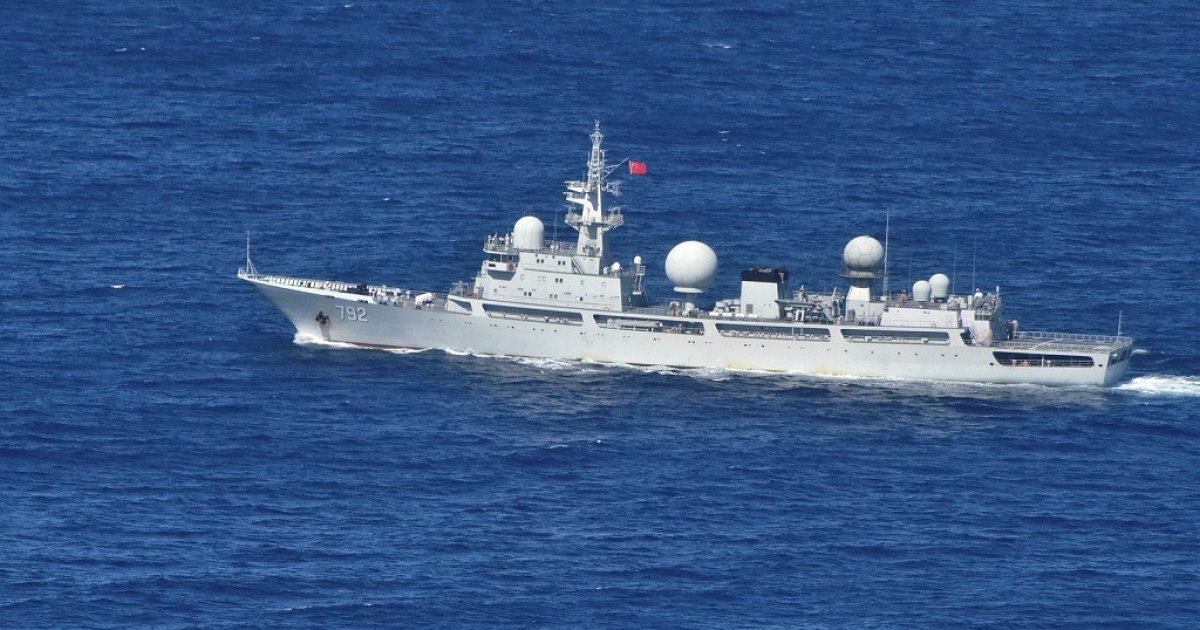
Australia’s vulnerability has been alarmingly exposed as tensions rise in the Pacific between China and the US. A senior defense consultant criticized the Australian government’s approach to national security, particularly in light of the Defense Strategic Review (DSR). With military analysts predicting possible conflict within the next four to eight years, the consultant argues that valuable time has been wasted due to the government’s indecisiveness, bureaucracy, and failure to build the self-reliant capabilities necessary for defense.
Brent Clark, CEO of the Australian Industry and Defense Network (AIDN), with three decades of experience in the Royal Australian Navy and civilian companies manufacturing defense equipment, shared his concerns at the Royal United Services Institute for Defense and Security Studies NSW. He pointed out that the DSR’s review process took too long, significantly delaying defense construction and industry stagnation. Companies working on defense projects were adversely affected during this period.
According to Clark, the government’s handling of critical defense systems like the Guided Weapons and Explosive Ordnance Enterprise has been inadequate. Rather than offering firm directives, the DSR merely calls for options papers to be delivered in 2024, further prolonging decisions on long-standing issues.
Despite not explicitly naming China, Clark highlights the rapid development of China’s military capabilities and their unlimited construction capabilities as a cause for concern. He emphasizes that Australia needs to prioritize building self-reliance and sovereign capability instead of relying on other countries.
The AUKUS submarine program, which was expected to produce eight submarines in Adelaide from 2035 onwards, has been misrepresented to the public. The total fleet of nuclear submarines will be eight, with only three AUKUS submarines expected to be built in Adelaide. The dependence on foreign suppliers for crucial components of defense equipment poses a significant risk during potential conflicts.
Clark’s solution to this problem is to focus on developing a sovereign capability within Australia, despite the additional costs involved. He believes that for Australia to protect itself during times of conflict effectively, it must reduce dependence on other countries and establish independence in defense capabilities.
The article also highlights China’s involvement in several near-miss incidents with other nations, including the US, Taiwan, Vietnam, and the Philippines, raising concerns about potential escalations. Australia’s lack of a back channel for communication with China further complicates matters and poses risks to global security and peace.
Overall, the article emphasizes the urgency of building self-reliance and independent capabilities in Australia’s defense strategy to mitigate potential risks and protect the nation’s security.
