

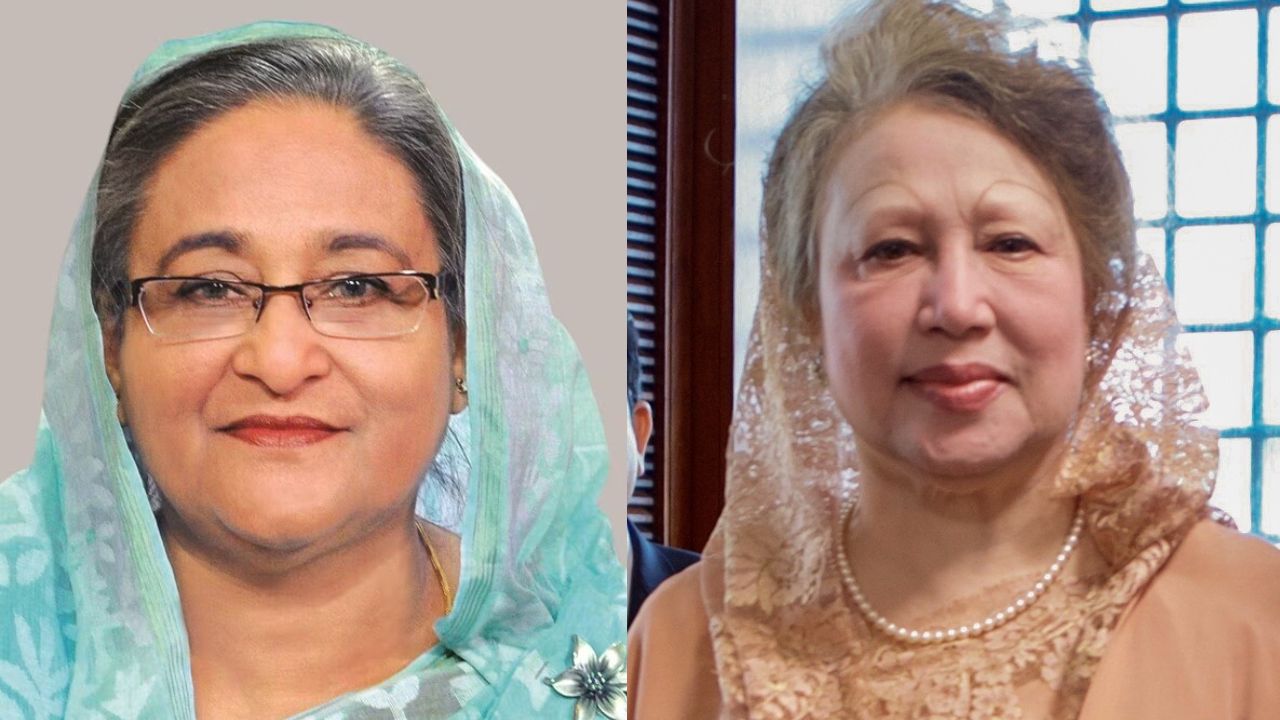
The exit of Khaleda Zia and Sheikh Hasina from politics marks the most consequential rupture in Bangladesh’s power structure since independence.
For nearly four decades, the two ladies – heads of Bangladesh Nationalist Party (BNP) and Awami League – dominated the country’s political life, alternately ruling for more than three decades.
Their personal rivalry hardened into an enduring political culture of confrontation, institutional decay, and democratic stagnation. With Khaleda Zia’s death two days ago and Sheikh Hasina’s forced exile after the 2024 mass uprising, that long era has abruptly ended.
Khaleda Zia’s death closed a chapter rooted in electoral legitimacy and oppositional resilience. Sheikh Hasina’s fall, however, represents a collapse of authority. Facing death penalty on charges of crimes against humanity, Hasina is unlikely to return or re-enter politics at the age of 78. Her attempts to direct Awami League activities online from New Delhi underline the party’s diminished relevance. With Awami League barred from contesting the upcoming election, Bangladesh’s dominant ruling force of the past decade has been effectively sidelined.
This political vacuum has reshaped the electoral landscape just 41 days before the 12 February national election. The return of BNP acting chairman Tarique Rahman after 17 years of exile is the most significant development.
With Khaleda Zia gone, Tarique is now the uncontested leader of the party. The massive public outpouring of grief and respect surrounding his mother’s death has already generated strong emotional and political momentum for BNP. In a society where legacy and symbolism carry enormous weight, this moment offers Tarique a rare opportunity to consolidate authority and broaden appeal.
Yet BNP’s advantage is neither automatic nor uncontested. Its principal rival is Jamaat-e-Islami, led by Shafiqur Rahman, which has gained unprecedented ground since the collapse of the Hasina regime. Jamaat has capitalised on public anger, disciplined organisation, and grassroots mobilisation. Its electoral alliance with several Islamist groups and the newly formed National Citizen Party (NCP) has further strengthened its position, transforming it into the most visible challenger to BNP.
The evolution of NCP is particularly telling. Once celebrated as a new democratic force emerging from the student-led uprising, the party has rapidly lost credibility by aligning with Jamaat, a party accused of mass killings, rape, and crimes against humanity during the 1971 Liberation War.
This alliance exposes the fragility of post-uprising idealism and raises serious questions about moral compromise and political opportunism. Rather than emerging as a genuine third force, NCP now risks becoming an appendage of the religious right.
With Awami League absent from the race, BNP appears structurally advantaged. However, the nature of competition has fundamentally changed. Unlike previous elections defined by BNP–Awami League rivalry, the current contest is shaped by an ideological struggle between nationalist conservatism and organised religious politics. Jamaat’s growing strength suggests it could translate momentum into electoral success if BNP fails to articulate a clear vision, maintain unity, and confront right-wing mobilisation effectively.
This evolving landscape has triggered pressing questions. Which parties will dominate Bangladesh’s post-Hasina era? Will power consolidate around BNP and Jamaat, or can a credible third force still emerge? Who will fill the leadership vacuum left by Hasina and Khaleda? Above all, can Tarique Rahman successfully steer BNP against a resurgent Islamist challenge, and what political strategy will he adopt to counter right-wing influence without alienating conservative voters?
Beyond electoral calculations, Tarique faces a crucial foreign policy test: India. New Delhi’s deep involvement in Bangladesh’s internal politics during Hasina’s rule has generated widespread resentment. How Tarique positions himself will shape both domestic legitimacy and regional relations.
The 12 February election will answer many of these questions.
