

US-backed plan for peace in Gaza has transitioned to its second phase, even as fundamental disagreements between Israel and Hamas regarding alleged truce breaches and unmet obligations from the initial stage remain unresolved.
The most critical points of contention continue to be Hamas’s unwillingness to openly agree to complete disarmament – a core Israeli demand – and Israel’s ambiguous stance on a full military withdrawal from the Palestinian territory.
While a new Palestinian technocratic council was unveiled on Wednesday to oversee civilian administration in postwar Gaza, it does not address the larger political and security dilemmas at the heart of the conflict.
The following outlines key developments from the concluded first phase to the newly commenced second stage.
Outcomes and shortfalls in phase one
Initiating on 10 October, the first part of the 20-point proposal presented by US President Donald Trump primarily sought to halt hostilities, facilitate humanitarian access, and secure the release of all remaining captives – both living and deceased – held by Hamas and other militant factions.
All hostages have been returned except for the body of one Israeli, Ran Gvili. Israel alleges Hamas is deliberately postponing the handover, whereas Hamas attributes the delay to the extensive devastation across Gaza complicating recovery efforts.
Gvili’s family had appealed to mediators to postpone advancing to the next phase. “Moving on breaks my heart. Have we given up? Ran did not give up on anyone,” stated his sister, Shira Gvili, following the mediators’ announcement.
Israeli Prime Minister Benjamin Netanyahu affirmed that operations to retrieve Gvili’s remains would persist but has not publicly addressed the launch of phase two.
Hamas has charged Israel with repeated violations of the ceasefire, citing airstrikes, firing on civilians, and advancing the informal demarcation known as the “Yellow Line,” which separates zones under Israeli control from those under Hamas authority.
Gaza’s Hamas-run health ministry reports that Israeli forces have killed 451 people since the truce began. The Israeli military states it engaged suspected militants who encroached into restricted areas near the Yellow Line and that three Israeli soldiers were killed by militants in the same period.
Aid organisations contend that Israel has not permitted the volume of relief supplies envisioned in phase one, an assertion Israel denies.
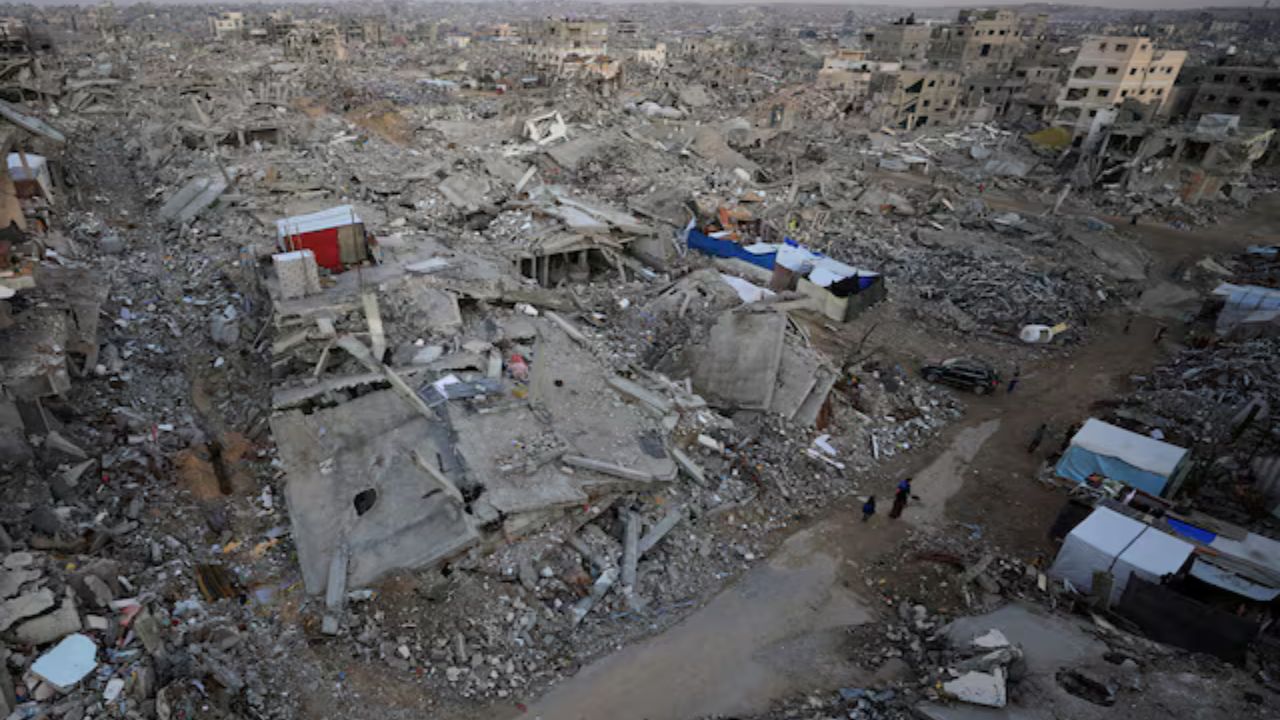
With its borders and crossings still under Israeli control, Gaza continues to suffer severe shortages of food, water, medicine, and fuel. Israel and the United Nations have repeatedly clashed over figures detailing the number of aid trucks granted entry.
Disarmament and administration in phase two
The second phase envisions Gaza being managed by a 15-member Palestinian technocratic committee, operating under a newly established “Board of Peace” to be chaired by President Trump.
“The ball is now in the court of the mediators, the American guarantor and the international community to empower the committee,” senior Hamas official Bassem Naim said in a Thursday statement.
Trump announced on Thursday the formation of the peace board, adding that its members would be revealed “shortly.”
Mediator nations Egypt, Turkey, and Qatar confirmed that Ali Shaath, a former deputy minister in the Ramallah-based Palestinian Authority, has been appointed to lead the administrative committee.
Egyptian state television later reported all committee members had “arrived in Egypt and begun their meetings in preparation for entering the territory.”
Al-Qahera News, with links to Egyptian intelligence, stated the arrivals followed US Middle East envoy Steve Witkoff’s Wednesday declaration “of the start of the second phase and what was agreed upon at the meeting of Palestinian factions in Cairo yesterday.”
In a recent interview, Shaath said the committee would depend on “brains rather than weapons” and would not coordinate with armed groups.
On Wednesday, Envoy Witkoff stated phase two targets the “full demilitarisation and reconstruction of Gaza,” which includes disarming all unauthorised militant factions.
He warned that Hamas must fulfil its outstanding commitments, including returning Gvili’s body, or face “serious consequences.”
The plan also proposes deploying an International Stabilisation Force to help secure Gaza and train approved Palestinian police units.
For Palestinians, the pivotal issue remains the complete pullout of Israeli forces from Gaza – a component within the framework but without a published detailed schedule.
With core disputes over disarmament, withdrawal, and governance still unresolved, diplomats indicate the success of this phase hinges on continuous mediator pressure and the willingness – or capacity – of both sides to compromise on their entrenched positions.
