

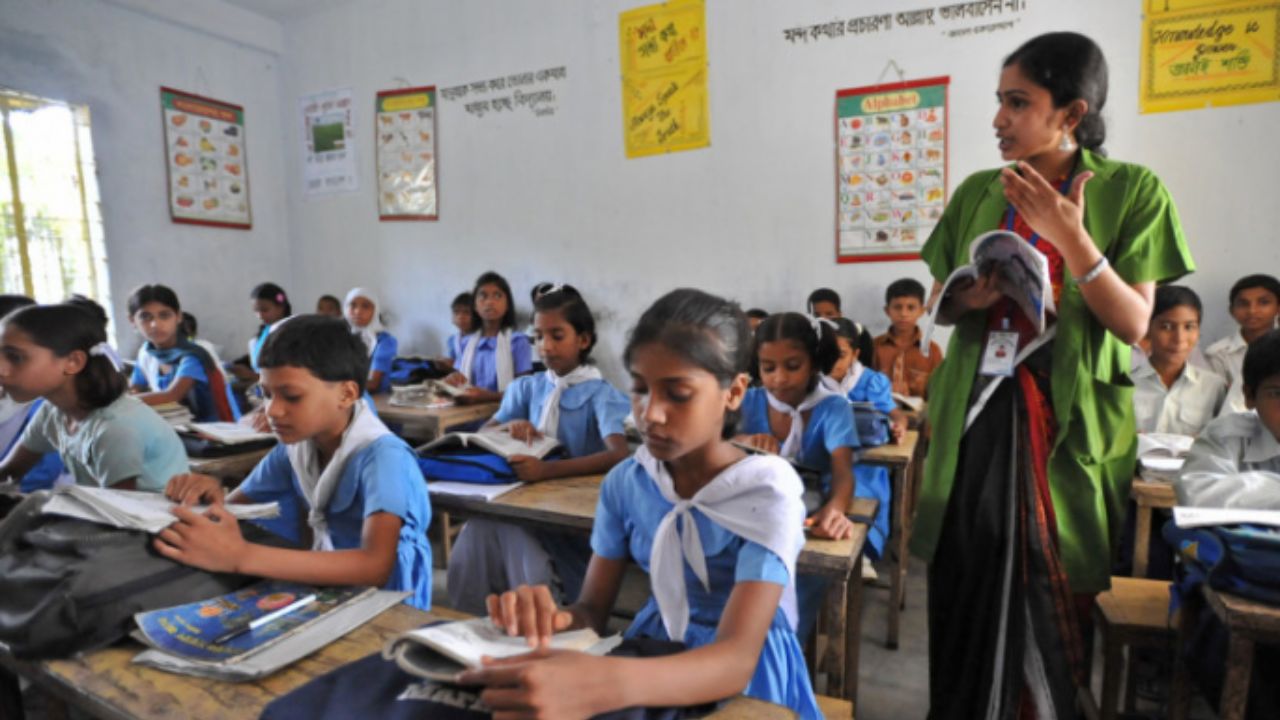

A sudden extension of school closures to 38 consecutive days has sparked concern among parents, educators and policy experts, with many warning that the disruption could significantly undermine classroom learning, particularly for younger students.
For some families, the scale of the interruption is difficult to reconcile with the academic calendar’s already limited teaching time.


“A continuous gap of 38 days in an academic calendar is a very serious matter,” said Abdur Rahim Khan, a physician and guardian of a second-grade student at Rangpur Cantonment Public School. “January is mostly consumed by admission procedures, annual sports and education week activities. February and March are now lost to holidays, and April and May are exam months. So, when exactly do students get meaningful classroom learning time?”
His concerns reflect a broader anxiety among guardians who fear that classroom teaching will be rushed or compressed, prioritising exam completion over genuine learning.
“Teachers seem more focused on conducting exams than ensuring students are properly prepared through teaching,” he said. “The government had to declare additional holidays beyond the academic calendar due to teachers’ demands. This will inevitably create learning gaps.”
Educationists have also criticised the abrupt change in the academic calendar, arguing that the decision reflects deeper structural weaknesses in education planning.
They point out that Ramadan-related adjustments could have been managed by shortening school hours or introducing half-day classes instead of suspending academic activities altogether.
“All other sectors continue functioning during Ramadan,” said education researcher and Dhaka University professor Mohammod Moninoor Roshid. “Why should education alone stop? The key question is whether we prioritise curriculum implementation or public appeasement. Morning classes or half-day sessions could have easily continued. That is standard practice worldwide.”
He emphasised the need for a permanent policy framework governing school operations during Ramadan, seasonal heatwaves, monsoon periods and winter, rather than ad hoc decisions.
Without such stability, he warned, repeated disruptions could weaken the education system’s effectiveness.
Although the closure affects all levels of schooling, education professionals say primary students are particularly vulnerable.
According to the academic calendar for the 2026 academic year, the first term examinations for primary students are scheduled for the first week of May. Yet with admissions, extracurricular activities and political disruptions already consuming much of January and early February, and the newly extended holiday stretching from 19 February to 28 March, only April remains available for classroom instruction before exams.
This effectively leaves primary students with just one month of formal classroom teaching.
By contrast, secondary and higher secondary students will have at least three months between the end of Ramadan holidays and their examinations.
The closure was originally scheduled to run from 8 March to 26 March, creating a 21-day break including weekends. However, a government notification issued on 18 February brought forward the holiday start date to 19 February, extending the total closure period to 38 days.
Even after excluding six weekend days from the additional closure period, students still face a shortfall of 11 instructional days compared to the original calendar.
Teachers acknowledge that the extended closure could create learning gaps but note that Ramadan-long holidays have historically been part of the academic calendar.
Mohammad Shamsuddin Masud, assistant teacher at Dakshin Char Lakshmi Government Primary School in Lakshmipur and president of the Bangladesh Government Primary School Assistant Teachers’ Association, said the disruption was largely a result of changes to the original calendar.
“If the full Ramadan holiday had been included from the beginning, there would not have been a learning gap,” he said. “We are aware of the issue, and if necessary, we will coordinate with the administration to arrange additional classes to compensate.”
Head masters also recognise the dilemma.
Md Riaz Parvez, head master of Gendaria Mohila Samity Government Primary School and president of the Government Primary School Head Meachers’ Association, described the situation as a “double-edged problem.”
“Previously, the entire Ramadan period was included in the annual calendar,” he said. “This year, only part of Ramadan was scheduled as holiday, and now the full month has been declared off. This creates a learning gap that we will have to cover.”
However, he added that keeping schools open might not have solved the problem entirely.
“Even if schools remained open, student attendance would likely be low, and parents might object. So extending holidays solves one problem while creating another.”
Parents say the extended closure could increase academic pressure on students once schools reopen.
Some are already making private arrangements to compensate.
Sheikh Shafayat Hossain, a journalist and father of a third-grade student at Viqarunnisa Noon School’s Bashundhara branch, said he was arranging home-based study support for his daughter.
“Exams will follow soon after schools reopen,” he said. “Without preparation during this long break, students will face excessive pressure. That’s why I am planning alternative study arrangements, including guidebooks.”
His concern reflects a wider shift towards supplementary education when formal schooling becomes inconsistent.
Education policy experts say the disruption highlights longstanding governance challenges in the country’s education system, particularly the absence of consistent long-term planning.
Emeritus Professor Manzoor Ahmed of Brac University warned that sudden changes to academic calendars could have lasting consequences.
“It will be very difficult to recover the lost academic time,” he said. “The practice of long Ramadan closures needs to be reconsidered. Instead, school hours could be adjusted.”
He also expressed concern about broader patterns of instability in education policy.
“With every government change, curricula and academic calendars are altered. This cycle must stop. Education reform should prioritise continuity and learning outcomes.”
Professor Ahmed, who previously led a national advisory committee on improving primary and secondary education, argued that policy decisions must place students’ learning needs at the centre.
“Teachers raised demands, and the government conceded. But decisions should be based on educational priorities, not convenience,” he said.
When contacted, Shahana Sharmin, additional secretary (schools) at the Ministry of Education, said the authorities would take steps to ensure students do not fall behind.
“We will consider the matter carefully so that students do not face study gaps and their academic progress is not affected,” she said.
The controversy reflects a deeper tension between cultural practices, administrative realities and educational priorities.
While Ramadan-related adjustments are widely accepted, experts say the core issue lies in planning consistency rather than the holiday itself.
Without structural reforms and stable academic planning, they warn, students—particularly those at foundational stages of learning—may continue to bear the consequences.
