


The recent flare-up on the Pakistan-Afghanistan border underscores the crisis between is no longer a one-time spectacle, but it is a structural phenomenon. The kind of relationship once described as brotherly, due to the convergence of strategic interests, has now degenerated into open hostility typified by cross-border attacks, high casualties, and an even deeper trust deficit.
With the Afghan Taliban troops based in Khost, it was reported on Friday night that they decided to retaliate by attacking military posts in Pakistan. Pakistan claims that no less than 12 of their military men were killed during the encounters with the Afghan Taliban warriors, and the military spokesperson, Lieutenant General Ahmed Sharif Chaudhry, has already reported that 274 Taliban soldiers had died. The Afghan officials, in their turn, maintain that more than 50 Pakistani military representatives have been killed, and Pakistan has been striking Kabul, Kandahar, and Paktika with airstrikes. The Taliban government has gone as far as stating that it had attacked a Pakistani military base in Faizabad, Islamabad.


Pakistan’s prime minister, Shehbaz Sharif, has ordered the army to take decisive action against any aggression. Meanwhile, the Taliban spokesperson, Zabihullah Mujahid, charged Pakistan with trying to impose its civil war in Afghanistan. The rhetorical war represents the kinetic war.
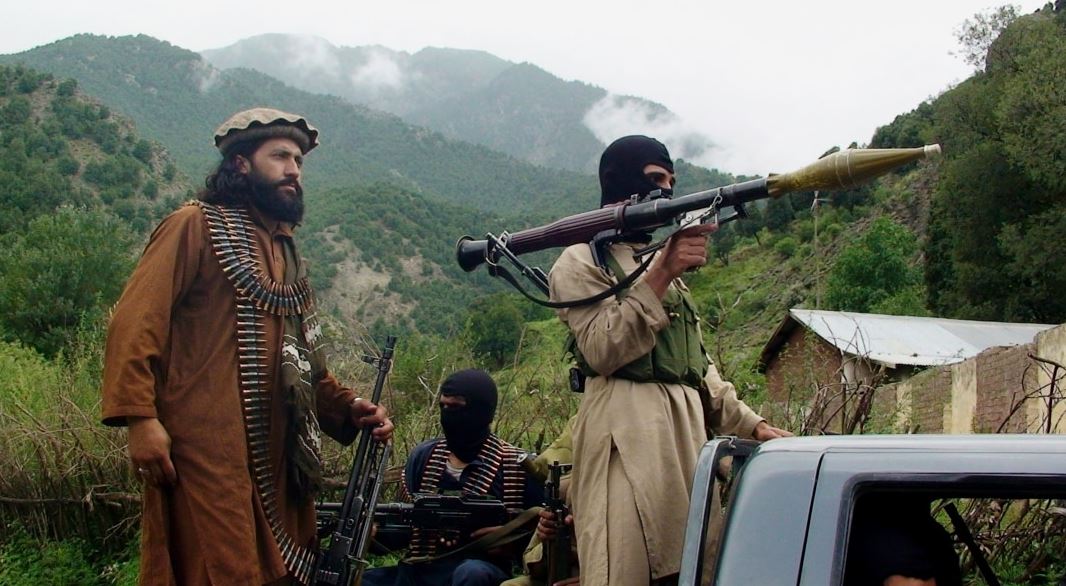
The Tehrik-i-Taliban Pakistan (TTP), a militant group, is at the core of such a crisis, as they are accused by Islamabad of seeking refuge in the Afghan territory to mount attacks in Pakistan. Following the reestablishment of the Afghan Taliban to power in 2021, Islamabad had anticipated that strategic cooperation would be realised due to the ideological endowment. Instead, there is an increasing trend in TTP-related violence, and it has deteriorated the internal security of Pakistan.
The situation in Pakistan is very straightforward; Kabul cannot afford to use its ground to attack a neighbour. It is even more complex with the Taliban in Afghanistan. They fail to realise that they are offering shelter to the TTP, yet their ideological and historical links make a bloody crackdown politically and militarily costly. The TTP views itself as part of an even broader jihadist movement; the very fact that the Afghan Taliban annihilates it is not a demand in itself, it is an ideological demand.
This is where the distrust is high. Islamabad feels betrayed. In the case of the US war in Afghanistan, the government of Pakistan was accused throughout the decades of offering a safe haven to the Taliban leaders of the Afghan terror organisation. This time around, the Pakistani officials state it is the reverse. Kabul contends that Pakistan is transferring the blame for internal failure and internal militancy.
The fact that the Durand Line war is also complicating the situation is not a secret. Historically, Afghanistan has never ratified the 1893 boundary, and tussles between Pakistan and Afghanistan have been occasioned by border fencing. The border posts have become a subject of irritation, and both sides accuse each other of being the instigators.
The local players are engaged in a frantic spectatorship. China has strongly intervened, expressed concern about the escalating tensions, and requested that both sides resolve the disagreements through negotiations. Stability in Afghanistan is critical to China’s Belt and Road interests and to the dominion of militancy in its western regions. Turkey has also been diplomatic, with Foreign Minister Hakan Fidan holding a round of talks with Pakistan’s Foreign Minister, Ishaq Dar, on the situation. Even former Afghan president Hamid Karzai has not been left behind, and he has said that Afghans will rescue their beloved nation.
The stakes are high. Prolonged war will only bring havoc to an already volatile area. Pakistan is grappling with the economic state of affairs, political fragmentation, and active militant threats. Afghanistan is diplomatically isolated and economically constrained, having a Taliban government. The two countries cannot afford to lose, yet neither appears prepared to surrender.
The present policy followed by Pakistan has been either coercive or based on negotiation. The airstrikes are full of determination, but also bring life to the Afghan opinion and hardliners who were part of the Taliban leadership. It is quite understandable that the call to act against the TTP is grounded in security concerns, but it does not take into account Kabul’s domestic politics. The Taliban is not a unitary state, and the groups do not agree on how to deal with external forces.
In the case of the Afghan Taliban, the calculus is no better either. Allowing the TTP to continue its operations will increase the likelihood of international criticism and regional isolation. However, striking it decisively may alienate ideological allies and provoke opposition in the country. The Taliban’s credibility is partly founded on the discourse of their resistance in fighting the domination of the foreign nation. Conceding to the Pakistani demands can be seen internally as a surrender.
The crisis also demonstrates that strategic depth as a doctrine is limited. Over the decades, Pakistan found a friendly Kabul government essential to its security against India. The Taliban was likely to do the same with its comeback. Instead, it has become a short-term and changeable relationship. The strategic depth has been changed to strategic drift.
What then are the options?
First of all, formal communication channels must be renewed by both sides. This must involve sharing intelligence, common border commissions, and good channels of communication to ensure that tactical incidents do not become strategic crises. Measures such as coordinated patrols or third-party policing would help build confidence.
Second, the region could be forced to mediate. China, Turkey, and possibly the Gulf states would be useful through the backchannel diplomacy. However, both the sovereignty of the Afghans and the Pakistani security interests should not be overlooked in the mediation process. Any feeling of being forced by an external force may not be helpful.
Third, Islamabad will be required to contend with its militancy in the country. Instability is also caused by domestic radicalisation and weak governance, though cross-border sanctuaries are also a contributor. This accusation against Kabul will not resolve Pakistan’s security dilemma.
Finally, but not least, Kabul must understand that accommodating or apparently accommodating transnational militants is a negative development towards its foreign policy of gaining international credibility. Another requirement of legitimacy is accountable state action.
This crisis has no shortcuts because it is historically founded, ideologically rooted, and based on mistrust. Each airstrike is a source of resentment; each accusation pushes them further apart. Nevertheless, the alternative situation, unregulated escalation, would be catastrophic to the two nations.
After all, it is not the TTP or border posts that are to blame for the crisis between Islamabad and Kabul. It is a question of whether the bonds of geography can enable the two neighbors to overcome the ghosts of the past and the temptations of the time’s vengeance. Without trust, it is not possible to have any strategy. And being lackadaisical, there is no way out.
The writer is a Professor, Department of International Relations, University of Chittagong. Email: [email protected]
