

In December 1971, the United States Under Secretary of State for Political Affairs Ural Alexis Johnson had commented during a meeting that the newly independent Bangladesh would be an “international basket case.” The then US National Security Advisor Henry Kissinger agreed with his assessment, and replied, “But not necessarily our basket case.”
More than five decades have passed since then, and throughout this period, Bangladesh has faced devastating floods, recurrent cyclones, a deadly famine, frequent political instability, persistent socio-economic crisis, and adverse effects of climate change. And yet, the gloomy prediction of Johnson and Kissinger has not come true.
At present, in terms of gross domestic product (GDP), Bangladesh is the world’s 34th largest economy valued at $455.16 billion. If we take into account purchasing power parity (PPP), the picture is more impressive, with Bangladesh having the world’s 25th largest economy valued at $1.62 trillion.
The country has achieved significant successes in terms of increasing the rate of literacy, improving public health, boosting the quality of life, enhancing life expectancy, lowering population growth, facilitating the empowerment of women, initiating primary level of industrialization and enabling the growth of a vibrant private sector.
In fact, in terms of socio-economic development, Bangladesh currently fares better in several spheres than its neighbours India and former overlord
Pakistan.
However, this is only the beginning, and the country has a long way to go before the long-cherished dream of creating a Golden Bengal is realized. Former US President Abraham Lincoln had remarked that the best way to predict the future is to create it. Hence, let us explore how the vision of a Golden Bengal can be brought into reality in the next 100 years.
Political inclusion and external balancing
While Bangladesh has apparently outgrown the times when political transition in the country was determined by coups and counter-coups, the country is yet to transform into a fully stable and pluralistic polity. Bangladeshi political culture is characterized by factionalism and polarization, and it is detrimental to the implementation of national goals.
However, if it becomes possible to draw the energetic and meritorious part of the young generation into politics, and if the political factions can agree with one another on a positive modus operandi, the country has the potential to develop an inclusive and pluralistic political system in the next decades. Moreover, it is highly necessary to eliminate violence, corruption, and other unfair practices from political life.
At the same time, it would be wiser for the state to develop a keen sense of nationalism and national unity among its population. Taking into account the increase in ethnic and religious conflicts in the region and throughout the world, the state should undertake its efforts to preserve inter-faith harmony, and undertake adequate political, administrative and economic measures to fully integrate ethnic minorities into the mainstream society. The state should not allow the conflict in the Chattogram Hill Tracts (CHT) to escalate, and should accord local self-government and equitable socio-economic benefits for the peoples of the CHT.
Meanwhile, the upcoming century is highly likely to witness an intense geopolitical competition between the US-led Western World on the one hand and China, Russia and their allies on the other hand. Owing to Bangladesh’s strategic location along the Indian Ocean, a number of external powers, including the US, the European Union (EU), China, India, Japan, Russia, and Turkey, are seeking to expand their influence over the country.
Currently, the income from the export of ready-made garments (RMG) and the remittances sent by millions of migrant workers constitute the two principal pillars of the Bangladesh economy
Bangladesh has so far carefully navigated this New Cold War, and it is likely to do so in the future. In the upcoming decades, Dhaka should resort to internal balancing through the expansion of its national military and economic power while pursuing external balancing by maintaining cordial and cooperative relations with all powers.
Bangladesh should maintain cooperative and mutually beneficial ties with neighbouring and regional states, but these ties should be based on reciprocity and mutual respect. In addition to enhancing its close ties with major Asian, European and North American states, Dhaka will have to search for new economic partners among the minor powers, particularly in Africa, Latin America, and Oceania.
Moreover, taking into account Bangladesh’s interests, it should push for growing multilateralism in international affairs, as international law and collective security are the best available tools to protect the country’s sovereignty and independence. Accordingly, the country should maintain its active cooperation with the United Nations (UN) system, and participate in regional and multilateral organizations, forums and mechanisms.
Through these, Bangladesh can turn itself into a stable and inclusive polity, and ensure its continued independence, sovereignty and territorial integrity in the next 100 years.
Socio-economic, financial, and infrastructural modernization
At present, Bangladesh is at the primary phase of industrialization, and its industrial sector primarily consists of light industries. With a GDP growth rate of 5.7 percent, the state is scheduled to graduate from the least developed country (LDC) status by the end of 2026, and is expected to become the world’s 25th largest economy by 2035. Currently, the income from the export of ready-made garments (RMG) and the remittances sent by millions of migrant workers constitute the two principal pillars of the Bangladesh economy.
However, Bangladesh should not remain permanently dependent on these two sectors. The country should diversify its export basket by developing other light industries, such as food processing, consumer goods, electronic appliances, and small vehicles. Afterwards, it should gradually shift towards the development of heavy industries, including steel, chemicals, shipbuilding, heavy machinery, and locomotives.
At the same time, Bangladesh should reap the fruits of the Fourth Industrial Revolution (4IR), and the rapid and effective implementation of Vision 2041, in the form of 5G Internet, 100% smart phone penetration and 100% internet penetration, would help the country along the way. Moreover, the country should effectively develop a Blue Economy by developing the administrative and technological tools to harness the resources of the Bay of Bengal. In addition, the state has the potential to develop a robust tourism industry.
Moreover, Bangladesh should prioritize the improvement of the quality of education for its young generation. The country has achieved considerable success in increasing the rate of literacy, yet the quality of education, from the primary level to the higher level, is quite unsatisfactory.
Accordingly, the country should undertake necessary measures, including the adequate training of teachers, the use of high-standard textbooks, the introduction of a uniform curriculum, the maintenance of uniform standards of education across all educational institutions, the curtailment of the commercialization of education, and the promotion of life-oriented education, to ensure a futuristic educational system for the country. At the same time, while the quality of medical education in the country is quite good, the country has to ensure affordable, advanced and universal healthcare for all its citizens.
Meanwhile, the financial sector of the country should be brought under strict supervision and regulation to control inflation, avoid bank runs, and strengthen the Bangladeshi taka (BDT). Taking the current geopolitical and geo-economic realities into consideration, the state should increase bilateral trade through the use of national currencies, and avoid concentrating its foreign reserves in the banks of any particular state. Hand in hand with all these, corruption should be strictly curtailed, and financial crimes, including money laundering, should be severely prosecuted.
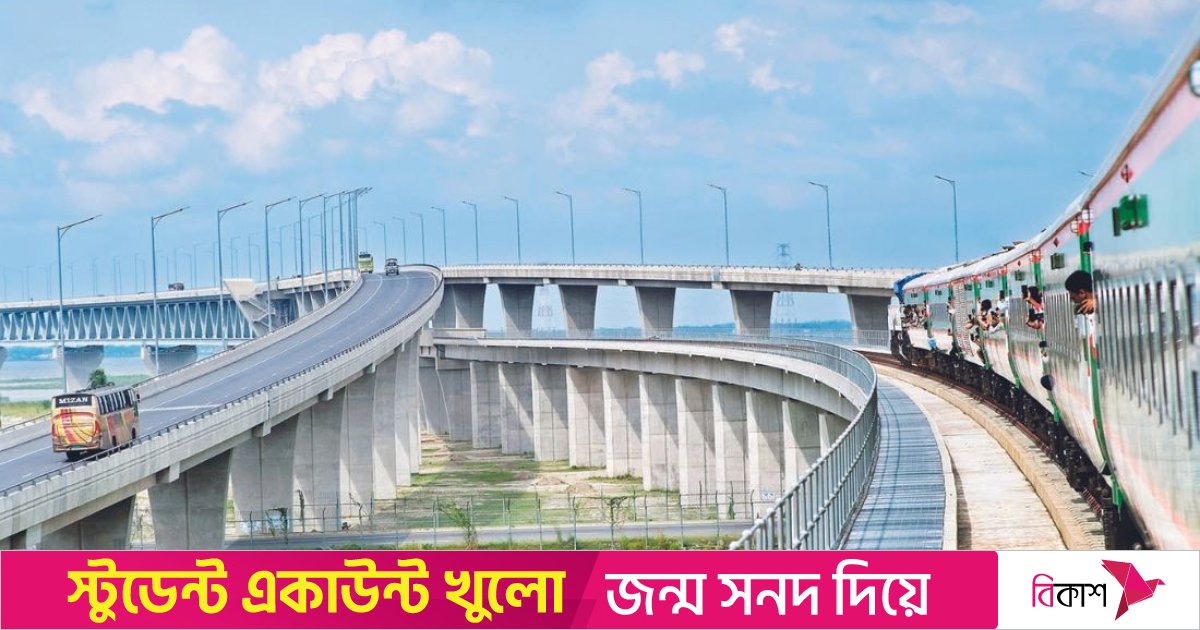
At present, the country is implementing numerous infrastructure projects, including the construction of highways, railways, tunnels, bridges, power plants, seaports, economic zones, and technology parks. Moreover, it is necessary to develop the infrastructure of not only major cities but also rural and peripheral areas.
The state should continue and accelerate the process, because developed infrastructure is central to the creation of a developed state. Last but not the least, it is likely that several southern districts of Bangladesh would be submerged by the sea by 2050 owing to climate change, and in that case, millions of citizens would become refugees. The state should prepare for the crisis and dedicate adequate resources to mitigating it.
Thus, if Bangladesh manages to pursue a vigorous and consistent policy to ensure socio-economic, financial and infrastructural modernization, the country can potentially transform into a developed country in the next 100 years.
Cultural and moral renaissance
The development of high culture is crucial to the construction of an advanced civilization. Located at the crossroads of South and Southeast Asia, Bangladesh is at the confluence of Islamic, Hindu, and Buddhist civilizations, both geographically and historically. Bangladeshi culture has been traditionally rich, with literature, music, drama, art, folklore, handicrafts, cuisine and festivals constituting its distinct elements.
Yet, the current Bangladeshi society is plagued with cultural and moral decay. The situation has to be reversed. The state should actively foster the conditions congenial to the flourishing of high-quality literature, music, art, films, series, drama, and other elements of culture. Finally, the state and the society should cooperate to instill moral values, based on the country’s traditions and religions, in the young generation to turn them into worthy citizens of a futuristic Bangladesh.
Conclusion
After five decades of its independence, Bangladesh has made the gloomy prediction about its future untrue. Now the state should strive to implement the political, diplomatic, economic, financial, and cultural measures that would create the foundation for the transformation of the country into a stable, pluralistic, and developed civilization-state. Thus, the vision of creating a Golden Bengal can be realized by the year 2124.
Md Himel Rahman is a Dhaka-based freelance analyst on international and strategic affairs.
