

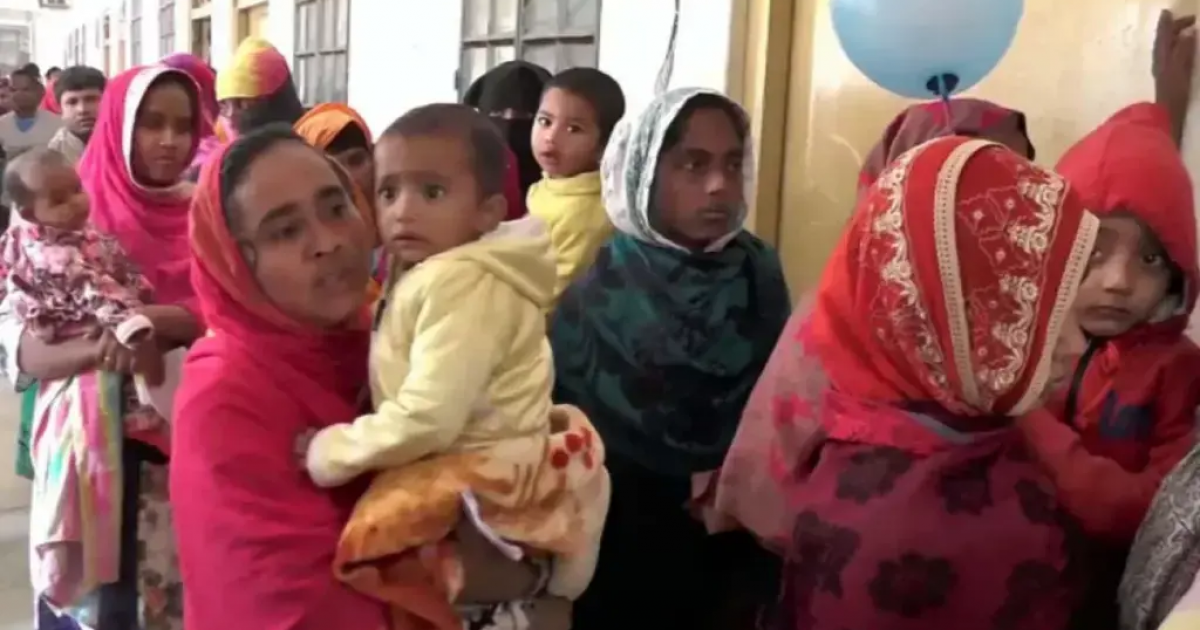
While Bangladesh has made commendable progress in public health since independence, particularly in achieving the Millennium Development Goals, recent reports from the Bangladesh Bureau of Statistics (BBS), released in March 2024, show concerning trends.
Regrettably, several vital health indicators, including child mortality and life expectancy, have declined.
According to the latest BBS report, the infant mortality rate increased from 21 to 27 per 1000 live births in 2023 compared to five years earlier. Similarly, newborn mortality rose from 15 to 20 per 1000 live births.
The mortality rate for under-five children climbed from 28 to 33 per thousand. Additionally, child marriage rates also increased, with 41.6% of girls marrying before 18, up from 40.9% in 2022and the marriages of under-15 girls rose from 6.5% to 8.2% worsening adolescent childbearing.
The 2022 Demographic & Health Survey (DHS) revealed that 24% of children under five are stunted, 22% are underweight, and 11% are wasted. These trends are deeply concerning to hinder the achievement of Sustainable Development Goals and Vision 2041,a goal set by the Bangladesh Government.
Bangladesh’s innovative community clinic based health system, launched in 1998, aimed to offer primary healthcare access to all. This model has significantly transformed the government healthcare services, particularly in rural areas.
While rural areas have benefitted from this system, these community clinics still encounter various challenges staff shortages and inadequate medical supplies, particularly in hard-to-reach areas.
Concern Worldwide, an international humanitarian organization working in different fields including the health and nutrition sector over 20 years with the collaboration of the government, is presently engaged in strengthening health systems in the districts of Patuakhali, Barguna, and Bhola with collaboration of nearly 100 community clinics, Union Health and Family Welfare Centres, and Upazila Health Complexes, benefitting over half a million individuals, also with Char Kukri Mukri witnessing its first institutional delivery in 16 years.
The community clinic model does not adequately serve urban areas, posing challenges for daily wage earners, pavement dwellers, and those in unorganized slums. Accessing quality healthcare services at an affordable cost becomes significantly challenging in such settings. With Bangladesh’s urban population projected to escalate to 44% by 2030, the rapid expansion exerts immense pressure on urban healthcare services and infrastructure.
The Urban Primary Health Care Services Delivery Project-II supported by the Local Government Division and funded by the Asian Development Bank, has ended in June2024. However, this impending closure poses a substantial risk to the healthcare access of millions of urban dwellers across 29 city corporations and municipalities, would exacerbate the situation in the healthcare sector.
To address the health challenges in Bangladesh, the government needs to focus on several key areas, based on insights from different programmes in the health sector.
First, Bangladesh should intensify its efforts to achieve universal health coverage, high-quality healthcare services for all at an affordable cost. The growing gap between the rich and the poor undermines the country’s principles of equality and government’s promise of inclusive growth. Increasing investments in healthcare, especially for women and children, is essential for building a healthier nation.
In rural areas, particularly at the union and sub-district levels, the healthcare system needs significant improvement. This includes providing trained personnel and ensuring the timely availability of medical supplies, especially community outreach in hard-to-reach areas, is crucial to encourage pregnant and lactating women to seek necessary care. Furthermore, well-trained midwives, are especially important for essential maternal care services, contributing significantly to universal health coverage.
It is imperative for the government must also continue the Urban Primary Health Care Services Delivery Project-II. This project is especially crucial for providing quality healthcare to millions of urban poor. Additionally, integrating government social protection schemes with health services can greatly benefit the urban population.
All healthcare providers must prioritize enhancing the integration of nutrition services should be a priority within primary healthcare centers. This includes providing health workers’ with comprehensive training to effectively screen for malnutrition in children, pregnant women, and breastfeeding mothers, and to promptly address any identified cases. Incorporating nutritional screening and education into immunization programs can help combat malnutrition more effectively.
Given Bangladesh’s large population and complex challenges, it is important to pursue diverse solutions tailored to both rural and urban areas. This includes fostering partnerships between the public and private sectors, particularly in urban areas, to extend healthcare services, easing the strain on the public health system. Exploring avenues to augment the revenues of city corporations and municipalities is essential, towards financial allocations for the provision of healthcare services in urban areas.
Finally, its important to increase community involvement along with the strategic use of technology in implementing and monitoring health service delivery at the grassroots level. This approach aligns with the government’s vision of SMART Bangladesh and can lead to better health and nutrition outcomes for the population.
To meet Bangladesh’s national health targets and Sustainable Development Goals (SDGs), it is crucial to enhance health and nutrition standards, especially for poor and marginalized communities. In addition, strengthening local health service providers in the urban health systems and empowering women to adopt and sustain improved health and nutrition practices is vital. Collaborative efforts with the government and local NGOs are necessary to reinforce health system. By focusing on these areas, Bangladesh can improve health outcomes and work towards achieving its SDGs, ensuring a healthier future for all citizens.
Manish Kumar Agrawal, country director, Concern Worldwide
