

A nation is ultimately judged not only by how it governs, but by how it creates.
Culture — music, theatre, cinema, folk traditions — is where a country explains itself to its people and to the world, like a shared diary. It’s how we remember where we came from, how we argue without fighting, and how we dream of a future that’s about more than just politics. When politics falters, culture often holds the line. When culture falters, the damage is quieter, but it runs deeper.
In Bangladesh, this isn’t just a nice theory; it’s our DNA – our own history bears this out. From the songs of the Language Movement to the poetry, theatre and music that sustained the Liberation War, culture here has never been ornamental. It has been foundational. Even during years of military rule and political repression, artists found ways to speak when institutions failed. Culture became refuge, resistance and record all at once.
But lately, something feels off.
Between 2024 and 2025, that space began to narrow. What unfolded was not a single sweeping ban or a headline-grabbing act of censorship. Instead, it arrived through a series of interruptions, uneasy silences and quiet withdrawals. Together, these left artists increasingly exposed and institutions conspicuously absent at the moments when protection mattered most.
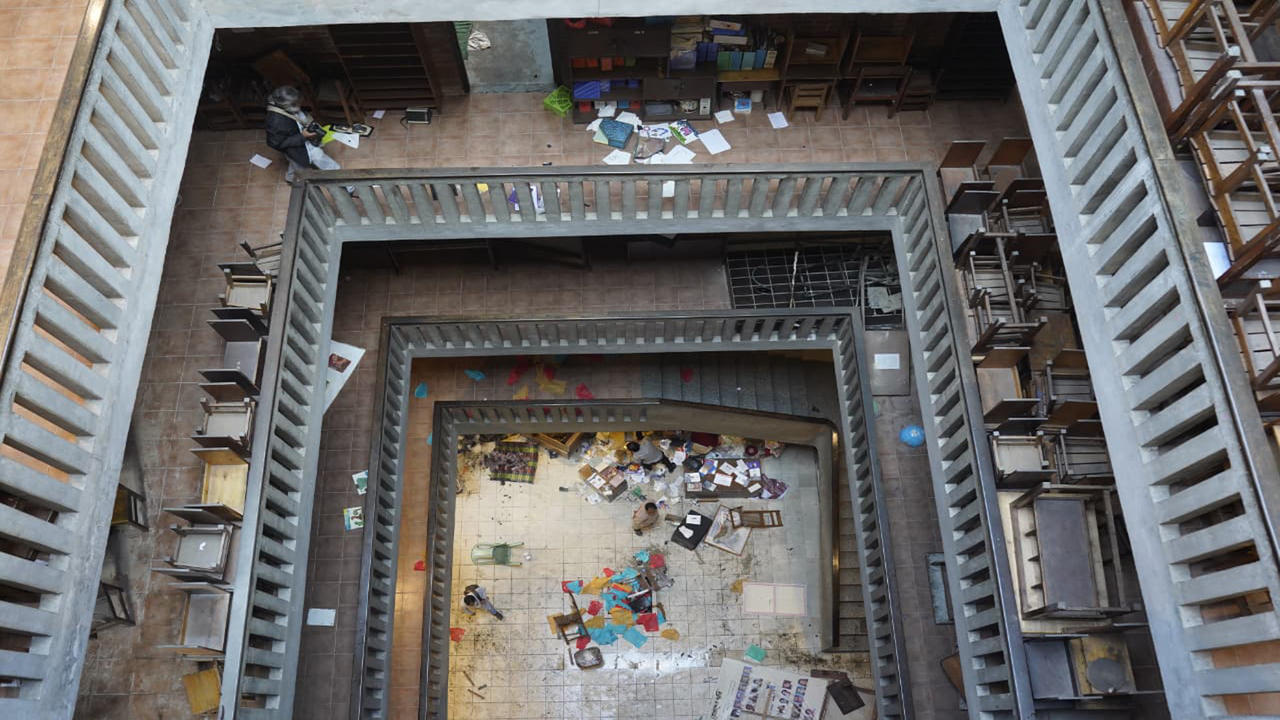
One of the earliest and most visible signs of strain in Bangladesh’s cultural space came in late 2024 at the Bangladesh Shilpakala Academy, the country’s premier cultural institution. A stage play by the Desh Natak troupe, Nityapuran, was stopped midway during its run after protesters gathered outside, and Syed Jamil Ahmed, then director general of the academy, said he halted the performance to ensure the safety of the audience and performers amid the unrest.
The image lingered: the head of a national cultural institution forced to stop a performance halfway through.
Soon after, Jamil resigned. In a public statement, he cited bureaucratic obstruction and alleged financial mismanagement within the academy, claiming that allocated funds were treated as ‘personal assets’. He said his request for a Tk165-crore budget was not fully met and questioned how cultural leadership could function without institutional cooperation, autonomy and trust.
His departure exposed a deeper vulnerability. Cultural institutions were being left structurally fragile, expected to absorb pressure from outside while receiving little backing from within.
When filmmaker Mostofa Sarwar Farooki was appointed adviser for cultural affairs, many in the arts community initially welcomed the decision. Farooki’s work had long engaged with social realities, and his appointment was seen as a move away from purely bureaucratic oversight towards lived cultural understanding.
That optimism has since faded.
One of the most pointed criticisms directed at the ministry under Farooki’s watch has been its failure to protect Bangladesh’s most vulnerable cultural practitioners: the Bauls.
Baul singers are custodians of a centuries-old syncretic tradition that resists rigid boundaries between faiths, classes and doctrines. Their music has long unsettled orthodoxy, but that discomfort was historically met with tolerance and, at times, deep respect.
Over the past year, that tolerance eroded.
Media reports documented incidents in which Baul artists were attacked, publicly humiliated and intimidated. In some cases, their hair was forcibly cut, an act widely recognised as symbolic violence. Cultural activists and scholars expected a firm and visible response from the Ministry of Cultural Affairs. What followed instead was silence.
No public campaign was launched to protect Bauls. No sustained legal or institutional response followed. For many artists, the conclusion was unavoidable: they were on their own.
The pattern extended beyond folk traditions. Concerts were cancelled or halted midway following objections from self-appointed groups. Several musical events were dropped citing ‘apprehensions’ rather than formal bans. In Sherpur, a traditional pala gaan performance was stopped. In most cases, the state offered no public defence of artistic expression.
Theatre, once a vital space for social critique, has also contracted. Directors and producers report fewer performances, shrinking audiences and declining sponsorship. While state grants exist, private sponsors have grown cautious, citing political sensitivity. Several practitioners say that even when funding is approved, uncertainty about safety discourages experimentation.
Cinema tells a similar story.
Under Farooki’s tenure, filmmakers had hoped for renewed attention to infrastructure, particularly at the Bangladesh Film Development Corporation (BFDC). Instead, directors complain that production continues to rely on outdated equipment, including cameras that have not been upgraded in years. Film output has declined, cinema halls continue to close or remain inactive, and audiences have been left with few works that resonate nationally or internationally.
This stagnation has drawn particular scrutiny given the scale of public spending.
According to official figures, the Ministry of Cultural Affairs’ allocation for the 2025–26 fiscal year stands at Tk824 crore, with Tk487 crore earmarked for operational expenses and Tk337 crore for development. In the first quarter alone, the ministry spent Tk104 crore, most of it on operations.
Bangladesh’s economic pressures are real. Government debt has grown, reaching more than Tk21 trillion by mid-2025, according to Ministry of Finance data. In such a climate, scrutiny of public spending is inevitable. Critics argue, however, that culture has become an easy casualty: frequently invoked, rarely defended.
A report by the daily Bonik Barta shed light on the extent to this expenditure had translated into cultural output. One economist observed that although ministry spending increased, “cultural activity in the country has declined since the interim government took charge”. He noted that forced stoppages of concerts, attacks on Baul artists and widespread apprehension among organisers were met with little visible initiative from the government. Culture, he warned, appeared to have slipped down the list of priorities.
The problem, critics argue, is not only how much is spent, but how selectively authority and protection are applied.
That inconsistency entered public debate following the arrest of actress Nusrat Faria earlier this year in connection with a legal case related to a film project, as reported in the media. While the matter remains before the courts, the incident triggered wider discussion within the cultural community.
The concern raised was not about due process, which must take its course, but about perceived selectivity. Commentators pointed out that others associated with the same project faced no comparable action. Public attention settled less on accusation than on contrast, particularly given that Farooki’s wife, actor Nusrat Imrose Tisha, a prominent industry figure, was not subjected to similar scrutiny.
No allegation has been formally made, and none should be inferred. But perception matters.
Culture depends not only on freedom, but on fairness. When artists begin to believe that proximity to power determines who is protected and who is exposed, trust erodes quickly.
That erosion is already visible.
Artists speak of being ‘tagged’ online, politically or ideologically, with real consequences for their work. Actors and musicians report losing projects after coordinated social media campaigns label them controversial. Theatre practitioners say sponsors have withdrawn funding citing political risk. Some have withdrawn quietly from public life; others have left the country altogether.
This retreat requires no official censorship. Fear does the work efficiently.
Even December, traditionally a month of solemn remembrance and cultural reflection, felt altered. The appearance of Pakistani artists during the month, including a performance by Atif Aslam on the night of December 13 at the Gulshan Club, drew attention not because of the artist himself, but because of timing. December in Bangladesh carries the weight of 1971, and cultural programming during this period has historically been approached with care.
The discomfort expressed by sections of the public reflected not hostility to cross-border art, but a sense that historical context was being handled casually rather than with deliberation.
A culture does not disappear in one dramatic moment. It fades gradually, when stages go dark, when songs are sung more softly, when stories remain untold because telling them feels unsafe.
Bangladesh’s cultural history shows that art can survive adversity, but it struggles to survive neglect.
What is most troubling about the past year is not that culture faced opposition. It always has. It is that it found so few guardians when it did. Institutions hesitated, leadership equivocated, and protection arrived late or not at all. Culture was asked to absorb pressure quietly, as though resilience alone were enough.
A nation does not lose its culture when artists stop creating. It loses it when those entrusted with protection step aside. When that happens, what disappears is not just performance or protest, but memory, dissent and imagination, the elements that allow a country to recognise itself.
