

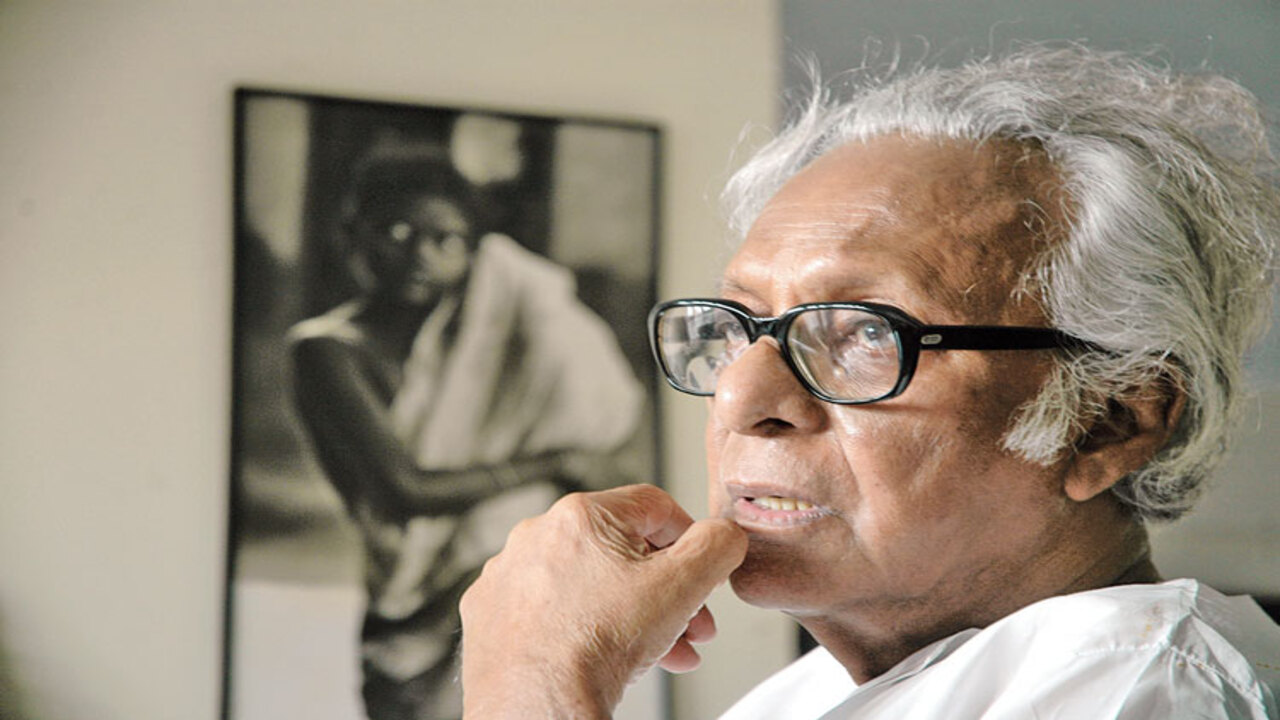
In the history of Bengali cinema, Mrinal Sen stands alongside Satyajit Ray and Ritwik Ghatak as one of its defining figures. Tuesday, December 30, marked his death anniversary. Sen passed away on this day in 2018, leaving behind a body of work that continues to provoke, disturb and inspire.
Mrinal Sen was not merely a filmmaker but a keen observer of society. Politics and social realities were inseparable in his cinema. His portrayal of the political unrest, the Naxalite movement and the moral decay of Kolkata during the 1960s and 1970s remains striking even today. Through films such as ‘Interview’, ‘Calcutta 71’ and ‘Padatik’, he captured the anxieties and contradictions of a city in turmoil.
He repeatedly challenged the grammar of conventional storytelling. His films often employed techniques of deliberate distancing, directly engaging the viewer, breaking the illusion of cinematic detachment and forcing engagement.
With ‘Bhuvan Shome’, he helped usher in India’s New Wave cinema, redefining both form and content. His exploration of middle-class uncertainty and moral compromise, seen in films such as ‘Ek Din Pratidin’ and ‘Kharij’, remains deeply relevant. Kharij, centred on the death of a teenage domestic worker, exposes the hypocrisy and indifference of the urban middle class in a way that still unsettles viewers.
Sen’s influence extended far beyond Bengal and India. His films were recognised at major international festivals including Cannes, Berlin, Venice and Moscow. In 1983, he received the Padma Bhushan from the Government of India, followed by the Dadasaheb Phalke Award in 2005, the country’s highest honour in cinema.
Mrinal Sen believed cinema was not simply a form of entertainment but a language of resistance. Though he is no longer with us, his films continue to question power, morality and social complacency.
Whenever society enters a period of crisis, and whenever the conscience of the middle class comes under scrutiny, Mrinal Sen’s cinema remains an essential point of reference.
