

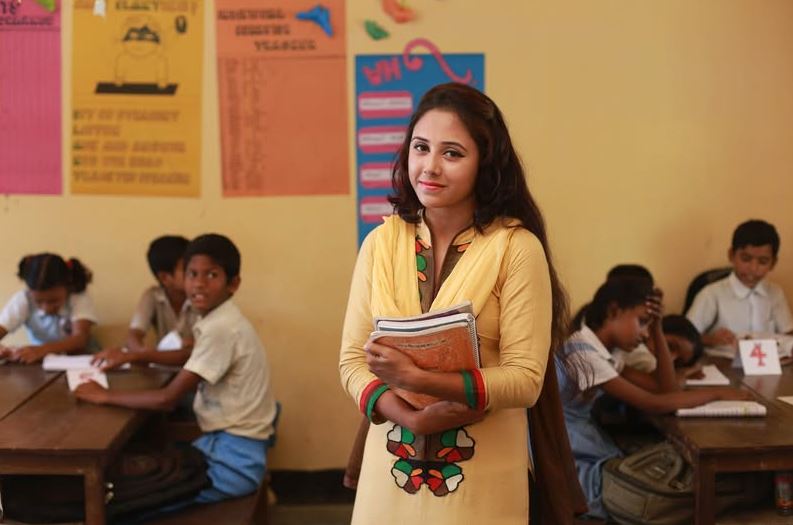
With nearly 19.5 million students enrolled from primary to higher secondary levels (BANBEIS, 2023), Bangladesh possesses one of the largest youth cohorts in South Asia, a demographic advantage that could fuel economic growth, technological innovation, and social mobility over the next two decades. Yet this promise is undermined by a structural constraint that has outlived its purpose- double shift schooling, which still operates in approximately 42 percent of institutions nationwide. Introduced in the 1980s as a temporary response to population pressure and limited infrastructure, the model has gradually become institutionalised, despite mounting evidence of its damaging effects on learning quality and equity.
In double-shift schools, students typically receive only 700–750 instructional hours annually, far below the 1,000–1,200 hours provided in globally competitive education systems such as Finland, Japan, South Korea, Singapore, Canada, and the UK. This instructional gap has measurable consequences. The World Bank confirms that students exposed to fewer than 900 learning hours annually perform significantly worse in mathematics, science, and reading comprehension.
As Bangladesh aspires to achieve upper-middle-income status and fulfill its Vision 2041, maintaining a fragmented, time-deficient schooling system risks producing a workforce ill-prepared for the demands of a knowledge-based economy. A universal single-shift school day up to Class 12 is no longer a luxury, it is a prerequisite for national competitiveness.
The urgency of this transition is amplified by the implementation of the National Curriculum Framework (NCF) 2022, which marks a decisive shift away from rote learning toward competency-based, inquiry-driven education. The new curriculum prioritises critical thinking, collaboration, creativity, digital literacy, and practical problem-solving- skills essential for navigating the Fourth Industrial Revolution. However, these pedagogical goals are fundamentally incompatible with compressed double-shift schedules that leave little room for experimentation, project-based learning, coding, robotics, laboratory work, or formative assessment.
A DSHE–EED joint assessment (2024) found that nearly 60 percent of higher secondary institutions fail to complete mandatory laboratory requirements in physics, chemistry, and biology, directly weakening STEM foundations and university preparedness. Bangladesh’s relative position in the region further highlights the cost of inaction. Vietnam, which transitioned largely to single-shift schooling over the past decade, now ranks among the top 20 globally in reading and science in PISA assessments. Malaysia and Turkey recorded 15–25 percent improvements in national examination outcomes within a few years of extending school days under unified schedules. For Bangladeshi students, longer and better-structured school days would allow systematic instruction in English communication, digital skills, entrepreneurship, career guidance, and global citizenship, areas increasingly decisive for international scholarships, overseas study, and cross-border employment. Without aligning instructional time and school structure with global norms, Bangladesh risks perpetuating an education system that delivers credentials without competence.
Beyond academic outcomes, the double-shift model poses serious risks to student health, emotional well-being, and holistic development. A DSHE survey (2023) reports that 47 percent of students experience high academic stress, while 41 percent suffer from chronic sleep deprivation, particularly those assigned to early-morning shifts who often leave home before 6 am. These conditions impair concentration, memory retention, and long-term mental health.
The WHO Bangladesh Office (2023) estimates that 19–22 percent of adolescents show symptoms of anxiety, a figure exacerbated by rushed school days, long commutes, and relentless dependence on private coaching. International evidence points to a clear alternative: high-performing systems such as Finland, Denmark, Australia, and Singapore begin classes no earlier than 8:30–9:00 a.m., aligning school schedules with adolescent sleep cycles and cognitive readiness. Equally important is the loss of structured time for extracurricular engagement under double-shift schooling. Sports, debates, science clubs, music, arts, scouting, swimming, and community service activities proven to enhance leadership, teamwork, and resilience are often sidelined. UNESCO (2023) notes that schools with regular extracurricular programs achieve up to 23 percent higher attendance and lower dropout rates, particularly among girls. In Bangladesh, where secondary-level dropout remains around 17 percent, expanding access to such activities could significantly reduce early marriage, social vulnerability, and disengagement from education.
Educators such as Mr. Samiul and Mrs. Khaleda have observed that double-shift schooling compromises students’ physical growth, mental well-being, and meaningful teacher-student interaction, ultimately driving families toward costly private tutoring. A single-shift system would allow schools not coaching centres to reclaim their central role in learning and character formation.
Admittedly, transitioning to nationwide single-shift schooling requires strategic, phased investment in infrastructure, teachers, and governance, but the returns far outweigh the costs. In many urban schools, the student-classroom ratio averages 53:1, nearly double the OECD benchmark of 25-30 students per class. According to EED (2024) estimates, Bangladesh will need 5,000-7,000 new academic buildings over the next decade to fully eliminate double shifts. A standard six-story facility with 24-30 classrooms costs approximately BDT18-22 crore, making a phased rollout starting in Dhaka, Chattogram, Narayanganj, Gazipur, Cumilla, and rapidly urbanising district towns both realistic and manageable.
Teacher recruitment is equally critical. With a secondary-level student-teacher ratio of 31:1, compared to 14:1 in OECD countries, Bangladesh must recruit 95,000-110,000 additional teachers to sustain a single-shift model. This investment would not only improve instructional quality but also generate substantial employment for educated youth. Strengthening teacher training institutions, enforcing continuous professional development, and offering incentives for rural service are essential to ensure national equity. Improved governance is another major gain- single-shift schools enable unified leadership, consistent supervision, stronger teacher collaboration, and deeper parental engagement. Education International (2021) found that teacher collaboration increases by 17 percent in unified-shift environments.
Most importantly, longer school days reduce reliance on private tuition, easing household financial pressure while allowing schools to integrate remedial support, innovation labs, counseling, and mentoring within regular hours. Ending double-shift schooling is therefore not merely an administrative reform it is a transformative investment in human capital, social equity, and Bangladesh’s future as a confident, globally competitive nation.
The writer is the Deputy Director-Faculty HR, North South University, and Former Vice-President, Dhaka University Journalists Association (DUJA)
