

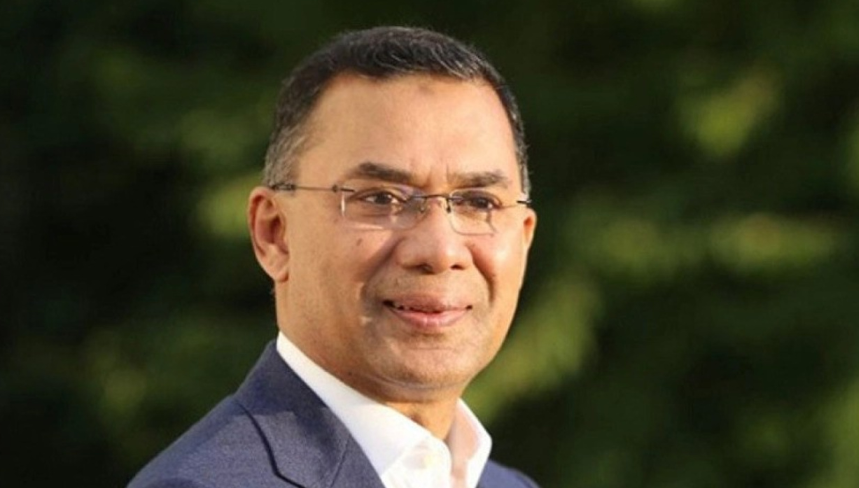
The potential for transformative change in Bangladesh’s society upon the return of post-exile Tarique Rahman hinges on a complex and contentious interplay of entrenched political dynamics and his own evolved leadership approach.
While his reappearance might stabilise a fragmented political scene, creating deeper societal change would require him to transcend his previous governance errors and effectively tackle systemic corruption, populist demagoguery and mobocracy.
His prolonged external exposure and de facto command of Bangladesh Nationalist Party (BNP) present a paradoxical opportunity, an infusion of reform-oriented rhetoric against a backdrop of deeply polarised and volatile socio-political terrain.
An affirmative perspective suggests his presence could act as a major catalyst. Bangladesh’s political ecosystem is deeply fractured, and with the prolonged illness of Khaleda Zia, a figure who enjoyed a degree of cross-spectrum respect, a significant void exists.
Tarique Rahman’s return from London would provide a central, physical figurehead for the major political party, potentially consolidating disparate factions. Furthermore, his repeated narratives, advocating for a corruption-free society, indicate an intent to curb the pervasive graft and extortion that have plagued the system, assuming his post-exile posture reflects genuine political maturity.
His consistent virtual contact with grassroots leaders could also be strengthened by physical proximity, granting better access to ground-level realities. This direct connection is seen by some as key to reining in mobocracy and re-linking a disconnected central command with the party’s base.
Finally, as the leader of the BNP, a party historically positioned as a centrist promoter of Bangladeshi nationalism, his leadership could reinforce a vital counter-narrative to both incumbent authoritarian tendencies and the alarming rise of ultra-right forces, whose disruptive presence has been felt in attacks on media and cultural institutions a week ago.
However, a skeptical view holds that profound systemic barriers will likely overwhelm individual intent. The networks of corruption and political patronage are so deeply entrenched that one leader, even at the apex, may lack the unilateral power to dismantle them.
Similarly, the drivers of mobocracy, deep-seated political frustration, economic desperation, and embedded violent factions, are complex socio-political phenomena that may defy top-down control from any single figure. Credibility and capacity also present significant challenges; past governance associations and a prolonged absence could hamper his ability to fill a national leadership void effectively or command universal respect within a splintered political landscape. The structural disconnection between central command and grassroots is an endemic issue within Bangladeshi politics, not easily resolved by the physical presence of one individual.
In conclusion, whether Tarique Rahman’s return sparks transformative change rests less on his individual presence and more on the rigidity or adaptability of the system itself. His leadership could potentially offer a centrist counterweight to competing authoritarian and extremist encroachments.
Yet, the structural inertia, entrenched patronage networks, and the sheer depth of societal division suggest profound limits. Thus, while his return may recalibrate opposition dynamics and amplify calls for accountability, the deeply rooted pathologies within Bangladesh’s political ecosystem are likely to persist, rendering any prospective transformation incremental and contested rather than immediate and foundational.
