

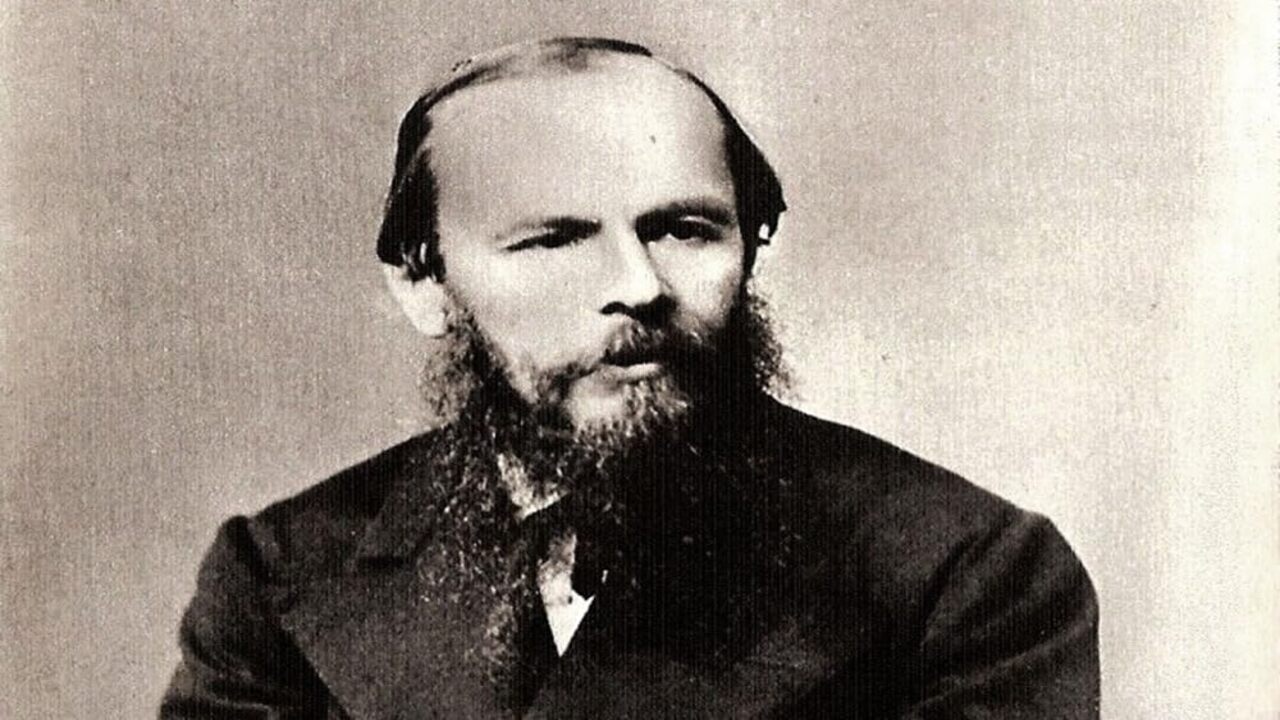

Today, February 9, marks the death anniversary of Fyodor Dostoevsky, widely regarded as one of the greatest writers and psychologists in world literature. Born on November 11, 1821 in Moscow, he was introduced to books early through fairy tales, legends, and the works of both Russian and foreign authors.
Dostoevsky lost his mother in 1837, at the age of 15, around the same time he left school to join the Nikolayev Military Engineering Institute. After graduating, he worked briefly as an engineer and led a lavish lifestyle, supplementing his income by translating books.
His literary career began in the mid-1840s with the publication of his debut novel, ‘Poor Folk’, which earned him a place in Saint Petersburg’s literary circles. He became involved with a group discussing banned books critical of Tsarist Russia. In 1849, he was arrested and sentenced to death, though his sentence was withdrawn at the last moment.
He subsequently spent four years in a Siberian prison camp, followed by six years of compulsory military service in exile. These experiences profoundly shaped his writing and deepened his insight into human suffering.
Dostoevsky’s works explore human psychology against the complex political, social and spiritual backdrop of 19th-century Russia. His fiction tackles philosophical and religious themes, establishing him as a keen observer of the human condition.
His 1864 novella ‘Notes from Underground’ is considered one of the earliest works of existentialist literature. Literary critics often describe him as one of the greatest psychologists in world literature.
Among his most celebrated works are ‘Crime and Punishment’ (1866), ‘The Idiot’ (1869), ‘Demons’ (1872) and ‘The Brothers Karamazov’ (1880). His body of work includes 11 novels, three novellas, 17 short stories and numerous essays and articles. In addition, he edited and published several journals, including ‘A Writer’s Diary’.
Dostoevsky travelled widely across Western Europe, developing a gambling addiction that caused financial difficulties and at times forced him to beg. Despite these challenges, he became one of Russia’s most widely read and highly respected writers.
His influences included Pushkin, Gogol, Shakespeare, Dickens, Balzac, Kant and Hegel. In turn, his works inspired figures such as Chekhov, Solzhenitsyn, Nietzsche, and Sartre.
Dostoevsky died in Saint Petersburg on 9 February 1881, yet his legacy endures. His works have been translated into more than 170 languages, and his exploration of morality, faith, guilt and the human psyche continues to captivate readers worldwide.
