

For many Bangladeshis living abroad, the first sight of Dhaka from an aircraft window carries a quiet emotional weight.
Familiar rivers, dense neighbourhoods and the sprawl of the capital often trigger a sense of belonging that words struggle to capture. It is a deeply personal feeling, yet one that is widely shared.
That emotional undercurrent framed Tarique Rahman’s return to Bangladesh after nearly 17 years in exile as acting chairman of the BNP. Dhaka’s sky was shrouded in mist that day, reminiscent of London, where he had spent much of his time away.
In his speech, he did not describe what it felt like to see his homeland again after so long. But some moments do not require verbal explanation. Removing his shoes and socks, stepping onto the grass, and touching the soil were gestures that resonated strongly.

For many observers, this silent act conveyed more than any formal political statement: a symbolic reconnection with his birthplace.
Such imagery matters in politics, particularly when a leader returns after prolonged exile. Symbols can mobilise emotion, signal continuity and raise expectations. Among the scenes of that day, this moment stood out for many as the most meaningful.
In his address, Tarique Rahman articulated a familiar but significant aspiration: a Bangladesh that is safe for people of all religions, classes, ages and genders. While the message itself was not new, its timing lent it added weight.
In a political climate shaped by questions of security, exclusion and trust, calls for safety and inclusivity are not merely rhetorical positions; they invite scrutiny over implementation.

25 December, therefore, marked more than a personal homecoming. Politically, it represented a moment of transition. Supporters expected emotional reassurance, while the wider public looked for direction.
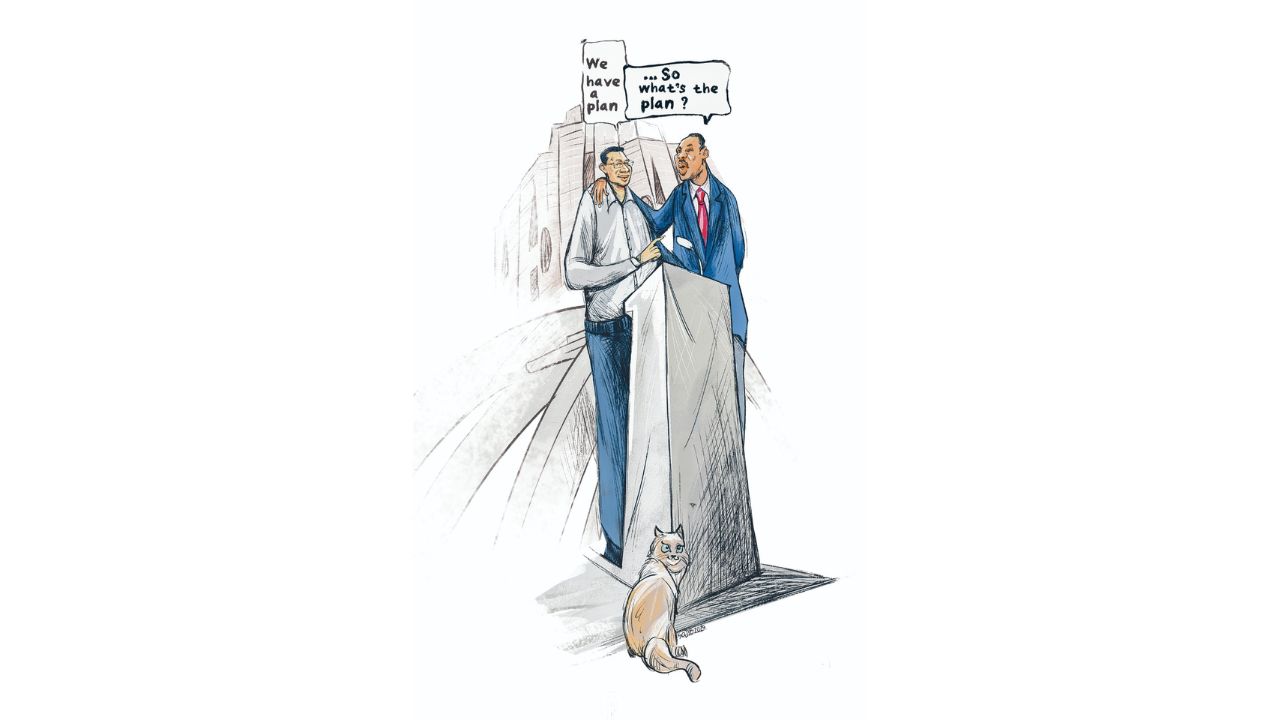
Tarique Rahman spoke of hope and referred to having a plan, yet he stopped short of outlining its specifics.
That omission creates space for analysis. In politics, the statement “I have a plan” is itself a promise. But in contemporary political discourse, promises are increasingly followed by practical questions.
What does the plan entail? How long will it take to implement? What will it cost? Where will the funding come from? How many people will benefit?

In Western political culture, such questions are often immediate and unavoidable when a leader claims readiness to govern. Having spent many years in London, expectations naturally arise that Tarique Rahman’s political outlook and language may reflect that environment.
As a result, public demand for clarity and detail following broad assurances is not unexpected.

Many see his return as the opening of a new chapter in Bangladesh’s political landscape. Whether that chapter remains anchored in emotion and symbolism, or evolves into a clearly defined roadmap with timelines, costs and institutional mechanisms, remains to be seen.
Political returns are moments. Governing plans, however, are journeys. How Tarique Rahman navigates that journey – moving from symbolic gestures to concrete policy articulation – will be the central question shaping the next phase of his political role.
