

She had no personal connection with her. She had never met her, nor was she a supporter of her political party. Yet she was crying.
She is the domestic aide in my household—a generous woman in her fifties. Her tears were for another woman: one who lost her husband at 35, entered politics, lost her younger son to prison, and saw her elder son forced to leave the country to save his life.
She said to me, “Sir, what did she really get in her life?”
I felt helpless. As a man, I struggled to relate. For a brief moment, I recalled my mother’s life and tried to understand why this woman was crying.
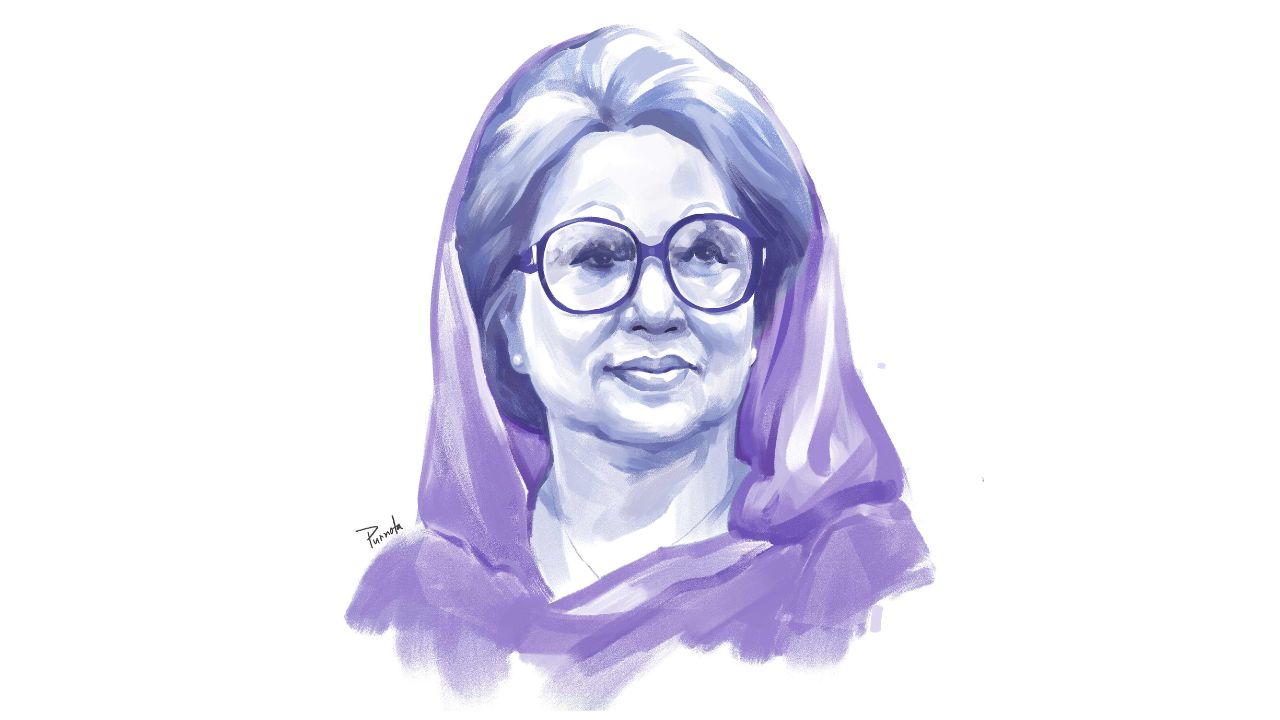
In the deeply patriarchal world of politics, Khaleda Zia dared to step forward and carve out her own space, doing so with dignity and resolve. She became an icon of women’s empowerment in a political landscape dominated by men. Compare her journey with that of the female leaders who emerged during the July movement: even their collective experiences of abuse do not come close to what she endured. Yet she never lost her composure. She stood firm and consistently argued for women’s empowerment through education.
In a country where development is often measured solely through infrastructure, she quietly dismantled the right-wing political agenda aimed at reversing women’s advancement. By introducing scholarships for girls at the school level, she opened doors for women to participate actively in politics, the economy, and other non-traditional spheres. This quiet but strategic intervention ensured that the other fifty percent of the population remained visible and relevant for decades.
If Begum Fazilatunnessa Mujib silently sustained Bangabandhu Sheikh Mujibur Rahman—managing the household and inspiring him during the darkest days—Begum Khaleda Zia quietly mobilised one of the strongest resistances to autocracy, keeping a political party intact for decades to uphold the dream of her husband, General Ziaur Rahman.
Many believed the BNP would vanish after being out of power for 17 years. They forgot that someone was standing quietly yet firmly protecting her dignity, the dignity of her party, and a political vision. Through her sustained commitment to women’s education, she emerged as one of the most significant political figures of post-independence Bangladesh.
What will likely make Khaleda Zia a subject of political study for years to come is her personal struggle and her carrying forward the legacy of a husband who was a military ruler, yet one whom even critics rarely accused of economic corruption. Allegations were also raised against her, a common tactic used to tarnish opposition leaders in this country, but she resisted them with resolve.
The political bulldozer that sought to destroy her image ultimately proved counterproductive. Ordinary people never fully believed those allegations, and even after 17 years of repression, nothing could be conclusively established. When she died, millions poured into the streets for her funeral. Yet it is important to remember that those visible on the streets were mostly men. Millions of women could not attend—women like our domestic aide—who mourned and prayed quietly at home. If Khaleda Zia’s party comes in power through the next election, I hope the leaders will not forget them!
