

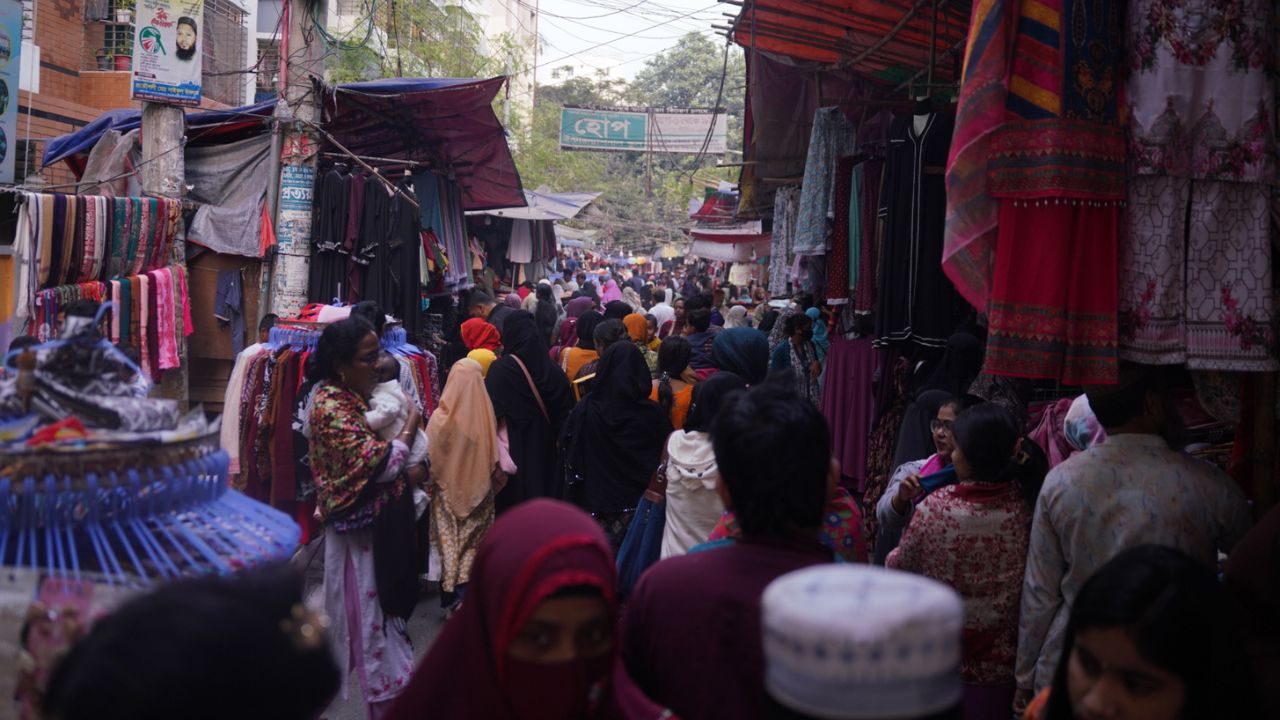
Mirpur Road at Mirpur 13 is supposed to move people forward. Instead, it stands still. Near Hope Market, the road narrows without warning. Not because of construction but because half of it is gone. Street vendors have taken over one side of the main road.

Clothes, ornaments, kitchen wares, showpieces, shoes and many food carts are stacked here close together. There is barely any space to walk. Pedestrians step down from the footpath. They walk on the road while buses brush past them. Rickshaws squeeze through gaps. One wrong step can mean disaster.
This is a main road. Here, traffic should flow, but it doesn’t. Cars crawl, buses stop randomly, and auto rickshaws jam every opening. Horns scream without result. Accidents are not rare here, they are expected.

As evening falls, the situation worsens. Officegoers return home. Students pour out of coaching centres. Schools and colleges nearby are empty at the same time. The crowd thickens and the road shrinks further. Hope Market becomes a choke point.

People push; vehicles compete for inches, and tempers rise. In this chaos, another danger moves quietly, pickpockets. They blend into the crowd. A small push, a quick hand and your phone and wallet might go missing. Victims often realise it too late, and there is no space to chase. No clear direction to run.

Women walk cautiously, parents grip their children’s hands tighter, and students look over their shoulders. This road connects lives to education centres, homes, and markets. Yet it fails the people who depend on it.

Street vendors need livelihoods. But roads are not markets and footpaths are not optional. Mirpur 13 does not lack movement, it lacks management. Until order returns, the road will remain a risk. Not just an inconvenience, but a daily test of patience and safety, and every evening, the road disappears again.
