

Nazmul Hasan Siyam, JU:
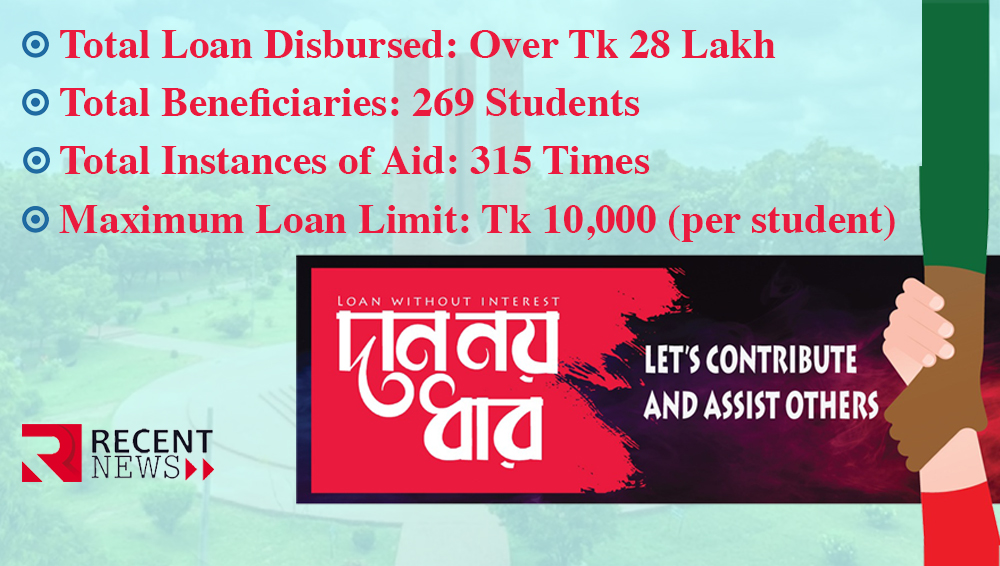
In a world where financial aid is often synonymous with pity, a silent revolution at Jahangirnagar University is redefining student support by replacing the weight of charity with the empowerment of trust. Moving away from traditional charity or pity, a group of former students established a unique humanitarian stream titled “Dan Noy, Dhar” (Not Charity, but a Loan). Over the last five years, this initiative has provided more than Tk 28 lakh in interest-free loans to 269 students, proving that assistance is not about mercy, but a bridge of responsibility and dignity.
Trust Over Bureaucracy
The initiative began its journey on April 24, 2020, within the Environmental Sciences department. The primary goal was to provide interest-free financial support to students facing temporary financial hardships without the hurdles of institutional bureaucracy. Based entirely on trust, the project quickly gained popularity.
During the pandemic, many students struggled to afford essential tools like smartphones, laptops, or internet connections for online classes. Others were burdened by family medical expenses. “Dan Noy, Dhar” stepped in as a reliable shadow of support, offering loans that maintained the students’ dignity and self-respect.
Transparency and Growth
Operated by a group of dedicated former students, the fund is built through voluntary donations. Over five years, approximately Tk 28 lakh has been distributed across 315 instances of assistance. Currently, a student can borrow up to Tk 10,000, with flexibility allowed for special cases. Students repay the amount according to their ability, without any interest or external pressure.
The organization’s core strength lies in its absolute transparency. All transaction data and fund statuses are published on their own website, ensuring donors that their contributions reach those genuinely in need.
A Vision for the Future
Founded by Md. Rokibul Hessen, an alumnus of the first batch of JU’s Environmental Sciences department, the initiative aims to protect student dignity. Hessen, who is the proprietor of a private consultancy firm, believes that lending money rather than giving it as charity empowers students.
The organization is now planning to expand its reach by opening branches in other universities, medical colleges, and engineering institutes across the country. Professor Syed Hafizur Rahman, the chief advisor of the organization, noted that while it started within one department, it has now expanded to the entire university.
Beyond financial aid, the initiative creates a sense of “extra responsibility” among students, who often use the loans to purchase bicycles, laptops, or to meet essential needs. It also serves as a vital bridge between former and current students, fostering a cycle of empathy and trust.
