

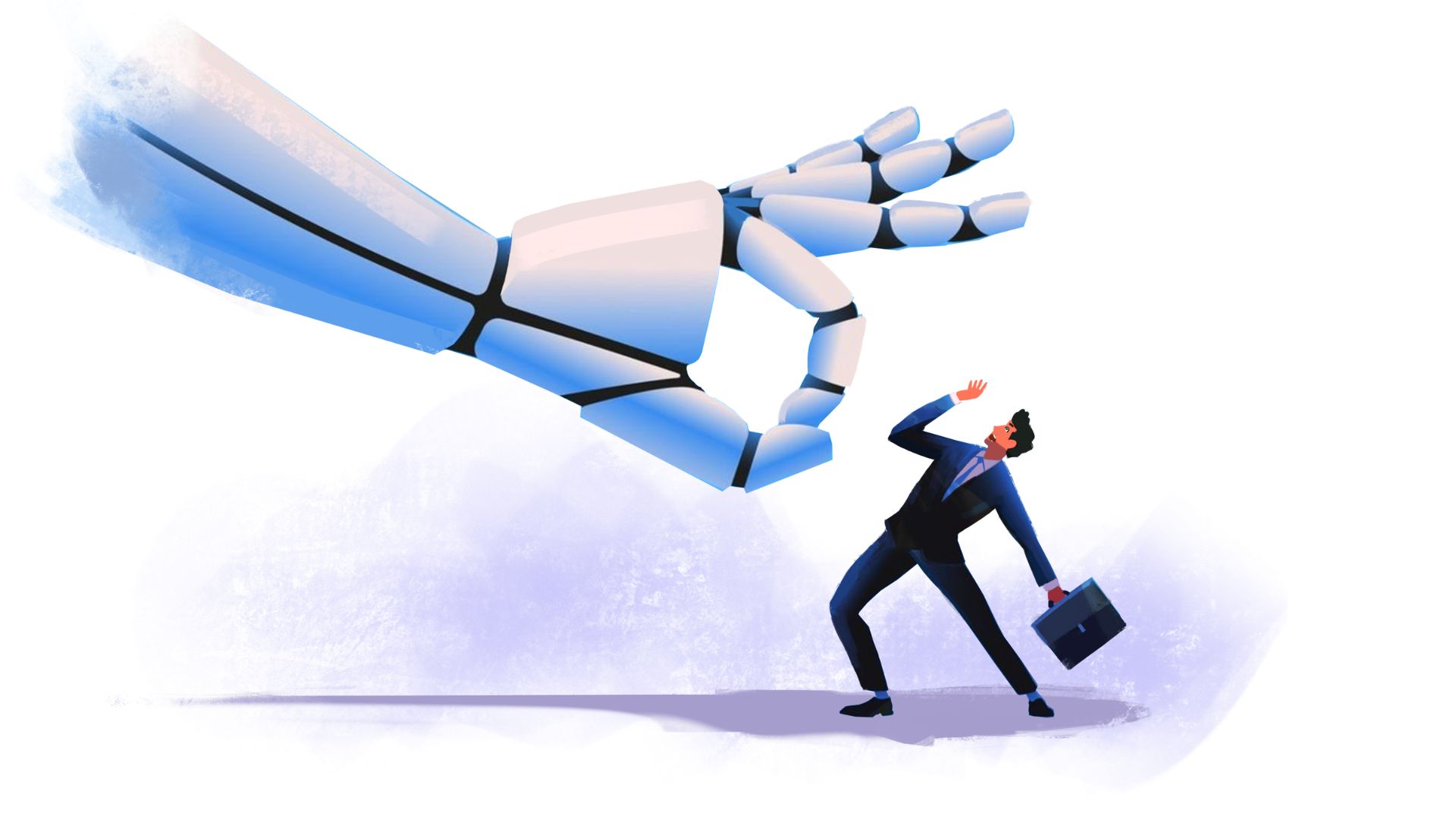

There was a time when the sound of a sewing machine meant livelihood. Now, in factories around the world, that sound is slowly being replaced by machines and automated systems. Inside factories, warehouses and offices, work that once needed many hands can now be done by a few people with machines. For many workers, there is a quiet threat. If machines can do the job, what happens to the people they replace?
The concern is real. A joint study by researchers from the University of Pennsylvania and OpenAI found that educated white-collar workers are among those most likely to be affected by workforce automation. PwC estimates that by the mid-2030s, up to 30 per cent of global jobs could be automated. Going further, a report from MIT and Boston University projects that AI could displace as many as two million manufacturing workers by the end of this year.


For Bangladesh, the risks are especially high. The ready-made garment sector remains the backbone of the economy, contributing roughly 84 per cent of export earnings and employing millions. It is also one of the sectors where the effects of automation are becoming visible the fastest. A UNESCO report on AI readiness warns that nearly 40 per cent of the country’s workforce could be at risk due to artificial intelligence and automation.
Inside garment factories, the shift is gradual but clear. Workers still sit in long rows, guiding fabric through sewing machines. But just a few steps away, automated systems now cut materials with speed and precision that manual labour cannot match.
In warehouses, digital tools track inventory and direct workers with minimal input. What once required teams of people can now be managed by a smaller, more technically skilled group. The efficiency gains are real, but so is the reduction in jobs.
A garment factory owner in Dhaka, who chose to remain anonymous, described the decision to automate as “unavoidable.” Global buyers demand faster delivery and consistent quality, often at lower prices. “If we do not modernise, we lose orders,” he said.
Over the past few years, his factory has reduced its workforce by nearly 25 per cent while maintaining similar output. Some workers were retrained to operate and maintain machines, but many struggled to make that transition. “The machines are easy to install,” he said. “Helping people adapt is much harder.”
For workers, the impact is rarely captured fully in statistics. Robiur Rahman’s experience reflects a pattern seen across the sector. He began his career operating manual machines in a sweater factory. When that factory shut down, he found work in a more modern facility and slowly learned to handle automated equipment.
But the cycle repeated itself. That factory also failed to compete with larger producers and closed its doors. Eventually, Robiur left the industry altogether. Looking back, he does not see technology as an enemy. “AI will not remove all jobs,” he said. “But it will change what those jobs are.”
Amid these concerns. Professor Abdur Razzak, chairman of the CSE department at the University of Dhaka, suggests looking beyond immediate fears. He points out that technologically advanced nations like Japan and South Korea, where robots assemble complex cars in under an hour, have not seen their job markets collapse. In fact, they continue to recruit workers from countries like Bangladesh.
“The arrival of new technology does not mean the end of work,” Professor Razzak said. “It means work changes its shape.” His idea is simple. Fear of technology has followed every industrial shift in history, and each time, new forms of employment have eventually emerged. The focus, he believes, should be on learning how to work alongside technology.
Still, this shift does not happen on its own. It depends on access to training, education and support systems that many workers currently lack. A sewing machine operator cannot easily become a technician without guidance and opportunity. Without structured reskilling programmes, the gap between those who can or cannot adapt, may grow wider.
Automation is not only about machines. It is also about people trying to keep up with change, each at a different pace. What happens next will depend not just on technology, but on how people and societies respond to it.
Machines are redefining jobs. The question is whether the people are being left behind. For Bangladesh, where millions depend on labour-intensive industries, the real test lies in managing this transition.
