

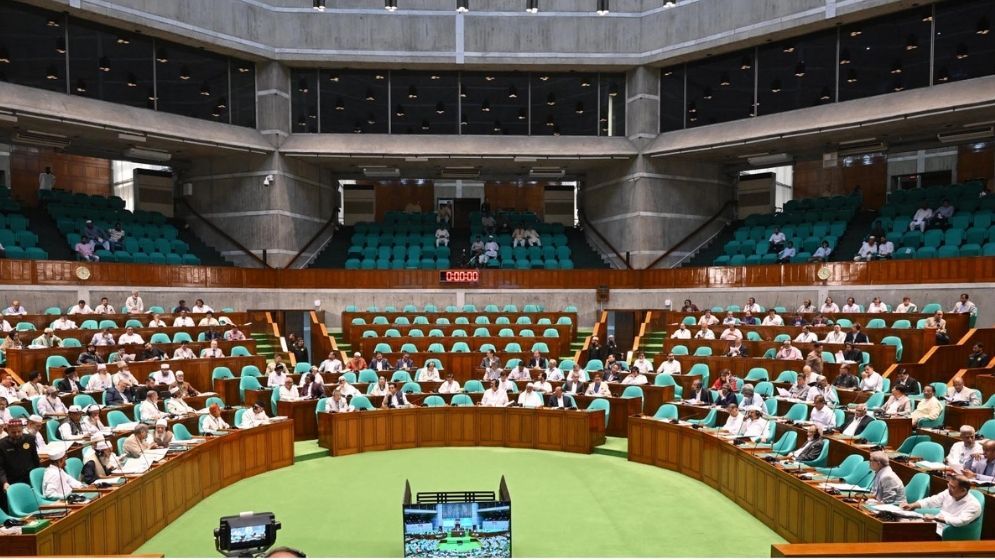
The Jatiya Sangsad on Wednesday passed the Invest Bangladesh Bill, 2026, paving the way for the establishment of the Invest Bangladesh Authority to bring all investment-related services under a single umbrella.
The new law provides for the dissolution of the Bangladesh Investment Development Authority (BIDA), the Bangladesh Public-Private Partnership Authority (PPPA) and the Bangladesh Economic Zones Authority (BEZA).
According to the government, the legislation will help attract both domestic and foreign investment, create employment opportunities and improve the country’s overall investment climate by providing a more business-friendly environment.
On behalf of Prime Minister Tarique Rahman, Home Minister Salahuddin Ahmed placed the bill before the House for immediate consideration, drawing objections from opposition lawmakers.
The legislation seeks to bring economic zones, free trade zones and other designated industrial areas under a coordinated framework, while introducing service delivery standards and timeframes for licences and approvals. It also provides for all investment- and business-related services to be delivered through a single digital platform.
Under the law, any industrial establishment required to pay royalties, technical know-how fees, technical assistance fees or franchise fees to a foreign individual or organisation must apply to the authority in the prescribed manner for approval of the amount payable.
The legislation further provides that the royalty or fee determined by the authority will be payable by the industrial establishment concerned.
Opposition lawmakers objected to the bill, arguing that they had not received the relevant documents at least three days before its introduction in the House, as required under parliamentary rules.
They also questioned the government’s decision to seek immediate passage of the bill without allowing sufficient time for scrutiny and debate.
Opposition lawmaker Nazibur Rahman urged the minister to refer the bill to the relevant parliamentary standing committee for review before its passage.
“We do not know what errors or shortcomings the bill may contain or why there is such urgency. Nor do we know whether any other interests are involved,” he said.
Responding to the objections, the home minister urged lawmakers to support the bill, saying it was essential for the country’s economic development.
He acknowledged that it had been parliamentary practice since the second parliament to refer bills to the relevant standing committees, but argued that the proposed legislation did not introduce any new legal provisions.
The minister said the law was intended to merge several authorities established under different laws over the years to eliminate overlapping functions and provide more efficient services to investors.
