

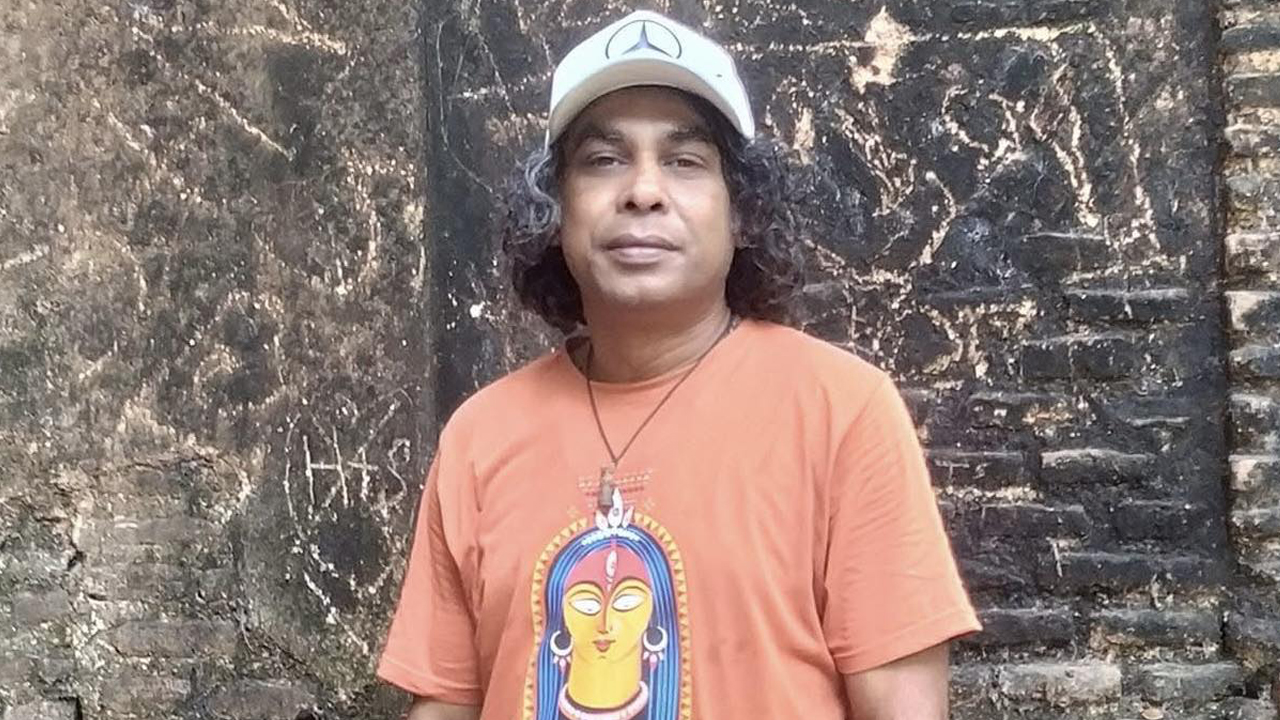

Rabi Dewan, one of Bangladesh’s noted film art directors, was born in Dhaka’s Jatrabari area, although his ancestral home is in Savar. He grew up in the capital and, during his adolescence, joined the children’s programme ‘Kochi Kachar Aashor’, where he came into close contact with cultural figures such as Sufia Kamal and Hashem Khan. This exposure played a significant role in shaping his artistic sensibility.
Later, while studying at the Faculty of Fine Arts at Dhaka University, he developed an interest in acting, stage design, lighting and the interplay of light and shadow. Over time, this fascination gradually drew him towards art direction. His journey in the field began in the late 1990s and continues to this day.


According to Rabi, despite Bangladesh’s rich cinematic history, art direction has never established a strong professional foundation in the country. He believes the sector has long suffered from a lack of professionalism and remains one of the most undervalued areas in filmmaking. Recognition is limited and remuneration is often inadequate, with payments sometimes delayed or never made.
Because of these realities, he admits that he often discourages young people from entering the profession. In his words, surviving in this field is difficult, let alone supporting a family. He himself never married, having prioritised his artistic passion over settling down, and now feels that decision may have been for the best.
Although film budgets can be substantial, the portion allocated to art direction is typically minimal, despite the department’s crucial role in shaping visual atmosphere, authenticity and aesthetic appeal. While art direction is highly valued in international cinema, it rarely receives similar recognition in Bangladesh. Only a few names, such as Uttam Goha and Tarun Ghosh, have gained wider recognition, while many others remain largely unknown.
Another persistent problem, he says, is unpaid dues. Producers frequently delay payments, yet workers are often reluctant to speak out due to personal relationships or professional sensitivities. The absence of a strong organisation representing art directors also makes collective advocacy difficult, leaving room for continued exploitation.
Rabi initially began his creative journey in theatre, performing as an actor during his university years. However, he soon shifted his focus entirely to art direction, leaving acting behind. His film career began as an assistant art director with Tareque Masud’s acclaimed film ‘Matir Moina’ (The Clay Bird). He later served as the lead art director on Masud’s ‘Noroshundor’.
Rabi speaks with deep emotion about Tareque Masud, describing him as an extraordinary filmmaker who granted him significant creative freedom. He recalls that their artistic sensibilities were closely aligned and working with Masud remains one of the most fortunate experiences of his career.
His greatest inspiration comes from legendary Indian art director Bansi Chandragupta, known for his work on Satyajit Ray’s ‘Pather Panchali’ and ‘Charulata’. In Bangladesh, his direct mentor was National Film Award-winning art director Tarun Ghosh.
Over the years, Rabi has worked as art director on around 40 films, including both feature-length and short productions. Among his notable projects are Morshedul Islam’s ‘Priyotomeshu’, Nurul Alam Atique’s ‘Laal Moroger Jhuti’ and Khandaker Sumon’s ‘Saatao’, which won Best Film at the 2023 National Film Awards. These films allowed him considerable creative freedom to build visual worlds through his imagination and aesthetic vision. Many of the projects he has worked on have also received recognition at national and international levels.
Despite his long career, Rabi says he has no personal regrets about not receiving major individual awards. For him, the success of a film feels like the achievement of a child he helped nurture.
At present, he is involved in several new government grant-funded films, including ‘Antyestikriya’, ‘Namhin Gotrohin’, ‘Shobuj Pakhi’, ‘Manusher Bagan’, ‘Bakita Itihash’, ‘Jibon Amar Bon’, ‘File Number 606’ and others.
