

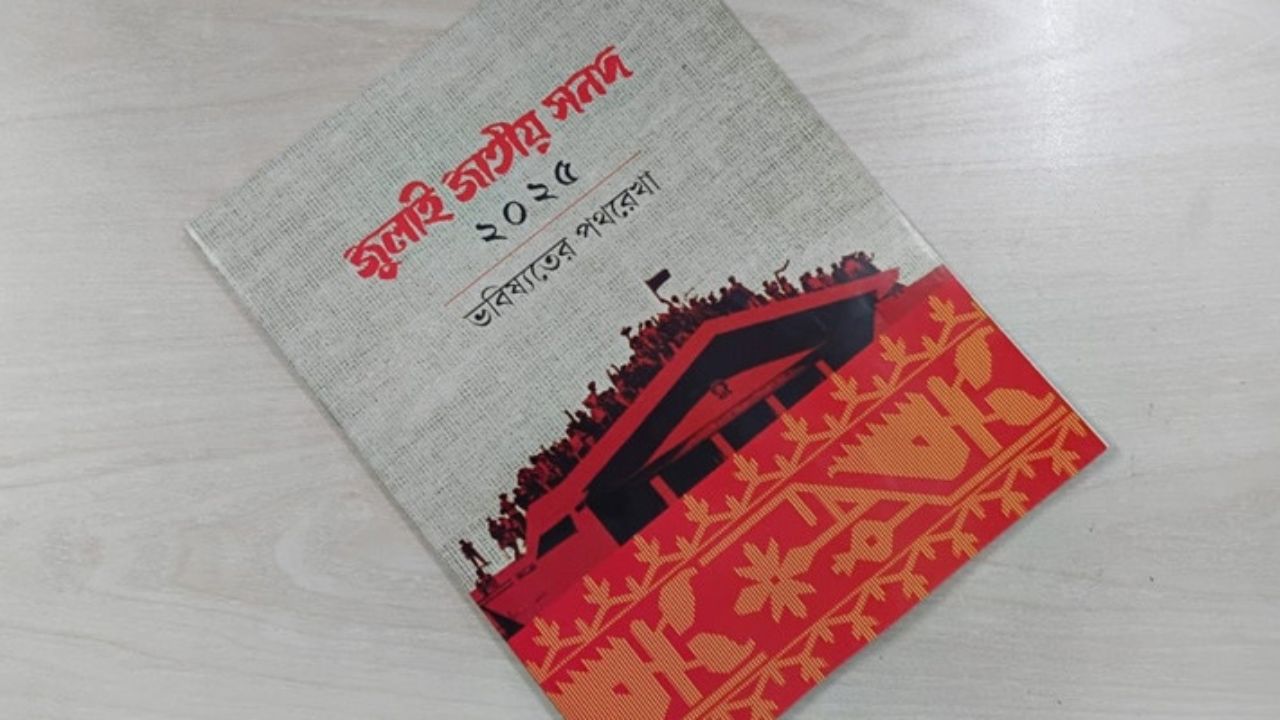

Political tensions are rising in Bangladesh over the implementation of the July Charter, with the opposition alliance warning it could launch street protests if the government fails to convene the Constitution Reform Council by Sunday.
The opposition bloc, led by Jamaat-e-Islami and comprising an 11-party electoral alliance, says the council must be convened in accordance with the July Charter. Otherwise, it plans to move towards a political movement after Eid.


Governing BNP, however, has maintained that any decisions related to constitutional reform must remain within the framework of the existing constitution and parliamentary procedures.
Differences between the government and opposition over implementing the July Charter have persisted since the new parliament was formed.
One major point of contention concerns the oath of office for members of the Constitution Reform Council.
Opposition lawmakers took oaths both as members of parliament and as members of the reform council. BNP lawmakers, however, took oath only as members of parliament.
The opposition argues that the reform process cannot proceed without the council being formally convened.
The warning came after a meeting of the liaison committee of the 11-party alliance at Jamaat-e-Islami’s central office in Dhaka on Saturday.
Speaking at a press conference afterwards, Hamidur Rahman Azad, assistant secretary-general of Jamaat and coordinator of the alliance’s liaison committee, said Sunday was the government’s final opportunity to act.
“According to the July Charter, tomorrow is the last day for the government to call the session of the Constitution Reform Council,” he said.
“If the session is not convened quickly, the government will have to bear responsibility. Ignoring the people’s mandate will not absolve them before the nation.”
Azad said the July directives had already led to the issuance of a presidential order, followed by a referendum in which around 70 percent of voters supported the proposal.
On the same day, voters also elected members to both the national parliament and the reform council, with the results later published in the official gazette.
“For that reason, it is the government’s duty to implement the process based on the people’s verdict,” he said, accusing BNP lawmakers of betraying public expectations by refusing to take the reform council oath.
The governing party has insisted that constitutional reform must proceed through parliamentary discussion.
Speaking to reporters after a meeting of the Parliament’s Advisory Committee on Saturday, Home Minister Salahuddin Ahmed, who is also a member of BNP’s standing committee, said the issue could be discussed in parliament.
When asked about the opposition’s threat to launch street protests, he said, “That is their political decision. The opposition can speak about it.”
He had earlier said the government remained committed to implementing the July Charter provisions, with the exception of certain dissenting notes.
Opposition leaders say they are preparing for possible political action if their demands are not met.
They said a meeting of top alliance leaders could be held after Eid to determine the next course of action, with 28 March being considered as a possible date.
Rashed Prodhan, vice-president and spokesperson of the Jatiya Ganatantrik Party (Jagpa), told TIMES of Bangladesh that no final programme had yet been decided.
He said the alliance would wait for Bangladesh Khelafat Majlis Ameer Mamunul Haque, who is currently abroad performing Umrah, to return before finalising any plans.
“The opposition will not compromise on the reform issue,” he said.
Opposition chief whip and convenor of National Citizen Party (NCP), Nahid Islam, said the alliance had repeatedly urged BNP lawmakers to take oath as members of the reform council alongside their parliamentary oath.
“The government has still not taken any effective steps,” he said.
“If the situation continues, it is natural that the opposition will take programmes outside parliament.”
Observers say the dispute over implementing the July Charter is steadily increasing political tensions between the government and the opposition.
With the deadline approaching and Eid holidays ahead, analysts believe the issue could intensify political mobilisation in the coming weeks.
