

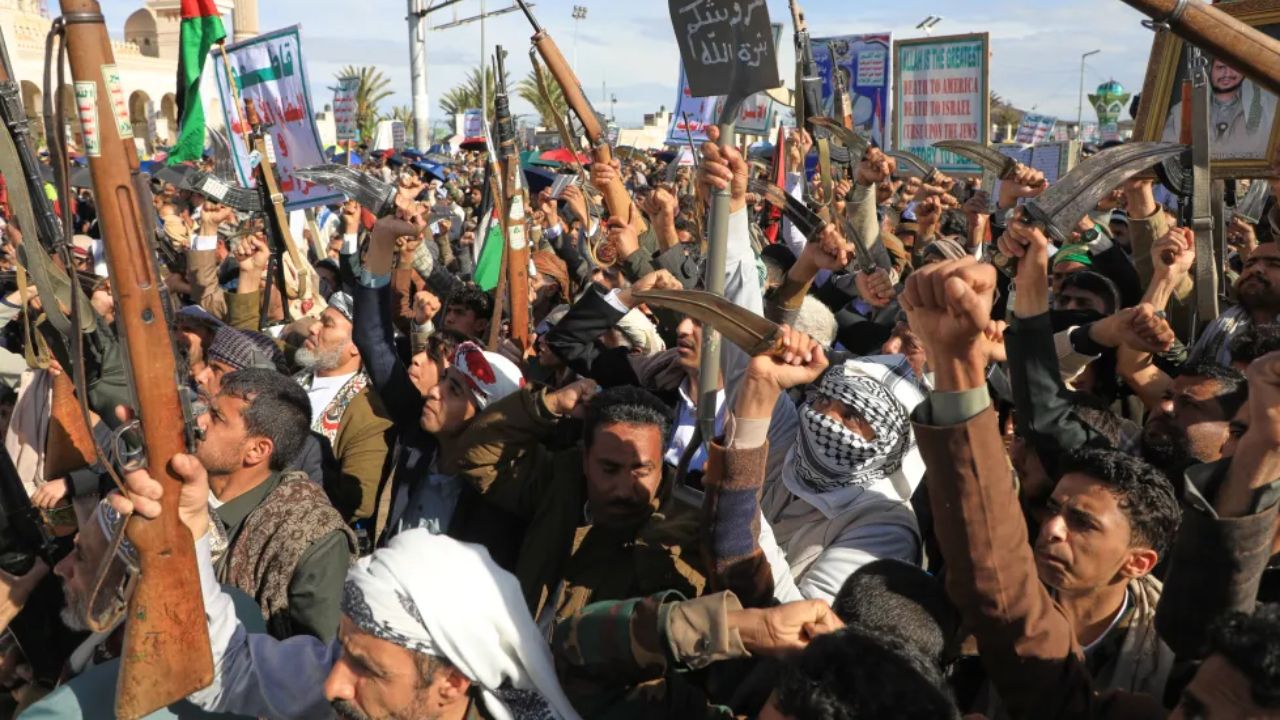

Yemen’s Iran-aligned Houthis launched missiles at Israel on Saturday, their first such attack since the Iran war began, raising fears of wider regional escalation.
The strike comes as the conflict enters its fifth week with no sign of easing.


While US Secretary of State Marco Rubio said operations could conclude within weeks, the Houthis said they would continue attacks until what they called “aggression” ends on all fronts.
In parallel diplomacy, Iran President Masoud Pezeshkian held talks with Pakistan Prime Minister Shehbaz Sharif as Islamabad prepares to host foreign ministers from Egypt, Turkey, and Saudi Arabia to ease tensions.
However, with no breakthrough in sight, the conflict—triggered by US and Israeli strikes on Iran on February 28—has spread across the Middle East, causing thousands of deaths and disrupting the global economy.
US President Donald Trump faces mounting pressure as the war drags on, with rising energy prices and falling approval ratings narrowing his options.

Despite diplomatic efforts, the US-Israel campaign has struggled to contain the crisis as Iran continues to disrupt Gulf oil and gas flows while launching missile and drone attacks across the region.
Oil prices have surged, with Brent crude rising above $112 per barrel, more than 50 per cent higher since the war began, while global equities have weakened.
In the United States, fuel prices have jumped, with diesel in California averaging $7.17 per gallon, adding domestic pressure on the administration.
Trump has threatened to strike Iran’s energy infrastructure if Tehran does not reopen the Strait of Hormuz, though he has extended the deadline by 10 days.
“Iran will retaliate strongly if its infrastructure or economic centres are targeted,” said Iran President Masoud Pezeshkian in a post on X.
As hostilities intensify, the United Arab Emirates and Bahrain reported missile strikes early Saturday.
A missile intercepted near Abu Dhabi’s Khalifa Port caused fires and injured five people.
Kuwait also reported drone attacks targeting Kuwait International Airport, damaging its radar systems, according to state media.
Analysts warn that Houthi involvement could trigger a “nightmare scenario” if attacks disrupt the Bab el-Mandeb Strait.
With restrictions already affecting the Strait of Hormuz, simultaneous disruption of both key routes could hit global trade, particularly shipments to Europe.
The United States is deploying additional troops to the region, signalling readiness for further escalation, including potential ground operations.
Prime Minister Shehbaz Sharif said Pakistan is engaging the United States and Gulf countries to facilitate dialogue and has offered to host talks between Washington and Tehran.
He also condemned Israeli strikes and expressed solidarity with Iran.
In a separate development, Qatar and Ukraine signed a defence agreement to boost cooperation in countering missile and drone threats.
The deal will support collaboration in defence technology and investment following Ukraine President Volodymyr Zelenskyy’s recent visit to the Gulf.
