Recent News BD
  • Home
  • Bangladesh
    • Governance & State Affairs
      • National Affairs
      • Politics & Governance
      • Administration
      • Policy & Reforms
      • Election & Political Process
    • Law, Order & Justice
      • Law & Justice
      • Anti-Corruption
      • Crime & Investigation
      • Human Rights & Social Justice
    • Development & Society
      • Infrastructure & Mega Projects
      • Social Issues
      • Disaster & Emergency
      • Agriculture & Rural Development
      • NGOs & Organizations
      • Bangladesh & Intl. Media Coverage
    • D.Local District News
    • E. Essential Public Services
      • Environment & Climate
      • Education
      • Health
      • Military & Security
  • International
    • World Regions
      • South Asia
      • Asia-Pacific
      • Middle East
      • Europe
      • Africa
      • North America
      • Latin America
    • Global Power & Diplomacy
      • Geopolitics & Diplomacy
      • Global Security & Defense
      • War & Conflict
      • International Organizations (UN, WHO, IMF)
      • Global Human Rights
      • World Climate Reports
      • Global Economy Impact
      • Migration & Refugees
    • Climate & Global Trends
      • World Climate Reports
      • Migration & Refugees
      • Global Economy Impact
  • Economy
    • Core Economy
      • Bangladesh Economy
      • Global Economy
      • Agricultural Economy
      • Trade & Commerce
      • Import–Export
    • Money & Market
      • Banking & Finance
      • Stock / Share Market
      • Investment Insights
      • Real Estate Market
    • Business & Industry
      • Industry & Manufacturing
      • Corporate News
      • SME & Enterprise
    • Future Economy
      • Startups & Innovation
      • Job Market & Employment
  • Sports
    • Cricket
    • Football
    • Other Sports (Hockey, Tennis, Athletics)
    • International Sports
    • Live Score
    • Transfer News
    • Sports Analysis
    • Sports Lifestyle
  • Editorial
    • Editorial
    • Opinions
    • Columns
    • Letters to Editor
    • Data Journalism
    • In-depth Explainers
  • Special Features
  • More
    • Lifestyle & Culture
      • Culture & Society
      • Travel & Tourism
      • Human Stories
      • Heritage & Traditions
      • Art, Books & Literature
      • Automobiles
      • Wellness & Health
      • Relationships
      • Food & Culinary
      • Fashion & Beauty
    • Science & Tech
      • Tech World
        • Tech News
        • Gadgets & Reviews
        • Software & Apps
        • Cybersecurity
        • Digital Bangladesh
      • Future Technology
        • AI & Robotics
        • Next-Gen Computing
        • Space & Exploration
        • Global Innovation Trends
      • Deep Science
        • Scientific Analysis
        • Research & Discoveries
        • Medical Research
  • Multimedia
  • বাংলা
Recent News BD
June 13, 2026
LOGIN / REGISTER SUBSCRIBE
  • Home
  • Bangladesh
    • Governance & State Affairs
      • National Affairs
      • Politics & Governance
      • Administration
      • Policy & Reforms
      • Election & Political Process
    • Law, Order & Justice
      • Law & Justice
      • Anti-Corruption
      • Crime & Investigation
      • Human Rights & Social Justice
    • Development & Society
      • Infrastructure & Mega Projects
      • Social Issues
      • Disaster & Emergency
      • Agriculture & Rural Development
      • NGOs & Organizations
      • Bangladesh & Intl. Media Coverage
    • D.Local District News
    • E. Essential Public Services
      • Environment & Climate
      • Education
      • Health
      • Military & Security
  • International
    • World Regions
      • South Asia
      • Asia-Pacific
      • Middle East
      • Europe
      • Africa
      • North America
      • Latin America
    • Global Power & Diplomacy
      • Geopolitics & Diplomacy
      • Global Security & Defense
      • War & Conflict
      • International Organizations (UN, WHO, IMF)
      • Global Human Rights
      • World Climate Reports
      • Global Economy Impact
      • Migration & Refugees
    • Climate & Global Trends
      • World Climate Reports
      • Migration & Refugees
      • Global Economy Impact
  • Economy
    • Core Economy
      • Bangladesh Economy
      • Global Economy
      • Agricultural Economy
      • Trade & Commerce
      • Import–Export
    • Money & Market
      • Banking & Finance
      • Stock / Share Market
      • Investment Insights
      • Real Estate Market
    • Business & Industry
      • Industry & Manufacturing
      • Corporate News
      • SME & Enterprise
    • Future Economy
      • Startups & Innovation
      • Job Market & Employment
  • Sports
    • Cricket
    • Football
    • Other Sports (Hockey, Tennis, Athletics)
    • International Sports
    • Live Score
    • Transfer News
    • Sports Analysis
    • Sports Lifestyle
  • Editorial
    • Editorial
    • Opinions
    • Columns
    • Letters to Editor
    • Data Journalism
    • In-depth Explainers
  • Special Features
  • More
    • Lifestyle & Culture
      • Culture & Society
      • Travel & Tourism
      • Human Stories
      • Heritage & Traditions
      • Art, Books & Literature
      • Automobiles
      • Wellness & Health
      • Relationships
      • Food & Culinary
      • Fashion & Beauty
    • Science & Tech
      • Tech World
        • Tech News
        • Gadgets & Reviews
        • Software & Apps
        • Cybersecurity
        • Digital Bangladesh
      • Future Technology
        • AI & Robotics
        • Next-Gen Computing
        • Space & Exploration
        • Global Innovation Trends
      • Deep Science
        • Scientific Analysis
        • Research & Discoveries
        • Medical Research
  • Multimedia
  • বাংলা
Recent News BD
Recent News BD
  • Home
  • Bangladesh
    • Governance & State Affairs
      • National Affairs
      • Politics & Governance
      • Administration
      • Policy & Reforms
      • Election & Political Process
    • Law, Order & Justice
      • Law & Justice
      • Anti-Corruption
      • Crime & Investigation
      • Human Rights & Social Justice
    • Development & Society
      • Infrastructure & Mega Projects
      • Social Issues
      • Disaster & Emergency
      • Agriculture & Rural Development
      • NGOs & Organizations
      • Bangladesh & Intl. Media Coverage
    • D.Local District News
    • E. Essential Public Services
      • Environment & Climate
      • Education
      • Health
      • Military & Security
  • International
    • World Regions
      • South Asia
      • Asia-Pacific
      • Middle East
      • Europe
      • Africa
      • North America
      • Latin America
    • Global Power & Diplomacy
      • Geopolitics & Diplomacy
      • Global Security & Defense
      • War & Conflict
      • International Organizations (UN, WHO, IMF)
      • Global Human Rights
      • World Climate Reports
      • Global Economy Impact
      • Migration & Refugees
    • Climate & Global Trends
      • World Climate Reports
      • Migration & Refugees
      • Global Economy Impact
  • Economy
    • Core Economy
      • Bangladesh Economy
      • Global Economy
      • Agricultural Economy
      • Trade & Commerce
      • Import–Export
    • Money & Market
      • Banking & Finance
      • Stock / Share Market
      • Investment Insights
      • Real Estate Market
    • Business & Industry
      • Industry & Manufacturing
      • Corporate News
      • SME & Enterprise
    • Future Economy
      • Startups & Innovation
      • Job Market & Employment
  • Sports
    • Cricket
    • Football
    • Other Sports (Hockey, Tennis, Athletics)
    • International Sports
    • Live Score
    • Transfer News
    • Sports Analysis
    • Sports Lifestyle
  • Editorial
    • Editorial
    • Opinions
    • Columns
    • Letters to Editor
    • Data Journalism
    • In-depth Explainers
  • Special Features
  • More
    • Lifestyle & Culture
      • Culture & Society
      • Travel & Tourism
      • Human Stories
      • Heritage & Traditions
      • Art, Books & Literature
      • Automobiles
      • Wellness & Health
      • Relationships
      • Food & Culinary
      • Fashion & Beauty
    • Science & Tech
      • Tech World
        • Tech News
        • Gadgets & Reviews
        • Software & Apps
        • Cybersecurity
        • Digital Bangladesh
      • Future Technology
        • AI & Robotics
        • Next-Gen Computing
        • Space & Exploration
        • Global Innovation Trends
      • Deep Science
        • Scientific Analysis
        • Research & Discoveries
        • Medical Research
  • Multimedia
  • বাংলা

@2022 - All Right Reserved. Designed and Developed by PenciDesign

Lifestyle & Culture

Why walking is beneficial exercise for health

by Recent News BD June 7, 2026
written by Recent News BD

A simple daily walk may be one of the most powerful habits for long-term health, according to a US-based heart specialist.
Jeremy London, a cardiovascular surgeon based in Savannah, Georgia, says walking regularly can strengthen the heart, improve blood circulation, reduce stress and lower the risk of chronic diseases.
In a video shared on Instagram, London explains that even moderate walking… Details

June 7, 2026 0 comments
0 FacebookTwitterPinterestEmail
Special Features

Choosing the right country for solo travel

by Recent News BD June 7, 2026
written by Recent News BD

Travelling alone is more than just visiting new places. It is about spending time with yourself, making your own choices and learning through new experiences. But along with this freedom comes the need to stay safe. That is why knowing which countries are safer and which country carries more risks is important before planning a trip.

A study by travel insurance company Squaremouth looked at 113 countries using the United Nation (UN) Human Development Index. It also considered crime rates, healthcare quality, how safe people feel walking alone at night and rankings in the Global Peace Index. Each country was scored from zero to ten. A lower score means safer conditions.

The study found the safest country for solo travel is San Marino. It is a small republic in southern Europe surrounded by Italy. It has strong healthcare, low environmental risk and high personal safety. About 90 per cent of people there feel safe walking alone at night. Other safe countries include Andorra, Singapore, Austria, Denmark and Qatar.

While Qatar ranks among the safer destinations, travellers should stay alert due to the wider Middle East situation. Regional tensions can change quickly and may affect travel plans.

On the other hand, some countries are considered riskier due to weak infrastructure, limited healthcare and higher crime rate. Venezuela ranks as the most dangerous for solo travellers. It is followed by Peru, Colombia and South Africa.

Solo travel can be safe and rewarding if you stay prepared. Before travelling somewhere solo, share your plans with the family. Avoid risky areas and keep valuables secure. With the right awareness, travelling alone can become a powerful and enjoyable experience.

June 7, 2026 0 comments
0 FacebookTwitterPinterestEmail
International Sports

World Cup 2026: England & Thomas Tuchel must get serious after New Zealand game

by Recent News BD June 7, 2026
written by Recent News BD

Tuchel has to take his own share of responsibility for this situation, having made some experimental selections leading up to these final preparations, including in the friendlies against Uruguay and Japan at Wembley in March.

Manchester City’s Phil Foden played up front against Japan. In the Uruguay game, Tuchel fielded Foden, Everton’s James Garner and Spurs striker Dominic Solanke. None of those made his World Cup squad.

Ivan Toney came on for the second half in Tampa after spending a year in the England wilderness, following a three-minute appearance in the friendly defeat against Senegal at the City Ground, Nottingham.

This, in effect, makes it even more important that Tuchel puts a line-up on the pitch against Costa Rica that is as close as possible to the one that will face Croatia. It will be an opportunity to find rhythm and momentum and build combinations before that tournament opener.

Tuchel did, at least, report no injuries from this first warm-up game, while he added: “The better the opponent gets, the better we will get.”

Kane’s goal came just before half-time, which heralded the mass changes, but Tuchel said: “I was happier with the second half. I thought we had more hunger and more desire. We played better but did not score.

“We didn’t play according to our plan in the first half. It slowed the game down, but it was better in the second half.

“We will acclimatise to the humidity and the sun while we are here. Tomorrow will be recovery day, then we have two days to prepare for Costa Rica. Then a chunk of players will get more minutes. The Arsenal players are in now, which is good because it gives us energy and quality, and then we have another one and a half days off.

“Then we go to Kansas and prepare for Croatia.”

June 7, 2026 0 comments
0 FacebookTwitterPinterestEmail
Youth Voice

Ukrainian refugee in Germany tell her story 

by Recent News BD June 7, 2026
written by Recent News BD

Since Russia launched a full-scale military invasion into Ukraine on February 24, many Ukrainian fled by crossing the country’s border in search of safety. Many family had made a desperate escape from the city after heavy Russian bombardments. Two Ukrainian sisters, Taya (15) and Yana (18) along with their family members also left Ukraine as Russia pounded the capital of Kyiv and other cities… Details

June 7, 2026 0 comments
0 FacebookTwitterPinterestEmail
Bangladesh

Why are so many people always tired?

by Recent News BD June 7, 2026
written by Recent News BD

Most people have never heard of mitochondrial dysfunction.Yet scientists increasingly believe it may be quietly influencing some of the world’s most common health problems from diabetes and heart disease to chronic fatigue, depression and neurodegenerative disorders. Details

June 7, 2026 0 comments
0 FacebookTwitterPinterestEmail
International

US and Iran exchange strikes in Gulf in latest test of truce

by Recent News BD June 7, 2026
written by Recent News BD

The shaky ceasefire between the US and Iran has been tested further, with American forces targeting Iranian drones and radar sites, and Iran firing missiles at US bases in the Gulf.
The US military said the attacks were in response to four Iranian “one-way attack drones” launched towards the Strait of Hormuz, which it said “posed an immediate threat to regional maritime traffic”. The drones… Details

June 7, 2026 0 comments
0 FacebookTwitterPinterestEmail
Editorial

Prioritising budget allocation for technological innovation

by Recent News BD June 6, 2026
written by Recent News BD

From a war-ravaged nation, Bangladesh has emerged as one of South Asia’s fastest-growing economies. Over the past five decades, it has achieved significant success in agriculture, healthcare, women’s empowerment, disaster management, poverty reduction, and the ready-made garment industry. These achievements reflect the resilience, determination, and aspirations of the Bangladeshi people.

Yet sustaining this progress and achieving long-term prosperity will require more than economic growth alone. In a world increasingly shaped by innovation and technology, countries must invest in knowledge, research, and human capital to remain competitive. For Bangladesh, building a self-sustainable future depends on prioritising quality education, scientific research, technological innovation, and skilled workforce development.

The global economy is undergoing rapid transformation. Technological advancement, digitalisation, and innovation are now the primary drivers of growth. Countries such as South Korea, Singapore, Japan, and China have demonstrated how investments in education and research can transform national economies. Their experiences show that economic success is closely linked to the development of scientific knowledge, technological capability, and skilled human resources. Bangladesh can also benefit from this model by investing strategically in its people and institutions.

Quality education is the foundation of sustainable development. While Bangladesh has expanded educational access and improved literacy rates, the quality of education remains a major concern. Many students complete their studies without acquiring the practical skills, analytical abilities, and technological knowledge required by modern industries. The education system often focuses on memorisation and examination performance rather than creativity, innovation, and problem-solving.

To address this challenge, educational reforms should begin at the primary level. Science, technology, engineering, mathematics, and digital literacy should receive greater emphasis throughout the curriculum. Students should be encouraged to think critically, ask questions, and explore new ideas. Modern science laboratories, computer facilities, internet access, and interactive learning tools should be gradually introduced in schools across the country. Programmes in coding, robotics, and digital skills can further prepare young learners for future opportunities. Quality education cannot be achieved without competent and motivated educators. Continuous professional development, access to modern teaching resources, and the integration of technology into classroom instruction are essential. Teaching methods should encourage participation, experimentation, and independent thinking rather than relying solely on traditional lecture-based approaches.

Alongside education, research and innovation are critical drivers of national progress. Countries that invest substantially in research and development are often leaders in economic growth and technological advancement. Research contributes to productivity, creates new industries, and helps solve social, economic, and environmental challenges. Despite its development achievements, Bangladesh still allocates a limited share of resources to research and innovation. Many universities and research institutions face shortages of funding, equipment, laboratory facilities, and opportunities for international collaboration.

To build a self-reliant economy, Bangladesh must increase investments in research across strategic sectors, including agriculture, healthcare, renewable energy, climate adaptation, information technology, and industrial development. Collaboration among universities, government agencies, and private industries can generate practical solutions to national challenges. Young scientists, researchers, and innovators should be supported through scholarships, research grants, fellowships, and mentorship programmes that encourage creativity and technological exploration.

Science and technology have the potential to transform every sector of the economy. In agriculture, technological innovation can improve productivity, strengthen food security, and increase resilience to climate change. Smart irrigation systems, biotechnology, precision farming, climate-resilient crops, and digital agricultural services can help farmers increase yields while reducing production costs. Given Bangladesh’s vulnerability to floods, cyclones, salinity intrusion, and rising temperatures, scientific research is essential for protecting rural livelihoods and ensuring sustainable agricultural growth.

Industrial modernisation is equally important. While the garment industry has been a major contributor to economic growth and export earnings, Bangladesh cannot depend indefinitely on labour-intensive manufacturing. The global industrial landscape is being reshaped by automation, artificial intelligence, robotics, and advanced manufacturing technologies. To remain competitive, the country must embrace technological transformation and diversify its industrial base. Greater investment is therefore needed in high-tech industries, software development, electronics manufacturing, biotechnology, AI, and green technologies. The government and private sector should work together to establish technology parks, innovation centres, startup incubators, and research hubs. Such initiatives can encourage entrepreneurship, stimulate innovation, create high-quality employment opportunities, and attract domestic and foreign investment.

Regular science and technology fairs can also play a valuable role in promoting innovation. Organising annual fairs in divisional cities would provide students, researchers, and young inventors with opportunities to showcase their ideas, inventions, and scientific projects. Government institutions, educational organisations, and private companies should provide financial support, mentorship, scholarships, and technical assistance to promising innovators. Bangladesh has already made considerable progress through expanded internet connectivity, digital financial services, e-governance initiatives, and online public services. However, disparities remain between urban and rural areas in access to technology and digital infrastructure. Ensuring affordable, reliable, and nationwide internet access is essential for promoting inclusive development.

With appropriate training and digital access, millions of young Bangladeshis can participate in online education, freelancing, software development, e-commerce, and digital entrepreneurship. The digital economy offers significant opportunities for employment generation, foreign exchange earnings, and economic diversification. Continued investment in digital infrastructure and technological skills development is therefore essential.

Although Bangladesh has made notable progress in women’s empowerment, female representation in scientific research and technology-related professions remains limited. Climate change presents another major challenge that requires scientific and technological solutions. Bangladesh is among the countries most vulnerable to climate-related disasters, including floods, cyclones, river erosion, and sea-level rise. Building climate resilience must therefore become a national priority. Investments in renewable energy, sustainable infrastructure, environmental conservation, and climate research can help reduce risks while supporting long-term development.

Bangladesh now stands at a critical juncture in its development journey. Future competitiveness will depend less on cheap labour and more on knowledge, innovation, technology, and skilled human resources. To achieve genuine self-sustainability and secure its place in the global economy, the country must prioritise quality education, scientific research, technological innovation, and human capital development.

These investments are essential for the nation’s future. By allocating greater resources to science, technology, and education, Bangladesh can strengthen economic resilience, improve living standards, address environmental challenges, and enhance its global competitiveness. With strategic planning, effective implementation, and long-term commitment, Bangladesh can transform its human potential into scientific excellence, technological capability, and innovative leadership, paving the way for a prosperous, self-reliant, and sustainable future.

The views expressed in this article are solely those of the author

The author is a freelance writer

June 6, 2026 0 comments
0 FacebookTwitterPinterestEmail
Education

Madrasa enrolment surges as primary schools empty out

by Recent News BD June 6, 2026
written by Recent News BD

In Saturia union of Manikganj’s Saturia upazila, the decades-old Bichhat Government Primary School is experiencing a steady decline in student numbers, while a newly established Qawmi madrasa nearby continues to attract pupils.

The drop has reached a point where the school struggles to meet the government’s minimum enrolment requirements.

Reports of child abuse and sexual exploitation in madrasas continue to surface, yet these religious educational institutions are still seeing growth in student numbers. The increase in madrassa enrolment is occurring alongside a decline in government primary school attendance.

Qawmi madrassa teachers say that publicity surrounding abuse cases has had little impact on parental choices. In recent years, commercial-style English-medium madrasas have also flourished.

Habibullah Mizan, member of the management committee of Bichhat Government Primary School, told TIMES of Bangladesh, “My family owns the land for both the school and the madrasa. The primary school is government-run. Yet over the past few years, enrolment has fallen so sharply that many teachers have expressed frustration to me about the madrasa’s establishment.”

“Parents, on the other hand, blame primary school teachers for a lack of accountability,” he added.

A similar pattern has been observed in several primary schools and madrasas in Dhaka’s Basila and Mohammadpur areas, where primary school numbers have declined while madrasa enrolment has risen.

Education experts say financially constrained families, particularly women in low-income jobs and men in informal employment, are increasingly sending children to madrasas instead of primary schools. Many madrassas provide free boarding and meals, reducing household costs.

“Government primary schools suffer from a lack of supervision and limited facilities. Parents often have to pay for private tutoring outside the classroom. Those with limited means are opting for madrasas because they combine education with free accommodation and meals,” Manzoor Ahmed, emeritus professor at BRAC University, told TIMES.

Unlike government schools, which maintain detailed enrolment statistics, data on Qawmi madrasas is difficult to obtain. There is no central authority that tracks the number of students enrolled in these private religious institutions.

Leaders of the Qawmi Madrasa Teachers’ Association claim that enrolment has doubled or even tripled over the past decade, reflecting a growing trend despite ongoing concerns about student welfare.

Over one crore students enrolled in madrasas

Bangladesh’s madrasa education is primarily divided into two streams: Qawmi and Alia. While Alia madrasas operate under government supervision, Qawmi madrassas remain outside state control.

According to the main Qawmi regulatory body, Al-Haiatul Ulya Lil-Jamiatil Qawmia Bangladesh, there are at least 25,000 Qawmi madrasas nationwide operating privately. Over the past decade, the number of primary-level Qawmi madrasas has nearly doubled, and student enrolment has grown two- to threefold.

Current estimates suggest that Qawmi madrasas educate between 65 lakh to 70 lakh students, spanning from primary levels to those equivalent to a master’s degree. A decade ago, the sector is believed to have had 20 to 25 lakh students.

By contrast, official statistics indicate a 35 per cent drop in government primary school enrolment since 2015.

In the Alia stream, Md Abdur Rashid, deputy registrar (administration) of the Bangladesh Madrasa Education Board, said the board currently recognises 12,060 Alia madrasas at secondary and higher-secondary levels, accommodating roughly 24.5 lakh students from sixth grade through Alim (equivalent to HSC).

However, he noted that primary-level student numbers are harder to confirm. There are 7,451 registered Ibtedayi (primary) Alia madrasas, but an additional 7,000 to 8,000 operate outside official lists.

Board officials estimate that Alia and Nurani madrassas collectively educate at least 10 lakh students at the primary level.

The figures highlight a rapid growth in religious education, particularly in the Qawmi sector, even as government primary schools experience declining enrolment.

Enrolment rises on ‘low costs, moral appeal’

The growth of Qawmi madrasas is partly driven by lower costs for families, according to education officials and principals.

Ruhul Amin Sadi, principal of Atharul Ulum Adinabad Madrasa in Beanibazar, Sylhet, said, “Government schools lack supervision and can be costly. By contrast, most Qawmi madrasas provide free education.”

Sadi said changes to the national curriculum and public controversies have also influenced parents’ choices. “Stories circulated about Sharif and Sharifa, whether true or false, created negative reactions among the public. People’s interest in religious education has grown,” he added.

Teachers in the sector also credit the 2018 decision to equate the Qawmi Dawra-e-Hadith certificate with a master’s degree for increasing the appeal of this system.

Musleh Uddin Raju, senior vice-president of Befaqul Madarisil Arabia Bangladesh, the body overseeing Qawmi madrasas, said, “Madrasa teachers take their students’ education seriously. Teaching is also considered a form of worship, and the teachers themselves prepare the lessons.”

Mizanur Rahman Chowdhury, principal of Madrasa Dawatul Haq in Kapasia, Gazipur, added that many mainstream schools lack ethical and moral instruction, prompting parents to turn to Qawmi education.

However, not all agree with this “moral advantage” argument. Khairul Chowdhury, professor of sociology at Dhaka University, said, “Ethical and moral values exist within families and society, and across all religions. Madrasa teachers highlight moral education primarily for promotional purposes.”

Chowdhury noted that marginalisation of government primary schools in urban areas has facilitated the growth of English-medium and madrasa institutions. “The expansion of female labour and commercialisation has led to social exploitation. Working parents increasingly view madrasas as an alternative to boarding schools or day-care centres,” he added.

He also pointed out that while previously spinning and jute mills offered separate arrangements for workers’ children, the growth of the garment industry and other occupations has not been matched by government efforts to ensure children’s safety. “If the government wishes, it could take more responsibility for the protection of children from working families,” Chowdhury said.

Qawmi madrasas rely on donations

Despite economic pressures, support for religious education remains strong, according to teachers in Qawmi madrasas.

Deen Mohammad Ashraf, organisational secretary of the Qawmi Madrasa Teachers’ Association, told TIMES, “We rely entirely on donations and charitable contributions to pay teachers’ salaries, cover students’ education, and manage all operational costs.”

Mizanur Rahman Chowdhury, principal of Madrasa Dawatul Haq in Gazipur, said most Qawmi students come from economically disadvantaged families. “Providing three daily meals, round-the-clock supervision by teachers, and managing boarding facilities is far more costly than running standard schools,” he said.

He added that the government provides no funding for these institutions. The Qawmi education system operates entirely on donations, grants, zakat, and other charitable contributions from the public.

June 6, 2026 0 comments
0 FacebookTwitterPinterestEmail
Education

Govt to provide free uniforms for over 1cr students

by Recent News BD June 5, 2026
written by Recent News BD

The government has planned to provide uniforms and shoes to approximately 1.07 crore government primary school students across the country in phases, minister for Primary and Mass Education Bobby Hajjaj said on Thursday.

A pilot programme is being implemented as part of the government’s 180-day agenda to verify the effectiveness and quality of the distribution of standard clothing and footwear among students.

Bobby Hajjaj shared these details during an exchange meeting with representatives of the country’s leading footwear brands at the ministry’s conference room, aimed at facilitating the free distribution of dresses and footwear to government primary school students.

The minister noted that top organisations in the country’s readymade garment (RMG) industry have already responded positively to the initiative. Through their cooperation, more than 4 lakh uniforms have already been secured for the pilot project. The government now expects similar cooperation from the country’s footwear industry.

During the meeting, primary discussions were held regarding the supply of white velcro (laceless) sneakers for Class 1 students. As most students in the first grade are approximately six years old, the minister sought opinions from the footwear companies regarding appropriate sizes, diversity of size, the specific needs of boys and girls, and the total number of units that can be supplied.

Bobby Hajjaj urged the relevant companies to send detailed information to the ministry concerning their potential donation amounts, delivery timelines, and production cost structures. He added that a long-term partnership between the government and the industrial sector would be established for the large-scale supply of shoes in the future.

Furthermore, the minister expressed the government’s intent to present visible progress of the pilot programme to the public by August this year. Specifically, the goal is to begin the implementation of this initiative before the government completes its first six months in office.

The Secretary of the Ministry of Primary and Mass Education and top officials from various footwear companies were also present at the programme.

June 5, 2026 0 comments
0 FacebookTwitterPinterestEmail
Education

Journo Kazi Mehedi Hasan awarded PhD from US university

by Recent News BD June 4, 2026
written by Recent News BD

Kazi Mehedi Hasan, a former seasoned broadcast journalist from Bangladesh, has been awarded a PhD degree in Mass Communication and Media Arts from Southern Illinois University (SIU) in the United States.

His doctoral research explored the evolution of the media environment and its role in driving political polarisation in the US between 2012 and 2024.

His dissertation, titled “Personalized Politics in the Digital Age: How Media Exposure and Social Media Microtargeting Impact Public Agenda Diversity and Widen Partisan Polarization in US Presidential Elections (2012–2024),” posits that the rise of social media and data-driven political campaigns have fundamentally shaped political polarisation and public agenda diversity in recent years.

Dr Hasan’s research specifically found that the customisation of messaging through social media campaigns has increased issue fragmentation, thereby fuelilng political division in the United States.

The research was conducted under the supervision of Professor Dr Kavita Karan. The doctoral committee included Dr Lisa Brooten, Dr Patrick Meirick, Dr Walter Metz, Dr Dong Han, and Dr Yoshua Ryoo.

Prior to his doctoral studies, Dr Hasan earned a master’s degree in Journalism from the University of Mississippi, USA. He also holds both an MA and a BA (Honours) in Mass Communication and Journalism from the University of Dhaka, Bangladesh.

Before moving to the United States, Dr Hasan had a distinguished career as a broadcast journalist in Bangladesh, where he was widely known as Shujon Mehedi.

During this time, he contributed to prominent television networks including Independent Television, Channel One, and NTV. He is currently serving as a Teaching Assistant at Southern Illinois University.

Born in Faridpur and raised in Keshobpur Upazila of Jashore District, Dr Hasan completed his Secondary School Certificate (SSC) from Sagardari Michael Madhusudan Institution. He is the eldest son of the late Kazi Wohidul Islam and Shirina Islam of Shekpura village in Keshobpur Upazila.

June 4, 2026 0 comments
0 FacebookTwitterPinterestEmail
Newer Posts
Older Posts

Recent Posts

  • BUP debuts ‘Unscripted’ panel with top journos, creators
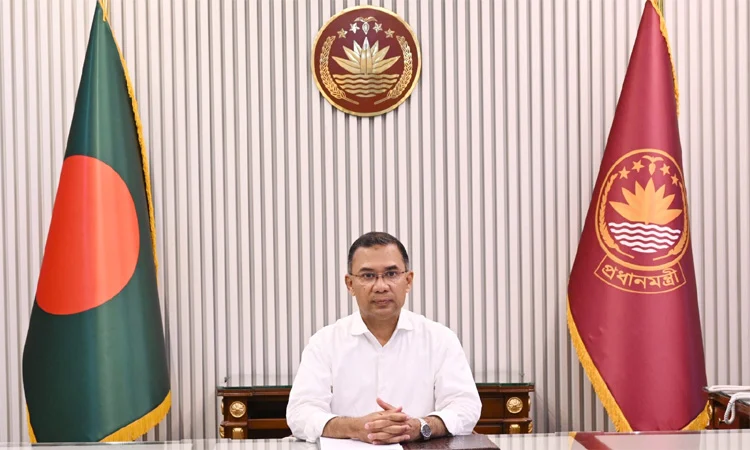
  • Now it’s our turn to rise: Prime Minister
  • How AI changing the internet forever
  • MV Malancha suspension disrupts Sandwip travel, fare hike alleged
  • World Cup 2026: Raul Jimenez completes comeback in Mexico win

Recent Comments

No comments to show.
Top Selling Multipurpose WP Theme

Follow Us

Facebook Twitter Instagram Pinterest Linkedin Youtube

Recent Posts

  • BUP debuts ‘Unscripted’ panel with top journos, creators

    June 12, 2026
  • Now it’s our turn to rise: Prime Minister

    June 12, 2026
  • How AI changing the internet forever

    June 12, 2026
  • MV Malancha suspension disrupts Sandwip travel, fare hike alleged

    June 12, 2026
  • World Cup 2026: Raul Jimenez completes comeback in Mexico win

    June 12, 2026

Newsletter

Categories

  • Agriculture & Rural Development (4)
  • Art, Books & Literature (5)
  • Bangladesh (71)
  • Bangladesh Economy (5)
  • Business (26)
  • Campus (36)
  • Economy (39)
  • Editorial (52)
  • Education (172)
  • Entertainment (48)
  • Environment & Climate (6)
  • Fact Check (6)
  • Featured (8)
  • Health (8)
  • Historical places of Bangladesh (4)
  • International (53)
  • International Sports (49)
  • Islam (1)
  • Lead News (24)
  • lead News 1 (14)
  • leadnews2 (13)
  • Lifestyle & Culture (52)
  • Money & Market (2)
  • More (164)
  • National Affairs (41)
  • Opinion (12)
  • Opinions (1)
  • Politics (48)
  • Special Features (50)
  • Special Stories (12)
  • Sports (55)
  • Tech News (41)
  • Tech World (36)
  • Top Stories (1)
  • Travel & Tourism (6)
  • World Regions (9)
  • Youth Voice (51)
  • বাংলা (12)
Recent News BD
  • Home
  • Bangladesh
    • Governance & State Affairs
      • National Affairs
      • Politics & Governance
      • Administration
      • Policy & Reforms
      • Election & Political Process
    • Law, Order & Justice
      • Law & Justice
      • Anti-Corruption
      • Crime & Investigation
      • Human Rights & Social Justice
    • Development & Society
      • Infrastructure & Mega Projects
      • Social Issues
      • Disaster & Emergency
      • Agriculture & Rural Development
      • NGOs & Organizations
      • Bangladesh & Intl. Media Coverage
    • D.Local District News
    • E. Essential Public Services
      • Environment & Climate
      • Education
      • Health
      • Military & Security
  • International
    • World Regions
      • South Asia
      • Asia-Pacific
      • Middle East
      • Europe
      • Africa
      • North America
      • Latin America
    • Global Power & Diplomacy
      • Geopolitics & Diplomacy
      • Global Security & Defense
      • War & Conflict
      • International Organizations (UN, WHO, IMF)
      • Global Human Rights
      • World Climate Reports
      • Global Economy Impact
      • Migration & Refugees
    • Climate & Global Trends
      • World Climate Reports
      • Migration & Refugees
      • Global Economy Impact
  • Economy
    • Core Economy
      • Bangladesh Economy
      • Global Economy
      • Agricultural Economy
      • Trade & Commerce
      • Import–Export
    • Money & Market
      • Banking & Finance
      • Stock / Share Market
      • Investment Insights
      • Real Estate Market
    • Business & Industry
      • Industry & Manufacturing
      • Corporate News
      • SME & Enterprise
    • Future Economy
      • Startups & Innovation
      • Job Market & Employment
  • Sports
    • Cricket
    • Football
    • Other Sports (Hockey, Tennis, Athletics)
    • International Sports
    • Live Score
    • Transfer News
    • Sports Analysis
    • Sports Lifestyle
  • Editorial
    • Editorial
    • Opinions
    • Columns
    • Letters to Editor
    • Data Journalism
    • In-depth Explainers
  • Special Features
  • More
    • Lifestyle & Culture
      • Culture & Society
      • Travel & Tourism
      • Human Stories
      • Heritage & Traditions
      • Art, Books & Literature
      • Automobiles
      • Wellness & Health
      • Relationships
      • Food & Culinary
      • Fashion & Beauty
    • Science & Tech
      • Tech World
        • Tech News
        • Gadgets & Reviews
        • Software & Apps
        • Cybersecurity
        • Digital Bangladesh
      • Future Technology
        • AI & Robotics
        • Next-Gen Computing
        • Space & Exploration
        • Global Innovation Trends
      • Deep Science
        • Scientific Analysis
        • Research & Discoveries
        • Medical Research
  • Multimedia
  • বাংলা