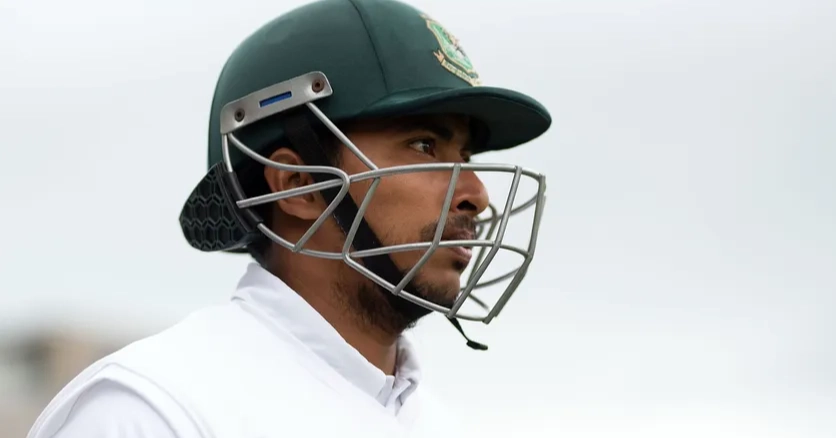
Opener Soumya Sarkar has earned a recall to Bangladesh’s Test squad for the first time in more than five years, with selectors backing his domestic form and experience against pace ahead of next month’s series in Australia.
Habibul Bashar, the chief selector of Bangladesh, said injuries have complicated the selection process, while the Bangladesh A team’s four-day series against South Africa Emerging also influenced several decisions.
Soumya, who last played a Test against the West Indies in February 2021, replaced Mahmudul Hasan Joy after scoring 633 runs in seven National Cricket League— Bangladesh’s first-class domestic event— matches last season to finish as the competition’s leading run-scorer.
“Soumya has played international cricket for a long time,” Bashar said on Monday. “The pace and bounce we expect in Australia are conditions he is familiar with.”
Mahmudul, meanwhile, will join the Bangladesh A squad after a lean run at the top of the order. He has reached fifty once in his last six Test innings, four of which ended in single-digit scores.
Towhid Hridoy has also been omitted after making 2 and 9 on his Test debut against Zimbabwe last month.
Bashar said Mehidy Hasan Miraz’s return left little room for Hridoy in the playing XI, but stressed the selectors still view him as part of Bangladesh’s long-term Test plans.
“We see Hridoy as a Test player,” Bashar said. “The four-day matches against South Africa Emerging will be important for his development.”
Wicketkeeper-batter Mahidul Islam will also feature for Bangladesh A after missing out on the Australia squad.
Jaker Ali returns to the Test squad for the first time since June last year. Bashar said the wicketkeeper-batter had regained form and confidence through the High Performance programme after struggling before his omission.
Bangladesh begin the two-Test series against Australia in Darwin on August 13, with the second Test starting in Mackay on August 22.
The Bangladesh A side will play South Africa Emerging in four-day matches beginning on Aug. 16 and August 23.
Bangladesh squad for Australia series:
Najmul Hossain Shanto (c), Soumya Sarkar, Shadman Islam, Tanzid Hasan, Mominul Haque, Mushfiqur Rahim, Amite Hasan, Jaker Ali, Mehidy Hasan Miraz, Taijul Islam, Taskin Ahmed, Hasan Mahmud, Khaled Ahmed, Ebadot Hossain, Musfik Hasan.