


The system is intended to provide users with a flexible workspace while keeping their data under their own control Details

The system is intended to provide users with a flexible workspace while keeping their data under their own control Details


A US judge has ordered the removal of President Donald Trump’s name from the title of the Kennedy Center for the Performing Arts.
The Washington DC venue cannot be renamed without congressional approval, the judge ruled on Friday, also blocking the centre’s temporary closure during upcoming proposed renovations.
Trump’s name must be taken off the institution’s title, its façade – and… Details

A beaming Matteo Berrettini said tennis is the “love of my life” after reaching a Grand Slam quarter-final for the first time in almost four years.
The 30-year-old beat Argentina’s Juan Manuel Cerundolo 6-3 7-6 (7-2) 7-6 (8-6) and is one of three Italians in the last eight – the first time this has happened in the Open era, despite world number one Jannik Sinner exiting in the second round.
Flavio Cobolli, the 10th seed, beat Zachary Svajda in four sets while Matteo Arnaldi spent more than five hours on court to beat 19th seed Frances Tiafoe.
Arnaldi, the world number 104, will play Berrettini in his maiden Grand Slam quarter-final, guaranteeing at least one Italian – and one player ranked outside the top 100 – will reach the last four.
Berrettini, the 2021 Wimbledon finalist, reached a career-high world number six in 2022 but has slipped to 105th in the rankings after being plagued by injuries and fitness problems.
“[Tennis] is the love of my life, if it wasn’t I wouldn’t be here,” Berrettini said.
“After all the setbacks, all the injuries, all the bad moments, I came back once again.
“There were moments where it was really tough to come back and play, because I wasn’t ready and I wasn’t sure about my confidence – now I feel great.”
Berrettini is the lowest-ranked Roland Garros quarter-finalist since Igor Andreev in 2007.
Seeds For The Future 2022, Bangladesh announces 30 top students for the third round of this global competition. Based on the student’s CGPA, Academic Knowledge, Creativity/Project Idea, and proficiency in English the jury board consisting of Huawei staff, project manager, and university teachers has shortlisted these candidates out of 200 participants in the 2nd round. Initially,… Details


The Power Division has directed all markets and shopping malls across Bangladesh to close by 7:00pm as part of efforts to ensure efficient electricity use and maintain a stable power supply during the ongoing summer season.
In an official letter issued on Monday, the Power Division said the directive follows earlier government instructions aimed at reducing electricity consumption during peak… Details


Egyptian, Qatari, and Turkish officials will attend discussions
Hamas says progress depends on Israel showing genuine commitment Details
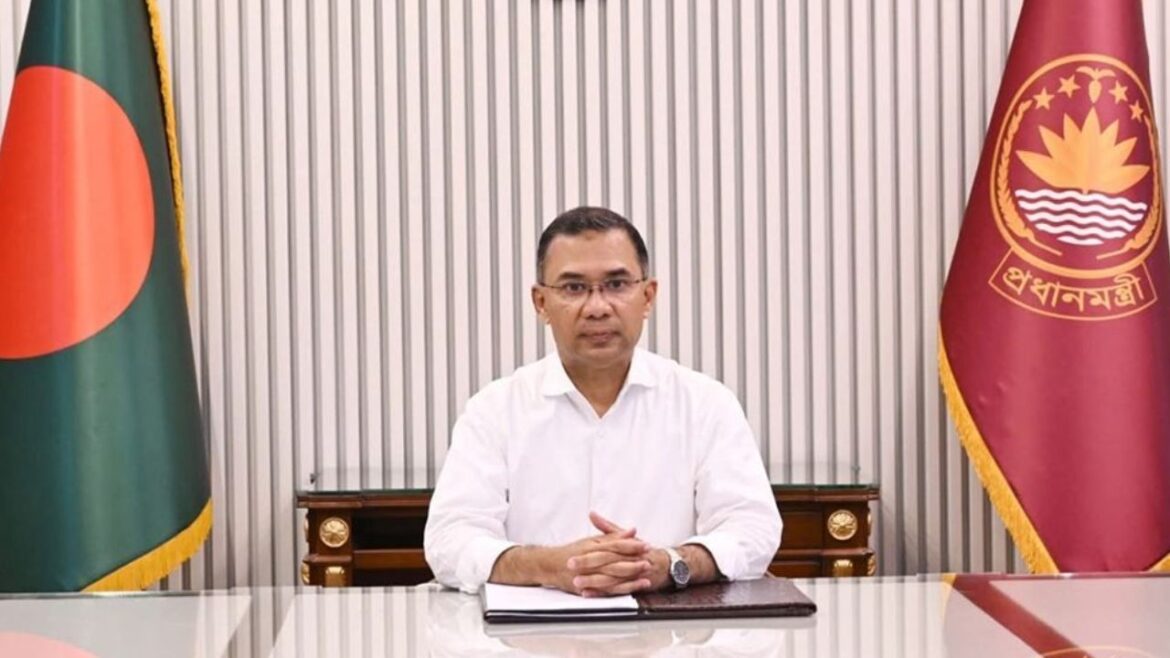
Securing a landslide victory was the easy part; after three months, Prime Minister Tarique Rahman’s political honeymoon is colliding with formidable structural crises.
The BNP administration now navigates a complex web of economic, political, and diplomatic hurdles to sustain its initial advantage. Analysts caution that 100 days is insufficient for a definitive assessment. Nevertheless, while the government has launched several positive initiatives, policy weaknesses and sluggish reform implementation are already evident.

To succeed, the administration must fight simultaneously on four fronts: the economy, good governance, diplomacy, and political stability, analysts said.

The economic strain is particularly acute, they say. The government needs to manage domestic and foreign debt totalling roughly Tk22 lakh crore, increase revenue collection, boost investment, and overhaul a fragile banking sector.

Simultaneously, it faces pressure to implement post-July uprising reforms, maintain law and order, and manage the reorganisation of the banned Awami League.

On the global stage, maintaining balanced relations between India, China, and the United States, while managing the Rohingya crisis, remains vital. Dissatisfaction is also mounting over the government’s handling of child measles deaths since the BNP took office.
Despite these burdens, Rahman has earned significant public praise for his accessible leadership style, drawing frequent comparisons to his father, the late President Ziaur Rahman. High-profile initiatives like protocol-free movement, driving himself through the capital, meeting young scientists, introducing “family and farmer cards,” and launching a canal-excavation programme have been well received.
BNP Standing Committee Member Begum Selima Rahman told TIMES of Bangladesh that the Prime Minister’s simplicity has won public hearts. “The prolonged dictatorship devastated our economy, leaving thousands of crores in debt. While resolving this will not be easy, the Prime Minister is determined to face these challenges head-on,” she said.
Nevertheless, critical questions are mounting regarding the slow pace of structural change. Public debate has intensified over stagnant law and order conditions and controversial decisions on judicial independence, including the abolition of the Supreme Court Secretariat and the repeal of the Judges Appointment Ordinance.
Economic recovery demands a surge in domestic and foreign investment, both of which rely on stability, transparency, and the rule of law. Yet, public impatience is growing over the government’s sluggish pace in delivering the governance reforms promised after the July uprising.
Early policy choices, including the appointment of the Bangladesh Bank governor, have already sparked debate. Badiul Alam Majumder, secretary of Shushashoner Jonno Nagorik, told TIMES of Bangladesh that investment will dry up without systemic reform. “Investors need to trust that their returns are secure,” Majumder said. “Without that confidence, even the best infrastructure will fail to attract capital.”
He argued that the July Movement sought to restore a democratic environment across all sectors. Instead, recent steps by the BNP administration, such as dissolving the Supreme Court Secretariat, repealing the Supreme Court Justice Appointment Ordinance, and failing to implement the July Charter, undermine governance. Majumder warned that if the government does not pivot toward genuine institutional reform, it will soon face compounding economic, diplomatic, and political crises.
The most urgent task facing the new administration is managing the severe economic strain inherited from the previous government. A volatile combination of high inflation, surging non-performing loans (NPLs), systemic banking weaknesses, heavy foreign debt repayment schedules, and stagnant investment has pushed the economy into a corner.
Within the banking sector, an acute liquidity crisis and a widespread lack of depositors’ confidence in banks are actively choking off new private investment. Boosting revenue collection is now mandatory if the government hopes to sustain public spending, fund infrastructure projects, and maintain social safety nets.
However, rampant tax evasion, a narrow tax base, and a dominant informal economy continue to hamstring revenue management just as foreign debt instalments are peaking. Professor Mustafizur Rahman, a distinguished fellow at the Centre for Policy Dialogue (CPD), highlights these overlapping vulnerabilities.
“To mobilise domestic resources, the government is being forced to rely on both domestic and foreign borrowing,” he told TIMES. “This debt burden will inevitably intensify. To survive it, the administration must execute a dual strategy: aggressively scale up internal tax revenues while securing favourable external financing.”
The economist noted that while the government is currently negotiating with the International Monetary Fund (IMF) and has reached tentative agreements with the World Bank and the Asian Development Bank (ADB), the underlying conditions of these loans remain a critical variable. “The upcoming budget will face massive expenditure pressures,” he warned. “If the administration fails to revive stagnant investments, the fallout will trigger a domino effect, crippling everything from job creation to state revenue collection.”
Maintaining a diplomatic balance among competing global powers is Bangladesh’s most complex foreign policy challenge. China remains a crucial infrastructure and credit partner, India centres regional security and neighbourhood relations, and the West provides vital trade and development cooperation.
As US–China rivalry intensifies in the Indo-Pacific, Dhaka must navigate this landscape carefully to avoid appearing aligned with any single strategic block. Leveraging cooperation from all three fronts to resolve the Rohingya crisis will serve as a definitive test of the government’s diplomatic acumen.
Former Ambassador M Humayun Kabir emphasised that international relationships are fundamentally transactional. “Diplomatic relations mean securing what is beneficial for oneself,” Kabir noted. “To achieve that, the economy must be strengthened. The government must prioritise this area and accelerate its efforts.”
Evaluating the administration’s first three months, Humayun advised patience but noted that the government is actively addressing core issues while attempting to maintain its equilibrium with India, China, and the West. However, he warned that foreign policy and domestic stability are deeply intertwined. Securing international investment requires skilled diplomacy backed by stable internal governance.
The early political honeymoon period is fading as opposition parties grow increasingly restless. Groups like Jamaat and the National Citizens’ Committee are taking a hard line against the slow pace of post-July reforms, partisan administrative appointments, and the government’s failure to restore law and order.
Dr Abdul Latif Masum, a retired professor of Government and Politics at Jahangirnagar University, warns that the administration is on thin ice. “The government is already showing fractures,” Masum told TIMES. “Controversial financial moves, such as backtracking on the Sammilito Islami Bank initiative and allegedly paving the way for the S Alam Group’s return to Islami Bank, have deeply angered political critics.”
According to Masum, the administration’s ambiguous stance on core state reforms is alienating its allies. With the banned AL actively looking for opportunities to sow discord, any failure to contain opposition grievances could trigger a law-and-order crisis the government is ill-equipped to handle.
Since losing power, Awami League has maintained strategic silence for over a year and a half but is now attempting to reorganise.
There is growing speculation that party chief Sheikh Hasina intends to return to Bangladesh to pursue legal battles. Reports suggest she has already hired lobbyists to build public support, claiming her sentence is baseless in anticipation of her return.
Analysts warn that if Hasina returns and AL re-enters the political arena, managing the resulting situation will pose a serious challenge for the government.
AL Joint General Secretary AFM Bahauddin Nasim told TIMES, “Before the election, BNP said it did not want to ban any party. Yet after coming to power, it legally prohibited Awami League. But a party of millions cannot be kept banned for long. At the right time, Awami League will return to claim its rights. Even now, the party remains active on the ground.”

For decades, academic success has been painted with the same familiar brushstroke – a student bent over a cluttered desk at midnight, eyes heavy with exhaustion, surrounded by fluorescent highlighters, coffee cups, and towering stacks of textbooks.
The image is so deeply embedded in generations that many believe suffering is a prerequisite for achievement. Yet modern science tells a different story.
Learning is not a contest of endurance. The brain is not a bucket that fills endlessly with information the longer we sit at a desk. Instead, it behaves more like a sophisticated computer system with limited processing power, requiring strategic management rather than relentless pressure.
In many cases, students who spend countless hours rereading notes and highlighting paragraphs are not strengthening their knowledge at all. They are simply becoming familiar with the appearance of the material.
The difference between studying harder and studying smarter lies in understanding how the brain learns, remembers, and retrieves information. Once we understand the mechanics beneath learning, we can transform studying from a frustrating uphill battle into a far more efficient and rewarding process.
Imagine you’re trying to assemble a thousand-piece puzzle on a coffee table barely large enough to hold a dinner plate.
This is essentially what happens inside the brain’s working memory.
According to Cognitive Load Theory, working memory is the brain’s temporary workspace where new information is processed. This workspace is remarkably small. Researchers suggest that most people can actively hold only about four meaningful chunks of information at a time.
Whenever students attempt to cram an entire chapter, memorize dozens of formulas, or absorb complex concepts in one sitting, they overwhelm this tiny mental workbench. The result is cognitive overload – a traffic jam of information where ideas collide, details disappear, and understanding breaks down.
The solution is not forcing more information into the system. Instead, effective learners focus on transferring information into long-term memory, the brain’s vast storage warehouse.
This transfer happens through the creation of schemas – mental blueprints that organize information into meaningful structures. Think of schemas as filing cabinets inside the mind. Rather than storing thousands of isolated facts, the brain groups related ideas together, allowing them to be accessed quickly and efficiently.
Once a schema becomes automated through repeated use, it occupies only a single slot in working memory. Suddenly, what once required enormous effort becomes almost effortless.
Just as an experienced driver no longer consciously thinks about changing gears or checking mirrors, an experienced student can process complex information with remarkable ease because foundational knowledge has already been automated.
Many students believe learning occurs while reading. But learning often happens when reading stops.
One of the most powerful discoveries in educational psychology is the effectiveness of active recall, sometimes called practice testing. Instead of repeatedly exposing yourself to information, active recall retrieves it from memory without looking at the answer.
Suppose your memory as a path through a dense forest. Every time you successfully recall information, you walk that path again, clearing away weeds and strengthening the trail. Eventually, the route becomes so well-established that finding the information requires little effort.
This is why practice testing consistently outperforms rereading. While rereading creates a comforting illusion of mastery, active retrieval forces the brain to do the heavy lifting necessary for long-term retention.
Students can harness this principle through simple techniques. Flashcards remain effective because they repeatedly challenge the brain to retrieve information.
The “blurting” method – writing everything remembered about a topic on a blank sheet of paper – reveals knowledge gaps with surprising accuracy. Similarly, the Cornell Note-Taking System transforms passive notes into active learning tools by encouraging students to hide detailed explanations and reconstruct them from brief cues.
These methods may feel more difficult than rereading, but that difficulty is precisely what makes them effective. The mental effort acts like resistance training for the brain, strengthening memory with every successful retrieval.
If memory were a sandcastle, time would be the tide. Without reinforcement, newly learned information begins to fade almost immediately.
This phenomenon, known as the forgetting curve, explains why students often feel confident after studying only to discover days later that much of the material has vanished.
Fortunately, forgetting can be used as a learning tool. Distributed practice, commonly known as spaced repetition, strategically schedules reviews just as information begins slipping away.
Each review acts like a fresh layer of cement, strengthening the memory before it fully erodes.
One practical approach is the 2-3-5-7 method – revisiting material after one day, three days, five days, and seven days. By repeatedly rescuing information from the edge of forgetting, the brain receives a powerful message that knowledge is important and worth preserving.
Rather than spending six hours cramming on a single night, smart learners distribute those six hours across several days. The total time may be identical, but the results are dramatically different.
Most students prefer studying one topic at a time. A mathematics student might solve twenty identical algebra problems before moving on to geometry. A language learner might spend an entire evening practicing only vocabulary.
While this approach feels comfortable, comfort can be deceptive. Interleaving is a strategy that mixes different topics or problem types within a single study session which creates what researchers call desirable difficulty.
Imagine a baseball player training against only fastballs. They may become excellent at hitting that specific pitch, but struggle when confronted with a curveball during a real game.
Interleaving prepares the brain for real-world challenges by forcing it to recognize patterns, distinguish between concepts, and decide which strategy applies to each situation.
Instead of merely learning how to solve a problem, students learn when to use a particular solution. The process feels messier. Mistakes become more frequent. Yet those very struggles sharpen understanding and dramatically improve future performance.
Memorisation alone is a fragile foundation. A student may recite definitions perfectly yet struggle to apply those concepts in unfamiliar situations. Genuine learning requires moving beyond remembering facts and understanding their meaning.
One of the most effective methods for achieving this is the Feynman Technique, named after renowned physicist Richard Feynman. The method is deceptively simple which explain a concept as though you were teaching it to a curious 12-year-old.
The moment jargon becomes necessary or explanations become tangled, hidden gaps in understanding emerge. Like a spotlight illuminating cracks in a wall, the process exposes areas that require deeper learning.
Another powerful strategy is elaborative interrogation, which revolves around a simple question: Why?
Each “why” acts like a bridge connecting new information to existing knowledge. The more connections the brain creates, the stronger and more accessible memory becomes.
Even the most sophisticated study techniques cannot overcome biological limitations. The brain, like any high-performance machine, requires periods of recovery and maintenance.
This is where the Pomodoro Technique proves valuable. By dividing work into focused twenty-five-minute intervals followed by short breaks, students align study habits with natural attention cycles.
These structured sessions reduce decision fatigue, maintain concentration, and minimize the distractions caused by constant multitasking.
Think of attention as a flashlight rather than a floodlight. Its power is greatest when concentrated on a single target. Every interruption forces the beam to shift, wasting valuable mental energy.
Perhaps most importantly, sleep remains the unsung hero of academic success. While many students sacrifice rest in pursuit of extra study hours, neuroscience suggests this strategy is deeply counterproductive. Sleep is when the brain sorts, strengthens, and organises the information gathered throughout the day. It is the night shift of learning, where memories are consolidated and neural pathways reinforced.
Without adequate sleep, the brain’s ability to absorb and retain information declines dramatically. Some studies suggest learning capacity can drop by as much as forty percent when sleep is restricted.
In essence, staying awake longer to study often undermines the very goal the student hopes to achieve.
The most successful students are not necessarily those who spend the most time studying. They are the ones who understand how learning works. They test themselves instead of merely rereading.
They revisit information strategically rather than cramming. They embrace productive struggle instead of seeking comfort. They explain concepts, ask questions, take meaningful breaks, and protect their sleep.
The image of academic success may no longer be a weary student staring at a textbook under the glow of a desk lamp at two in the morning.
Instead, it is a learner who understands that the brain is not a machine to be pushed endlessly, but a remarkable system that rewards strategy over sacrifice. By studying smarter rather than harder, students can achieve deeper understanding, stronger memory, and better results, often in less time than they ever imagined possible.

Every great story begins with a voice ready to be heard. Journalism today shapes public understanding, holds power accountable, and connects global communities through storytelling.
As the media landscape expands across digital platforms, data journalism, and investigative reporting, the demand for skilled, ethical, and well-trained journalists continues to grow worldwide. In this fast-changing environment, strong practical training and industry exposure are essential.
That is why choosing the right university for studying journalism abroad matters. A good institution provides not only academic knowledge but also hands-on newsroom experience, global perspectives, and professional networks that prepare students for real-world media challenges.
The right university becomes the foundation that transforms passion into a credible, impactful journalism career. To make your decision easier, here is a curated list of some of the world’s top-ranked universities for Journalism and Media Studies.

The University of Amsterdam ranks among the top institutions globally in Communication and Media Studies, making it a leading hub for journalism and media research.
Its academic approach combines critical theory with practical training, preparing students for the rapidly evolving digital media landscape. The university offers specialisations in Media Studies, Journalism and New Media, and Political Communication.
It is particularly known for its strong emphasis on digital storytelling, investigative reporting, and media ethics.
With English-taught master’s programmes and a highly international environment, it attracts students from around the world.
Situated in a major European media hub, it also provides excellent access to internships and professional networking opportunities.

Harvard University is globally recognised for academic excellence and intellectual leadership. Although it does not have a dedicated journalism school, it offers strong media-related pathways through departments such as Government, English, and Communication.
Its strength lies in shaping journalists who understand media within broader political and social systems, with a strong focus on digital democracy and public discourse. Students also benefit from The Harvard Crimson, the influential student-run newspaper, and the university’s proximity to Boston’s media ecosystem.
Its powerful global alumni network further strengthens career opportunities in journalism and publishing.

The University of Texas at Austin, particularly through its Moody College of Communication, is one of the most respected institutions for journalism education in the United States.
It is widely known for its hands-on, practice-oriented training model that prepares students for modern media careers.
The programme offers specialisations in multimedia reporting, investigative journalism, and sports journalism, supported by advanced production facilities and newsroom environments such as the Texas Newsroom.
Strong industry connections and a consistent placement record in leading US media organisations further enhance its reputation.

Nanyang Technological University is recognised as a leading centre for communication and journalism education in Asia.
It offers globally relevant training in broadcast journalism, digital media, and data journalism, reflecting the region’s fast-developing media industry.
With state-of-the-art broadcast studios, digital labs, and strong international exchange programmes, NTU provides students with both technical skills and global exposure.
Its curriculum also reflects the multilingual and diverse media landscape of Asia, making it a strong choice for internationally oriented students.

Stanford University integrates journalism with innovation, research, and technology, benefiting from its location in Silicon Valley. Its programmes emphasise multimedia storytelling, data journalism, and investigative reporting, with a strong focus on the intersection of media and technology.
Through initiatives such as the Knight Fellowships, Stanford also supports mid-career journalists and fosters global media leadership.
Its close connections with leading tech companies and startups make it a key centre for exploring the future of digital journalism and media innovation.

The London School of Economics and Political Science is widely respected for its strengths in social sciences and communication studies.
Its programmes in Media and Communications, Global Media, and Politics combine journalism with political analysis and international affairs.
LSE places strong emphasis on media policy, democracy, and global communication systems, making it ideal for students interested in journalism within political and institutional contexts. Located in central London, it provides direct access to major global news organisations and policy institutions.

The University of Southern California, through its Annenberg School for Communication and Journalism, is one of the most prominent journalism schools in the United States. It offers comprehensive programmes in reporting, broadcasting, investigative journalism, sports media, and public relations.
Known for its strong industry integration, USC provides students with direct exposure to leading media houses, television networks, and the entertainment industry in Los Angeles.
Faculty members often include award-winning journalists, further strengthening its professional training environment.

The University of Pennsylvania’s Annenberg School for Communication is highly regarded for its research-driven approach to journalism and media studies. It offers a communication programme with strong emphasis on political communication, media policy, and global media systems.
The school combines theoretical depth with practical applications, preparing students for both academic and professional careers. Its location in Philadelphia also provides access to major media markets along the US East Coast.

Columbia University is one of the most prestigious institutions for journalism education in the world and is closely associated with the Pulitzer Prize legacy. It offers advanced master’s programmes in journalism, including specialisations in data, investigative, and documentary journalism.
Students can also pursue interdisciplinary dual degrees combining journalism with fields such as international affairs, law, and computer science. Located in New York City, Columbia provides unparalleled access to global media organisations, making it a leading centre for aspiring journalists worldwide.

The University of Cambridge offers a highly interdisciplinary approach to media and communication studies, combining academic research with practical insights into global journalism.
Its MPhil programme covers areas such as media ethics, policy, and political journalism, with a strong emphasis on critical analysis and international communication.
Cambridge is particularly suited for students who wish to combine journalism with broader fields such as politics, international relations, or the humanities, supported by its long-standing academic tradition and global collaborations.
These universities represent more than academic excellence – they reflect the future of journalism itself. For aspiring journalists, choosing the right institution ultimately depends on whether they seek critical theory, hands-on newsroom experience, or a hybrid model that prepares them for a fast-changing global media landscape.
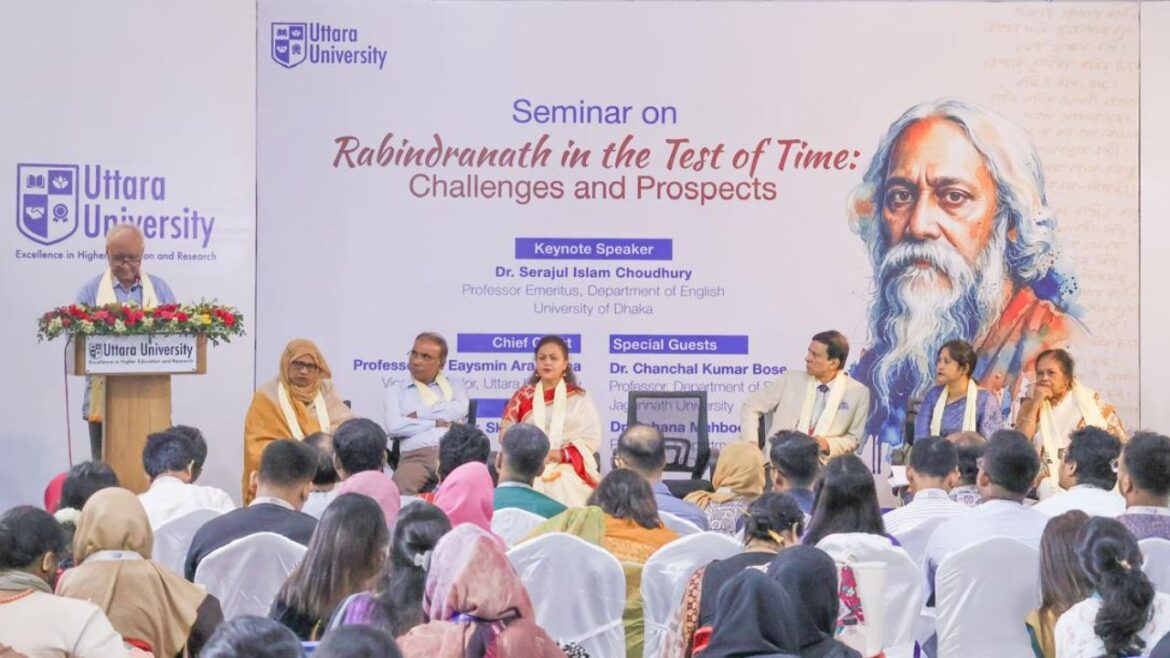
A special seminar titled “Rabindranath in the Test of Time: Challenges and Prospects” was held today at the university campus, jointly organised by the Department of Bangla and the Department of English at Uttara University.
Dr Serajul Islam Choudhury, emeritus professor of the Department of English at Dhaka University, attended the event as the keynote speaker. In his address, he provided a profound analysis of the relevance of Rabindranath’s work amidst contemporary crises and its future potential.
Describing the poet’s journey as a global citizen, Professor Choudhury remarked that Rabindranath was deeply seated in the hearts of the people, evolving from a Bengali and an Indian into a “global, timeless, and universal” figure.
He emphasised that the nation’s debt to him is “undeniable” due to his immense contribution to enriching literary thought and language.
Professor Choudhury further noted that it is impossible to imagine the cultural evolution of Bengalis or the global blueprint of Bengali literature by excluding Rabindranath.
Professor Dr Eaysmin Ara Lekha, the honourable Vice-Chancellor of Uttara University, graced the seminar as the chief guest. She described Rabindranath as an “eternal present” in every crisis and transition rather than a figure confined to the past.
According to Dr Lekha, comprehending the depth of his creations requires “freedom from the shackles of conventional thinking” and deep concentration. She asserted that in today’s complex era, Rabindranath’s relevance has not faded, but rather his work feels “even more alive.”
The seminar also featured a panel of distinguished speakers, including Dr Parveen Akther Jemy, Professor at the Department of Bangla, Jagannath University; Dr Sohana Mahbub, Professor at the Department of Bangla, Dhaka University; and Dr Chanchal Kumar Bose, Professor at the Department of Bangla, Jagannath University.
Other participants included Momtaz Begum, Professor at the Department of Bangla, Uttara University; Dr Faez Mohammad Serajul Hoque, Advisor, Uttara University; and Dr Syeda Afroza Zerin, Dean of the Faculty of Arts and Social Sciences, Uttara University.
During the session, speakers discussed the necessity of Rabindranath’s philosophy in addressing current social and cultural crises. Prof. Bose and Prof. Sohana presented research-based analyses of his major literary works, which deeply inspired the attending faculty and students.
The seminar concluded with a vote of thanks from the convener, Dr Shah Ahmed, Associate Professor of the Department of English, who expressed gratitude to the visiting guests and researchers on behalf of the organising committee.