

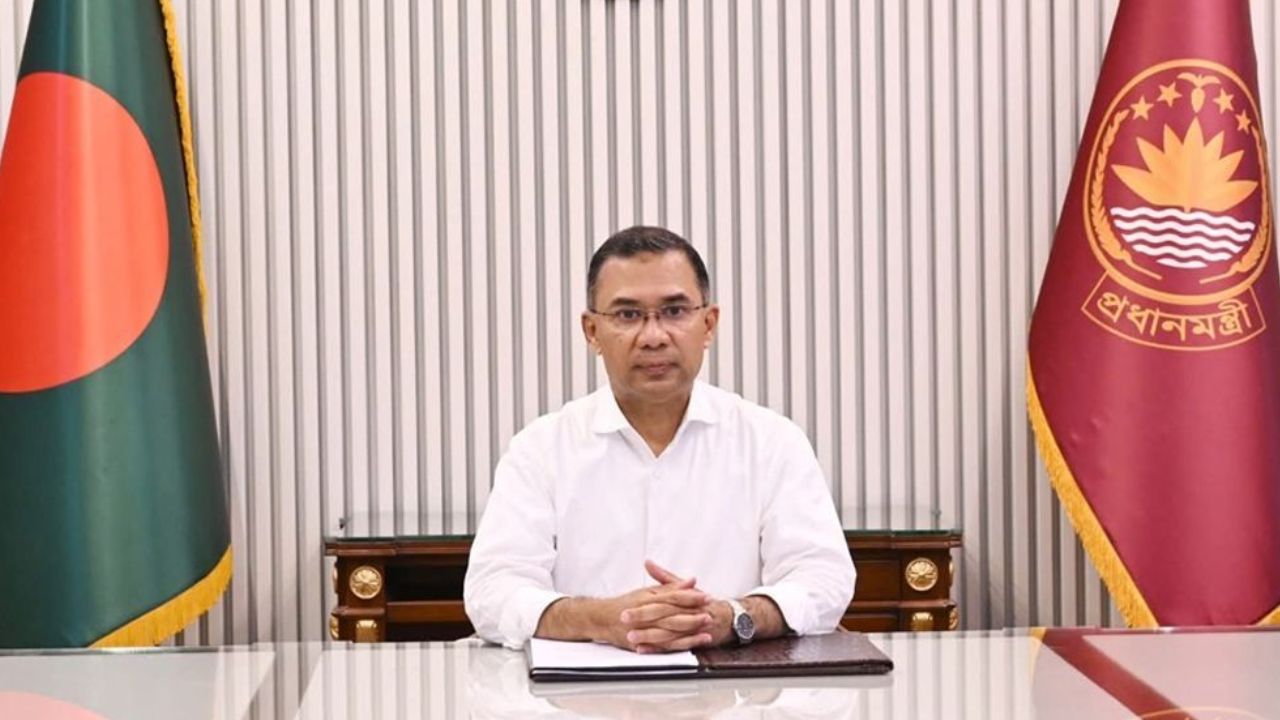
Securing a landslide victory was the easy part; after three months, Prime Minister Tarique Rahman’s political honeymoon is colliding with formidable structural crises.
The BNP administration now navigates a complex web of economic, political, and diplomatic hurdles to sustain its initial advantage. Analysts caution that 100 days is insufficient for a definitive assessment. Nevertheless, while the government has launched several positive initiatives, policy weaknesses and sluggish reform implementation are already evident.

To succeed, the administration must fight simultaneously on four fronts: the economy, good governance, diplomacy, and political stability, analysts said.

The economic strain is particularly acute, they say. The government needs to manage domestic and foreign debt totalling roughly Tk22 lakh crore, increase revenue collection, boost investment, and overhaul a fragile banking sector.

Simultaneously, it faces pressure to implement post-July uprising reforms, maintain law and order, and manage the reorganisation of the banned Awami League.

On the global stage, maintaining balanced relations between India, China, and the United States, while managing the Rohingya crisis, remains vital. Dissatisfaction is also mounting over the government’s handling of child measles deaths since the BNP took office.
Despite these burdens, Rahman has earned significant public praise for his accessible leadership style, drawing frequent comparisons to his father, the late President Ziaur Rahman. High-profile initiatives like protocol-free movement, driving himself through the capital, meeting young scientists, introducing “family and farmer cards,” and launching a canal-excavation programme have been well received.
BNP Standing Committee Member Begum Selima Rahman told TIMES of Bangladesh that the Prime Minister’s simplicity has won public hearts. “The prolonged dictatorship devastated our economy, leaving thousands of crores in debt. While resolving this will not be easy, the Prime Minister is determined to face these challenges head-on,” she said.
Nevertheless, critical questions are mounting regarding the slow pace of structural change. Public debate has intensified over stagnant law and order conditions and controversial decisions on judicial independence, including the abolition of the Supreme Court Secretariat and the repeal of the Judges Appointment Ordinance.
Dual challenge of governance and investment
Economic recovery demands a surge in domestic and foreign investment, both of which rely on stability, transparency, and the rule of law. Yet, public impatience is growing over the government’s sluggish pace in delivering the governance reforms promised after the July uprising.
Early policy choices, including the appointment of the Bangladesh Bank governor, have already sparked debate. Badiul Alam Majumder, secretary of Shushashoner Jonno Nagorik, told TIMES of Bangladesh that investment will dry up without systemic reform. “Investors need to trust that their returns are secure,” Majumder said. “Without that confidence, even the best infrastructure will fail to attract capital.”
He argued that the July Movement sought to restore a democratic environment across all sectors. Instead, recent steps by the BNP administration, such as dissolving the Supreme Court Secretariat, repealing the Supreme Court Justice Appointment Ordinance, and failing to implement the July Charter, undermine governance. Majumder warned that if the government does not pivot toward genuine institutional reform, it will soon face compounding economic, diplomatic, and political crises.
Ordeal in economy and banking sectors
The most urgent task facing the new administration is managing the severe economic strain inherited from the previous government. A volatile combination of high inflation, surging non-performing loans (NPLs), systemic banking weaknesses, heavy foreign debt repayment schedules, and stagnant investment has pushed the economy into a corner.
Within the banking sector, an acute liquidity crisis and a widespread lack of depositors’ confidence in banks are actively choking off new private investment. Boosting revenue collection is now mandatory if the government hopes to sustain public spending, fund infrastructure projects, and maintain social safety nets.
However, rampant tax evasion, a narrow tax base, and a dominant informal economy continue to hamstring revenue management just as foreign debt instalments are peaking. Professor Mustafizur Rahman, a distinguished fellow at the Centre for Policy Dialogue (CPD), highlights these overlapping vulnerabilities.
“To mobilise domestic resources, the government is being forced to rely on both domestic and foreign borrowing,” he told TIMES. “This debt burden will inevitably intensify. To survive it, the administration must execute a dual strategy: aggressively scale up internal tax revenues while securing favourable external financing.”
The economist noted that while the government is currently negotiating with the International Monetary Fund (IMF) and has reached tentative agreements with the World Bank and the Asian Development Bank (ADB), the underlying conditions of these loans remain a critical variable. “The upcoming budget will face massive expenditure pressures,” he warned. “If the administration fails to revive stagnant investments, the fallout will trigger a domino effect, crippling everything from job creation to state revenue collection.”
Test of diplomatic balance among India, China, and the West
Maintaining a diplomatic balance among competing global powers is Bangladesh’s most complex foreign policy challenge. China remains a crucial infrastructure and credit partner, India centres regional security and neighbourhood relations, and the West provides vital trade and development cooperation.
As US–China rivalry intensifies in the Indo-Pacific, Dhaka must navigate this landscape carefully to avoid appearing aligned with any single strategic block. Leveraging cooperation from all three fronts to resolve the Rohingya crisis will serve as a definitive test of the government’s diplomatic acumen.
Former Ambassador M Humayun Kabir emphasised that international relationships are fundamentally transactional. “Diplomatic relations mean securing what is beneficial for oneself,” Kabir noted. “To achieve that, the economy must be strengthened. The government must prioritise this area and accelerate its efforts.”
Evaluating the administration’s first three months, Humayun advised patience but noted that the government is actively addressing core issues while attempting to maintain its equilibrium with India, China, and the West. However, he warned that foreign policy and domestic stability are deeply intertwined. Securing international investment requires skilled diplomacy backed by stable internal governance.
Dealing with opposition discontent
The early political honeymoon period is fading as opposition parties grow increasingly restless. Groups like Jamaat and the National Citizens’ Committee are taking a hard line against the slow pace of post-July reforms, partisan administrative appointments, and the government’s failure to restore law and order.
Dr Abdul Latif Masum, a retired professor of Government and Politics at Jahangirnagar University, warns that the administration is on thin ice. “The government is already showing fractures,” Masum told TIMES. “Controversial financial moves, such as backtracking on the Sammilito Islami Bank initiative and allegedly paving the way for the S Alam Group’s return to Islami Bank, have deeply angered political critics.”
According to Masum, the administration’s ambiguous stance on core state reforms is alienating its allies. With the banned AL actively looking for opportunities to sow discord, any failure to contain opposition grievances could trigger a law-and-order crisis the government is ill-equipped to handle.
Facing AL also a major political test
Since losing power, Awami League has maintained strategic silence for over a year and a half but is now attempting to reorganise.
There is growing speculation that party chief Sheikh Hasina intends to return to Bangladesh to pursue legal battles. Reports suggest she has already hired lobbyists to build public support, claiming her sentence is baseless in anticipation of her return.
Analysts warn that if Hasina returns and AL re-enters the political arena, managing the resulting situation will pose a serious challenge for the government.
AL Joint General Secretary AFM Bahauddin Nasim told TIMES, “Before the election, BNP said it did not want to ban any party. Yet after coming to power, it legally prohibited Awami League. But a party of millions cannot be kept banned for long. At the right time, Awami League will return to claim its rights. Even now, the party remains active on the ground.”
