

There was a time when three “Ts” defined the relationship between China and the United States – Tiananmen, Tibet and Taiwan.
But as China emerged over the past three decades as the world’s second-largest economy and a strategic challenger to American dominance, the agenda has evolved dramatically.

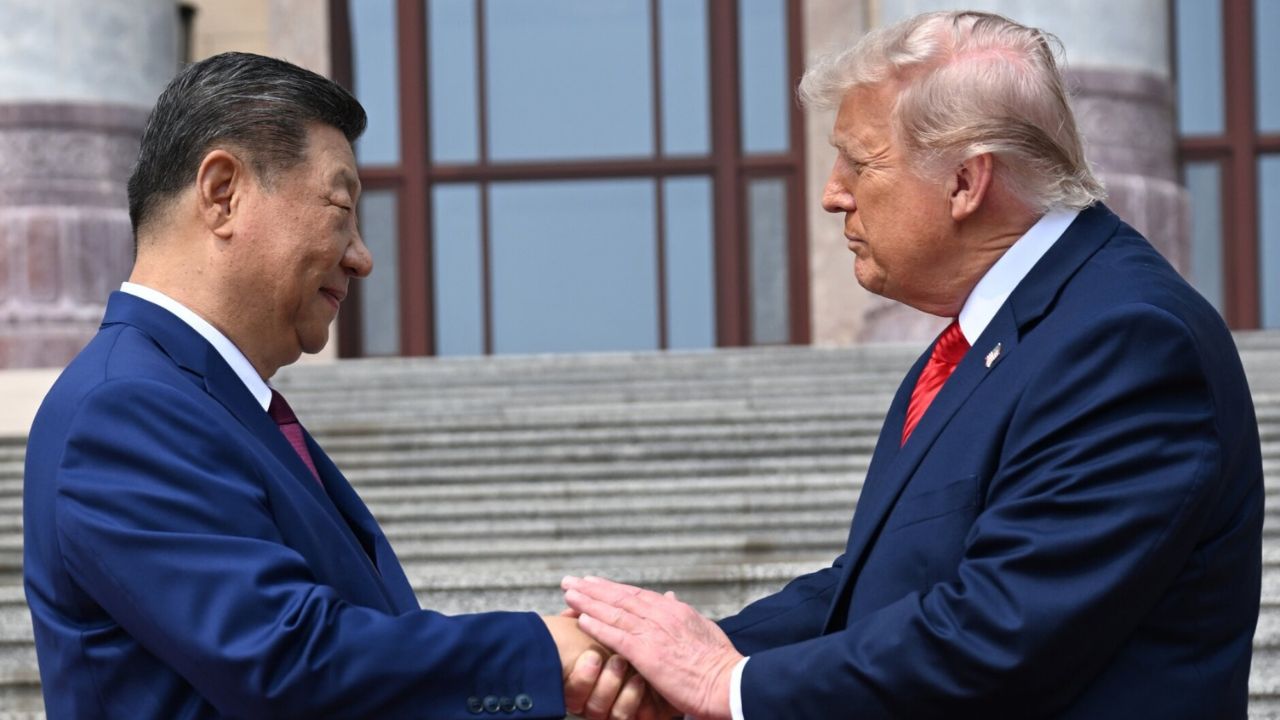
In 2026, during the Beijing summit between Chinese President Xi Jinping and US President Donald Trump, a new set of four “Ts” dominated discussions: trade, technology, Taiwan and Tehran.

The summit could prove pivotal not only for bilateral ties, but also for the wider global order, as the outcome may either reduce geopolitical instability or deepen uncertainty across multiple regions. The meeting is taking place at a politically sensitive moment for both leaders.


Trump faces mounting domestic pressure ahead of the US midterm elections amid growing public dissatisfaction over the conflict involving Iran, rising inflation and concerns over energy prices.

China, meanwhile, continues to struggle with economic pressures of its own, including sluggish growth, weak domestic demand and persistent youth unemployment, which has remained above 16 percent in recent months.
Still, many analysts believe Xi entered the negotiations with a strategic advantage.
Trump’s declining approval ratings and the political pressures of an election cycle may limit Washington’s bargaining leverage, while Xi operates with a longer-term strategic outlook and without immediate electoral constraints.
Xi comes into negotiations with the upper hand because he has something Trump does not have: time.
From strategic engagement to strategic rivalry
The atmosphere surrounding Trump’s latest visit differs sharply from his first state visit to Beijing in 2017. At that time, China welcomed Trump with elaborate pageantry aimed at demonstrating Beijing’s rising global stature and its willingness to maintain stable ties with Washington.
Trump was given a rare tour of the Forbidden City, the ancient home of China’s emperors, while his arrival ceremony outside the Great Hall of the People was broadcast live on Chinese state television – an unusual honour for a visiting foreign leader.
Back then, China was eager to persuade the United States to accept its growing international role.
This time, however, the dynamic appears different.

Washington is increasingly acknowledging China not merely as a trading partner, but as a geopolitical equal and strategic competitor capable of reshaping the international order.
That changing balance was reflected during Thursday’s talks when Xi reportedly raised the question of whether the two countries could avoid the so-called “Thucydides Trap”.
“Can the United States overcome the so-called Thucydides Trap and establish a new paradigm for bilateral relations?” Xi asked Trump during the discussions, according to Chinese officials.

The phrase refers to a theory derived from the writings of ancient Greek historian Thucydides, describing the dangerous dynamic in which a rising power threatens to displace an existing dominant power — often leading to conflict or war.
The concept has increasingly been used in discussions about the growing strategic competition between Washington and Beijing.
Security hiccups highlight mutual distrust
Despite the carefully choreographed diplomacy, several minor security incidents during the visit reflected the underlying tension and lack of trust between the two powers.
At the Great Hall of the People, US Treasury Secretary Scott Bessent was briefly prevented from entering after Chinese security officials said he lacked the proper identification badge.
Television footage showed guards stopping Bessent at the entrance and asking him to display the required security pin before eventually allowing him inside.

Shortly afterwards, there was another brief confrontation involving Chinese security personnel and members of the American delegation, including one individual appearing to wear military uniform.
A further disagreement reportedly occurred later when Chinese security officials initially refused to allow an armed US Secret Service agent into the Temple of Heaven during a joint visit by Trump and Xi.
After lengthy negotiations, both sides reached a compromise and the scheduled programme proceeded without major disruption.
While relatively minor, the incidents underscored the intense security sensitivities surrounding the summit and reflected the broader atmosphere of strategic caution shaping US-China relations.
