

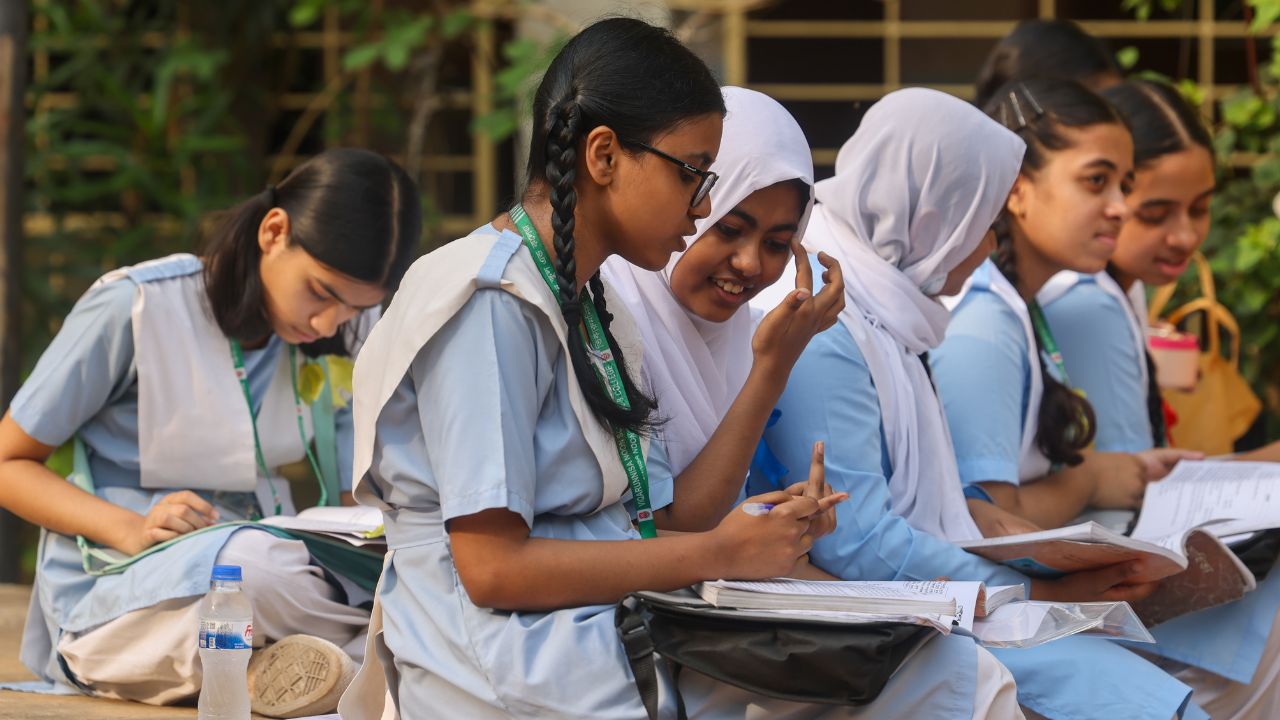
The government’s plan to bring the Secondary School Certificate (SSC) examinations forward by nearly three months from next year has prompted mixed reactions from students, parents and education experts.
Many parents have expressed concern that advancing the examinations by such a significant period midway through the academic year could leave students with inadequate preparation time.

Education experts have also raised questions over whether the compressed timeline would create a major learning gap.

On 14 May, Education Minister ANM Ehsanul Hoque Milon proposed holding the 2027 SSC and equivalent examinations from 7 January to 6 February, instead of the traditional April-May schedule followed in recent years.

The announcement came while the 2026 SSC examinations are still under way, which began on 21 April and will continue until 20 May.

Education experts say three months is a long time in an academic calendar. It will be difficult to compensate for such a large reduction in classroom learning time. There are concerns over whether the syllabus can be completed properly.
A secondary education expert at the National Curriculum and Textbook Board (NCTB), speaking on condition of anonymity, said the proposal would inevitably affect students to some extent.
However, the official said discussions involving the NCTB, education boards, the ministry and teachers would be held before any final decision is taken on implementation.
Another NCTB expert said authorities were considering whether adjustments to the syllabus, teaching methods or examination process would be needed to accommodate the revised schedule.
The official added that if the proposed timeframe proves difficult to implement fully, the exam dates could still be revised.
Under the existing 2026 academic calendar, Class 10 pre-test examinations are scheduled to take place from 28 June to 13 July, while test examinations are due between 28 October and 10 November.
After completion of registration and form-fill-up procedures, education boards usually publish SSC examination schedules in January or February for exams held later in April.
The education minister announced at a press conference at the Secretariat on 14 May that the government plans to hold SSC examinations in January and HSC examinations in June from next year.
The minister said the long-term goal was to gradually shift both public examinations to December in order to reduce the time students spend in the education system.
He said the government was consulting stakeholders to ensure syllabuses could be completed on time before implementing the revised examination schedule.
Parents say classes have been disrupted repeatedly this year because of political programmes, election-related activities, Ramadan and Eid holidays, while further vacations still lie ahead.
As a result, many believe the students are already facing a significant academic shortfall.
“When will students actually study properly in classrooms?” asked Bithi Akter, guardian of a Class 10 student at Piari Girls’ High School in Palashbari upazila of Gaibandha.
“The main pressure will fall on students. Teachers may somehow finish the syllabus, but students will probably have to rely on private tuition and coaching centres to complete their preparation,” she said.
A head teacher of a secondary school in Kaliganj upazila of Jhenidah, speaking on condition of anonymity, said the compressed schedule would leave little room for revision and exam preparation.
“After the test examinations, students usually receive preparatory classes for the board exams. There will barely be any opportunity for that,” he said.
He added, however, that holding SSC examinations in December could become feasible in future if the academic calendar is redesigned with a coordinated two-year plan beginning from Class 9.
Another head teacher from Adarsha High School in Pirganj, Rangpur, pointed to the logistical challenges facing education boards under the proposed schedule.
He said schools usually require 10 to 12 days to publish test examination results, followed by another seven to 10 days for SSC form fill-up procedures.
Verification and finalisation of applications then take an additional five to seven days, he said.
“After form fill-up, education boards normally need at least two months to complete all administrative procedures before arranging the examinations,” he said.
“If the exams are brought forward this quickly, everything will become rushed.”
Education expert Manzoor Ahmed, who headed an advisory committee on improving secondary education formed by the former interim government, questioned the need to bring the examinations forward so quickly.
“There was no urgent necessity to advance the exams at such speed,” he said.
He warned that the revised schedule could create learning gaps for students.
“There is a risk of students facing a learning shortfall. More important than simply holding examinations is ensuring quality classroom teaching. I hope the government will focus on that,” he said.
When contacted, Secondary and Higher Education Division Secretary Abdul Khaleque said the decision had been taken after discussions with stakeholders.
“The education minister announced the decision formally at a press conference. I have nothing further to add on the matter,” he said.
However, when asked whether the government had any specific plan to address concerns over student preparedness and possible learning gaps caused by bringing the examinations forward by nearly three months, the secretary declined to comment.
