

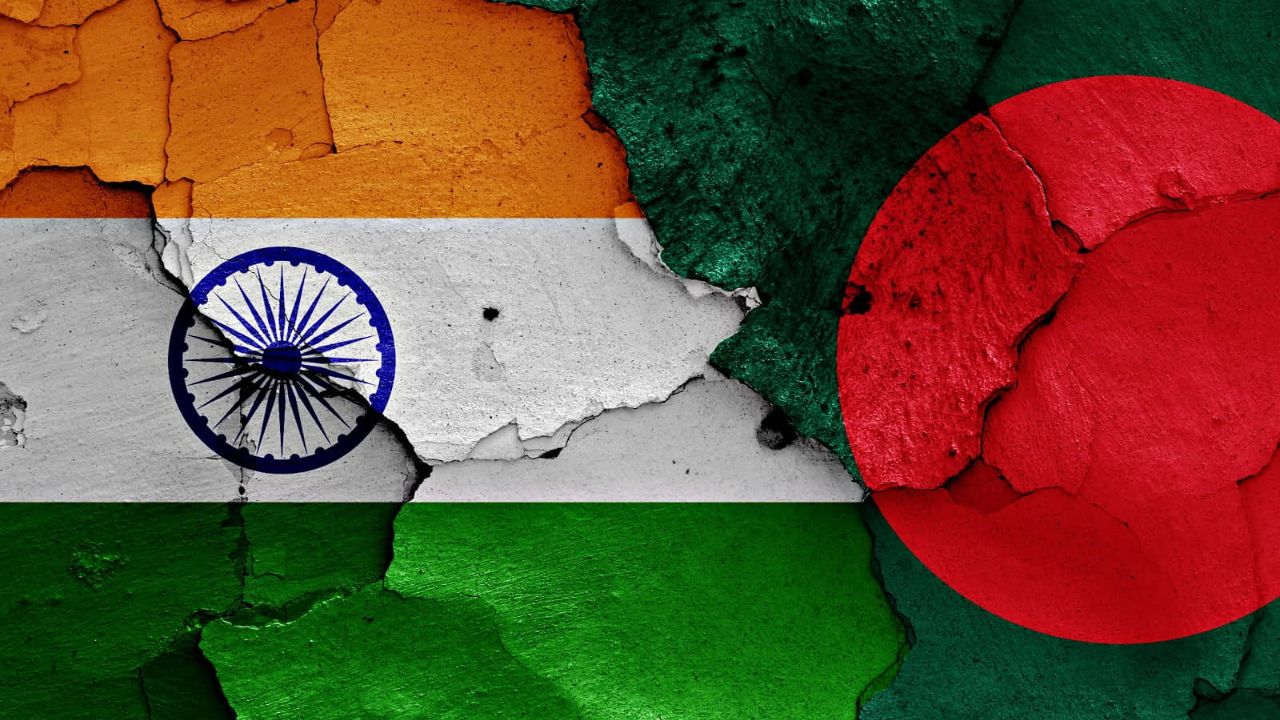
India’s rhetoric and diplomatic messaging towards Bangladesh have often appeared at odds with its actions.
Since the fall of the Awami League government on 5 August 2024, many in Dhaka have perceived New Delhi’s approach as increasingly unfriendly. During the tenure of the interim government, bilateral relations reached one of their lowest points in recent years.

Indian officials repeatedly stated that New Delhi would work with a democratically elected government in Bangladesh.

On October 6 last year, Indian Foreign Secretary Vikram Misri told a group of Bangladeshi journalists in New Delhi, “India is firmly in favour of holding free, fair, participatory and inclusive elections in Bangladesh at the earliest, and it is ready to work with any government chosen by the people in the polls.”
After the February elections brought the BNP government to power, India’s public messaging remained cordial. However, many observers argue that developments on the ground have not always reflected that tone.

Political rhetoric targeting Bangladesh intensified during recent election campaigns in the Indian states of Assam and West Bengal. Critics also point to pushback attempts along the border and other incidents that have generated concern in Dhaka.
The latest controversy involves Prime Minister’s Information Adviser Zahed Ur Rahman, who was subjected to harassment at New Delhi airport.
‘I was harassed,’ says Zahed
Indian immigration authorities kept Zahed waiting for more than two hours before eventually clearing him for entry into India on Sunday.
Speaking to journalists at the Secretariat on Tuesday, the adviser said, “I think what happened to me, I will call it harassment.”
Zahed reiterated that Bangladesh would safeguard its national interests and would not engage with any country by compromising those interests.
Asked whether Bangladesh would take any diplomatic action in response, he said the Ministry of Foreign Affairs was assessing the matter and would determine the next course of action.

Regarding the reason behind the incident, Zahed said he did not know why he had been singled out.
During the Awami League government’s tenure, he was involved in activism against the administration through various platforms.
“I do not know why they behaved like this,” he said.
Despite the experience, Zahed expressed hope that the incident would not damage bilateral relations. He also said he would be willing to visit India again if invited in the future.
Risk of fueling anti-Indian sentiment
During the interim government’s tenure, there were indications that India wanted to maintain constructive relations with the BNP. Indian External Affairs Minister S Jaishankar visited Dhaka to attend the funeral of former prime minister Khaleda Zia, while Indian Lok Sabha Speaker Om Birla attended the swearing-in ceremony of the new BNP government following the elections.
These gestures were widely viewed as positive signals from New Delhi.
However, critics argue that such messages have not always been matched by actions. They point to recent border-related tensions and the treatment of a senior Bangladeshi official at New Delhi airport as developments that could complicate efforts to improve relations.
Analysts warn that such incidents could further fuel anti-Indian sentiment in Bangladesh, particularly at a time when public perceptions of India remain sensitive.
It is widely acknowledged that New Delhi enjoyed particularly close relations with the Awami League government led by former prime minister Sheikh Hasina. Following the collapse of her government in August 2024, she fled to India and has since been staying there.
Media reports also say several hundreds of Awami League leaders and activists have taken shelter in India, many of them without proper documents.
Diplomatic observers note that maintaining healthy bilateral relations requires political will and mutual trust on both sides. This is particularly important for neighbouring countries whose economic, security and cultural interests are deeply interconnected.
International affairs experts argue that India doesn’t like the upcoming visit of prime minister Tarique Rahman to China before going to Delhi, which doesn’t have friendly relations with Beijing.
This may trigger India’s unfriendly actions towards Bangladesh.
In addition, Indian High Commissioner designate Dinesh Trivedi’s comments on bilateral relationships between Dhaka and Delhi further added salts to the injuries as he was asked not to talk with press before presenting credential. Dhaka didn’t like his comments indirectly calling for unifying both the countries and their cricket teams.
The recent tensions triggered following India controversial actions are unlikely to help efforts to strengthen ties between Dhaka and New Delhi. Diplomats argue that pragmatism, patience and sustained engagement are now more important than ever.
Ultimately, communication and dialogue remain the most effective tools for preventing misunderstandings and rebuilding confidence between the two neighbours.
