

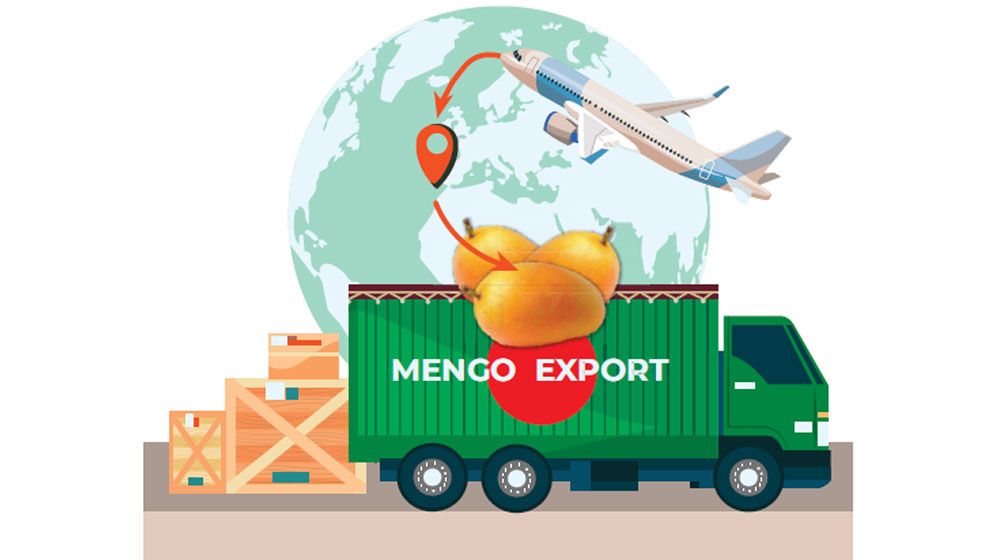
Bangladesh’s mango industry is rapidly emerging as a potential game-changer for the country’s export basket, but a new study warns that the nation risks missing out on booming global demand without urgent reforms.
Despite producing over 2 million tonnes of mangoes annually, Bangladesh exports only a tiny fraction, leaving a major agricultural opportunity untapped.
The study — Advancing Mango Production and Forward Marketing in Bangladesh: From Local Garden to Global Markets — was launched Wednesday in Dhaka by the Sustainable Agriculture Foundation Bangladesh and LightCastle Partners, with support from HSBC Bangladesh.
Global demand for mangoes stands at nearly 2.4 million tonnes a year. While Mexico, Thailand and Brazil dominate international trade, Bangladesh ranks eighth in global production, generating 1.5 million tonnes in 2022. Yet less than 0.05% of its output reaches foreign markets.
Mango exports rose to $284,135 by May 2025, exceeding previous years, with shipments expanding beyond Europe and the Middle East to new markets such as China. Analysts say the growth is encouraging but still far below the country’s potential. The report identifies five key obstacles: slow adoption of global GAP certification; weak post-harvest and cold-chain systems; limited branding and market intelligence; fragmented government–private sector coordination; and inadequate policy attention to mangoes as a priority export crop.
Speaking at the launch, Nasir-Ud-Doula, director general of the Department of Agricultural Marketing, said the government is putting greater emphasis on boosting mango export capacity.
“A coordinated and comprehensive approach is essential. Collaboration among the ministry, the National Board of Revenue, airlines, shipping lines and the private sector will be key to building a competitive mango export ecosystem,” he said.
HSBC Bangladesh’s Chief Operating Officer Davesh Dayal Mathur pointed to the rise of farmer-entrepreneurs as a promising trend for export-led agriculture.
Industry leaders said Bangladesh could significantly expand its presence in high-value markets, including the United States, European Union and the Middle East, if quality standards, traceability systems and varietal diversification are strengthened.
They added that with the right investments and policy reforms, mango could become a flagship export product, helping boost foreign earnings and support Bangladesh’s transition from Least Developed Country status in 2026.
