

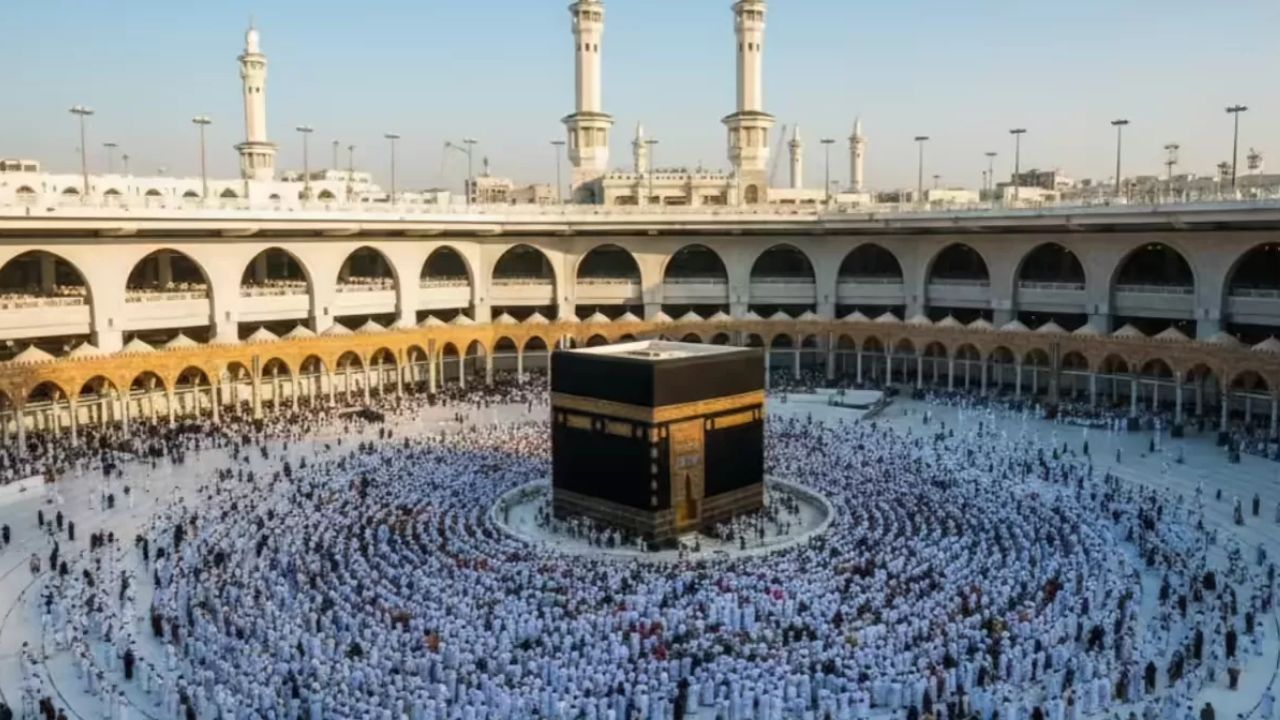
Hajj is one of the five obligatory pillars of Islam, which every capable Muslim must perform at least once in their lifetime. Umrah, although not obligatory, has deep spiritual and religious importance.
Every year, a large number of people from Bangladesh take part in these acts of worship in the holy cities of Makkah and Madinah. This journey is not only a personal religious duty; it is also connected to people’s faith, the image of the country, and large financial transactions.
Yet the reality is that this sacred worship often turns into a painful experience due to mismanagement, broken promises, and concealment of information.
Deciding to perform Hajj or Umrah does not only mean buying a ticket or choosing an agent. It is a physically demanding and mentally testing act of worship. Therefore, it is the responsibility of every pilgrim to take proper religious and practical preparation.
In recent years, complaints about suffering and irregularities in Hajj and Umrah management have regularly appeared on social media and in various news outlets in Bangladesh.
Lack of preparation, broken promises, problems with accommodation and transport, poor food quality, flight changes, and even long and exhausting bus journeys from Madinah to Jeddah on the return trip have, in many cases, caused severe physical and mental stress for pilgrims. In this reality, a fundamental question inevitably arises: where does the responsibility lie, and who is at fault?
Pilgrims should gain prior knowledge about the rules and rituals of Hajj and Umrah, consider their physical ability, and regularly follow government registration and information systems.
At the same time, maintaining discipline, patience, and brotherhood in the holy land is also their moral duty. For first-time pilgrims especially, one issue is extremely important: before choosing a Hajj agent, they should learn about the agent’s actual performance and reputation. Relying only on advertisements, personal connections, or verbal assurances can turn this sacred journey into suffering.
Pilgrims should clearly confirm the travel route before booking. The return journey, in particular, is often kept deliberately unclear. Pilgrims should find out in advance whether the return flight is directly from Madinah to Dhaka, or whether they will have to travel nearly 400 kilometres by an exhausting bus journey from Madinah to Jeddah and then fly back to Dhaka.
If this information is hidden or not disclosed beforehand, it can cause serious physical and mental distress, especially for elderly, sick, and female pilgrims. This route-related information should be clearly mentioned in the written contract. It is also very important to verify whether the contract is with a licensed main Hajj agency or with one of its appointed sub-agents.
The role of Hajj agencies is extremely important in this system. They are not just service providers; they are partners in the most sacred act of worship in people’s lives. Yet in reality, this responsibility is often not properly fulfilled.
Complaints are frequently heard about hotels being much farther than promised, low-quality or insufficient food, and a lack of special arrangements for elderly and sick pilgrims. Many times, important information about airlines or travel arrangements is not shared in advance, leaving pilgrims physically and mentally distressed.
This behaviour is not only unethical, but also contrary to religious values. Hajj agencies must remember that they are not selling an ordinary travel package; they are carrying the responsibility of a religious trust.
The most worrying issue is that even when Hajj and Umrah pilgrims are deceived or betrayed, in most cases they accept it silently.
There is almost no tendency to submit written complaints or take legal action with the Ministry of Religious Affairs, the Hajj Office, or the Hajj Agencies Association of Bangladesh (HAAB). This silence is the greatest strength of dishonest agencies. When there are no complaints, there is no investigation; and without investigation, there is no punishment.
As a result, these agencies continue the same unethical practices year after year, effectively remaining above the law.
Taking advantage of this culture of avoiding responsibility, serious irregularities have occurred in recent times. Many pilgrims were promised flights with Saudia Airlines, but at the last moment, without clear explanations or prior consent, they were shifted to a budget airline called Flyadeal, using excuses such as ‘no seats available’ or ‘departure will be delayed by a few days.’
The direct victims were elderly and sick Hajj and Umrah pilgrims, for whom Hajj was meant to be an act of worship but instead became a source of physical and mental suffering.
Similarly, hotels promised within 300–400 metres in Makkah were replaced with accommodation in the hilly Al-Taysir area. In Madinah, accommodation promised in the Markaziyah or nearby area was instead provided in a low-quality hotel about 2.5 kilometres away, in areas such as Shaza, Al-Hijrah Road, and Al-Suqiya.
Due to a lack of basic guidance on using the Saudi Umrah Ministry’s Nusuk app and the process of obtaining permits for visiting Riyadul Jannah, as well as the lack of cooperation from Hajj agencies, many Umrah pilgrims, especially women, were forced to return home without visiting the Rawdah of the Prophet Muhammad (peace be upon him).
The writer has direct accounts from several victims on this matter. Sadly, none of them are currently interested in taking legal action. This reality proves that the problem is not only a few dishonest agencies; it is a system without accountability, where the silence of victims and administrative negligence together turn irregularities into an institutional practice.
The government’s responsibility cannot be limited to setting quotas or managing registration systems. Effective Hajj management requires strong oversight, transparency, and accountability. If agencies that break promises or hide information are not dealt with swiftly and visibly, the same irregularities will continue to happen.
At the same time, it is essential to build an effective complaint resolution system for Hajj and Umrah pilgrims, make the complaint process easy and safe, and ensure special guidelines for pilgrims with special needs. Without clear examples of punishment, these irregularities will not stop.
Hajj and Umrah are not luxury trips; they are acts of worship based on self-purification, sacrifice, and patience. To ensure that this journey does not turn into a story of deception and suffering, responsible and joint action by pilgrims, Hajj agencies, and the government is essential.
If honesty, transparency, and accountability can be ensured, Hajj and Umrah can once again regain their true dignity – as peaceful, sacred journeys and the greatest acts of worship in a believer’s life.
The post <span style='color:red;'>HAJJ AND UMRAH/</span>Whose responsibility, whose failure? appeared first on Daily Times Of Bangladesh.
