

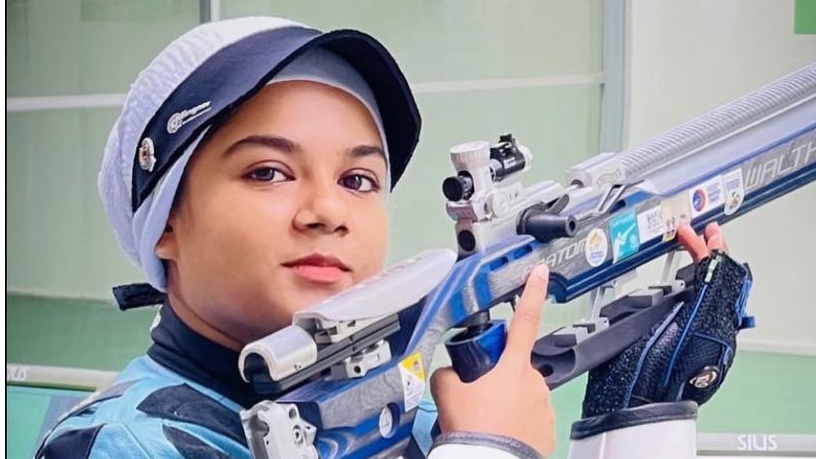

Bangladesh’s shooting arena erupted this week when the Bangladesh Shooting Sports Federation handed star shooter Kamrunnahar Koly a one-year ban, confirmed by letter on Tuesday to the Bangladesh Navy and the Bangladesh Olympic Association, following an executive meeting in Dhaka and allegations of disciplinary breaches at the national camp.
The Federation escalated matters fast. It moved from a temporary suspension in early January to a full one-year ban within a month, citing discipline, security, and institutional order as its reasons.
In a letter signed by General Secretary Ferdous Ara Khanam, the Federation stated that Koly violated seven clauses of the national training camp’s code of conduct. Officials said the executive committee approved the punishment at its sixth meeting on 2 February.
The letter also described an incident on 25 January at the Federation office. According to the Federation, Koly showed “extremely indecent, insulting, threatening, and aggressive behavior” towards senior officials and staff, with a police officer present. The Federation claimed the episode caused a breakdown in law and order.
On that basis, officials enforced Articles 16.20 and 16.21 of the Federation constitution. The ruling bars Koly from all shooting activities for one year.
Koly rejects the narrative entirely. Speaking exclusively to Daily Times of Bangladesh, she framed the ban as payback, not punishment. “This has been going on for the last three or four months,” she said, pointing to her protests and insisting the National Sports Council’s inquiry committee found merit in her complaints. That context matters, because it turns a discipline case into a power struggle.
She accused the leadership of ignoring official decisions and tightening control through an ad hoc committee. “Because of me, their corruption came out,” Koly said, arguing the ban flows from “anger and revenge,” not conduct. The Federation denies any such link.
Koly also dismissed the charge of misconduct as a familiar weapon. “Whenever an athlete speaks the truth, they use discipline as an excuse to silence them,” she said. Her point cuts deep in Bangladeshi sport, where whistle-blowers often pay the price.
She stressed personal dignity as much as procedure. “I am a human being before I am a shooter. I have self-respect,” Koly said, arguing that protest becomes inevitable when officials apply pressure or make unethical approaches.
The Federation labelled her behaviour “threatening.” Koly countered that she only asked General Secretary Aleya Ferdousi to explain the grounds of her suspension and claimed she has video evidence posted publicly. That clash of versions now defines the case.
Beyond her own fate, Koly warned of wider damage. “Indoor sports are getting destroyed because of this dirty politics,” she said, pointing to a recent tournament where Bangladesh fielded only one shooter. The implication is stark: governance failure now undermines performance.
Asked about her next move, Koly struck a measured tone. “Let the election on the 12th finish and a new government come,” she said, adding she would appeal through proper legal channels. Her focus has shifted from targets to tribunals.
The ban removes a proven performer from the national setup. Koly remains the only Bangladeshi shooter to post a 629 score in the 10m Air Rifle qualification at the 2022 ISSF World Championship in Egypt, a benchmark that still stands alone.
The crisis deepens with reports that another leading shooter, Shaira Afrin, has stepped away from the sport amid the turmoil. The Federation insists Koly’s punishment relates strictly to discipline, not her earlier allegations against joint secretary GM Haider, including claims of sexual harassment, which the ban notice did not mention.
