


Tomorrow is the day. After years of bloodshed, uncertainty and political rupture, the nation is preparing to hold what many hope will be its first genuinely competitive parliamentary election since December 2008.
For a country scarred by disputed polls and democratic backsliding, the 13th parliamentary election is widely seen as a moment of reckoning.
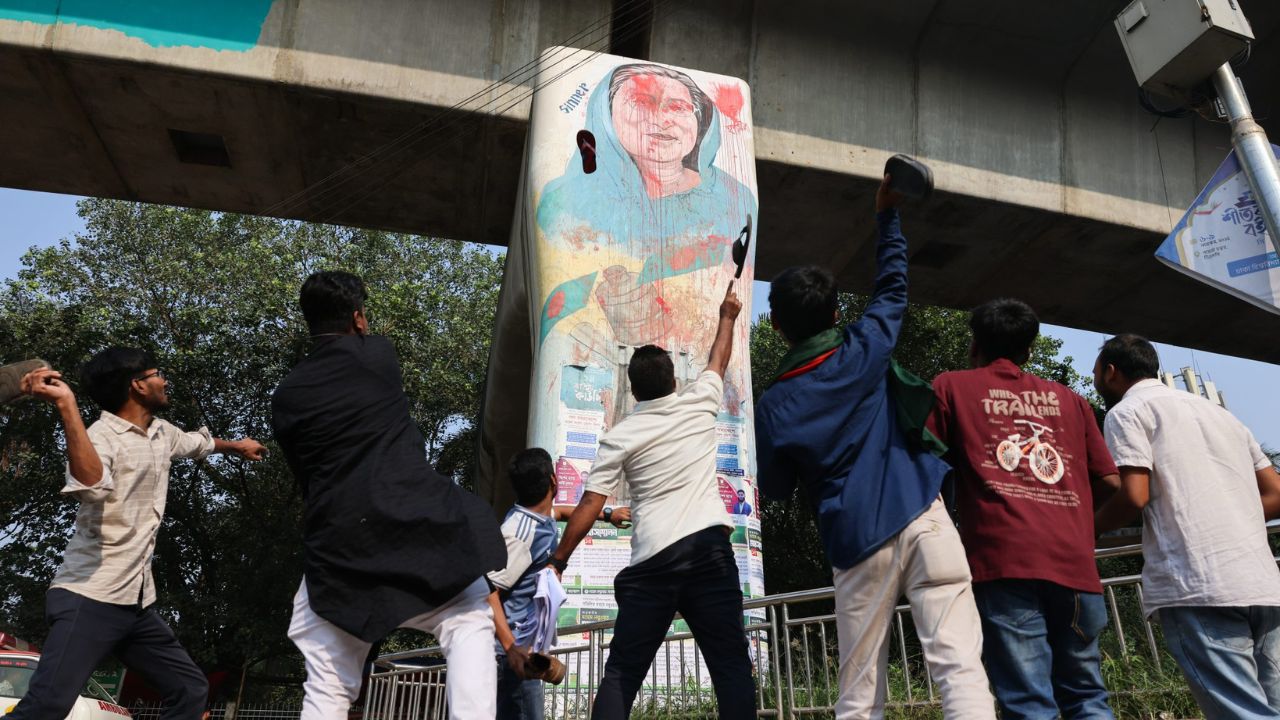
This moment has come at an enormous cost. The path to the ballot box was paved by the July 2024 mass uprising, which toppled the long-entrenched autocratic regime of Sheikh Hasina. That government had remained largely unshaken for more than a decade despite sustained movements led by BNP and Bangladesh Jamaat-e-Islami.
Over the past 15 years, both parties suffered extensive repression under Awami League rule, with leaders and activists killed, injured, imprisoned or subjected to enforced disappearance. Yet it was the student-led uprising that ultimately altered the political equation.
According to a United Nations fact-finding mission, more than 1,400 people were killed by law enforcement agencies during the protests, while countless others were injured.
Following Sheikh Hasina’s flight to India, Nobel laureate Muhammad Yunus assumed leadership of an interim administration. From time to time, his tenure has drawn criticism and disappointment from many quarters, but it has nonetheless steered the country to the brink of a consequential election.
The journey has been fraught with suspicion and mistrust. Even as campaigning ended on Tuesday, doubts persisted over whether voting would actually take place. That the country is now hours away from polling owes much to pressure from civil society, political actors and a public determined not to let the moment slip away.
The election, however, is not fully participatory. The absence of Awami League, the country’s oldest political party, whose activities are currently banned, remains a significant flaw. While many argue that the party is in no position to contest after its recent record, its exclusion underlines the imperfect nature of the process.
Yet there is also a widely shared view that Bangladesh cannot be governed indefinitely by an unelected administration. Among politically conscious citizens, the expectation is that Awami League will eventually return to mainstream politics after confronting its past abuses and removing leaders found guilty of serious crimes.
Even with these limitations, the stakes could hardly be higher. This election is not just about who forms the next government. It is about the credibility of state institutions, the cohesion of society and the survival of democratic norms.
The previous three elections, criticised domestically and internationally, were conducted under an increasingly authoritarian system and failed to reflect popular will. This time, expectations are markedly different.
For a new generation of students and ordinary citizens, voting is no longer a routine exercise. It is seen as an opportunity to reclaim ownership of the country’s future and to reset a political culture shaped by fear, coercion and exclusion.
In this context, the ballot has taken on symbolic weight, becoming a collective test of whether democratic repair is still possible.
Yet the atmosphere remains fragile. Rumours, provocations and fears of sabotage — including alleged domestic and foreign attempts to manipulate outcomes — continue to circulate.
These anxieties are a reminder of how deeply mistrust has become embedded after years of institutional decay. They also explain why restraint, vigilance and civic responsibility are as vital as enthusiasm in the final hours before polling.
One of the most corrosive consequences of prolonged polarisation has been the way politics has fractured everyday relationships. Families, friendships and neighbourhoods have often split along partisan lines, with bitterness that lingers long after elections pass.
This vote presents a chance to reverse that damage. Democratic competition does not require social hostility. Disagreement need not turn into dehumanisation. Without a culture of respectful debate, democracy cannot survive beyond election day.
Public fatigue with confrontational politics is increasingly visible. Many voters say they want an end to “tagging and bashing”, ideological labelling and the commercialisation of past sacrifices. Instead, there is growing demand for a cleaner political discourse focused on solutions rather than slogans.
Parties are being challenged to present credible plans on livelihoods, security, education and healthcare, rather than relying on blame and fear. This election may test whether politicians are willing to compete on competence instead of delegitimisation.
At the heart of this moment lies a broader question: can the tone of politics in the country finally change? For many, the answer will define whether the election becomes a turning point or merely another episode.
Personal attacks, winner-takes-all behaviour and the use of politics as a pathway to wealth have deeply damaged public trust.
A shift towards civilised policy debate, mutual recognition of political opponents and unity on core national interests is now widely seen as essential. Without such a change, the country risks retaining the form of elections while remaining deprived of genuine democracy.
The role of state institutions will be decisive. A peaceful and credible election depends on the neutrality and professionalism of the administration, the Election Commission and the security forces.
With nearly 180 million people invested in the outcome, even minor lapses could have disproportionate consequences. Conversely, a transparent process conducted with restraint could help restore confidence in institutions that have struggled to command trust.
Underlying all these dynamics is a powerful belief that a vote is not merely a right, but a moral responsibility. Increasingly, voting is framed as an ethical trust, requiring judgment, conscience and accountability.
The call to support honest, capable and patriotic representatives reflects a broader desire for moral renewal in public life, and an understanding that no leadership can succeed without public consent and cooperation.
What follows the results may matter as much as the vote itself. Acceptance of the outcome by both winners and losers will be a crucial test of political maturity.
Governing a divided society requires compromise and inclusion, while opposition politics demands vigilance without obstruction. Leadership can point the way, but it is an engaged and united citizenry that ultimately carries a nation forward.
As the nation stands on the threshold of this long-awaited election, the choice before voters extends beyond parties and personalities. It is a choice between perpetuating cycles of division or laying the foundations for a more inclusive, just and democratic order.
Whether this election marks a genuine turning point will depend not only on ballots cast, but on the tone adopted, the institutions upheld and the unity preserved in the days ahead.
