


“For the first time in two decades of running newsrooms, there was no phone call, no ‘advice’ and no attempt at censorship from any government agency on election day coverage or the presentation of results on election night,” a senior journalist wrote on his verified Facebook page on 12 February, the day voters elected BNP to govern the country for the next five years.
It was a simple observation, but one loaded with history. In Bangladesh, election nights have often come with tension inside newsrooms—editors glancing at phones, producers anticipating instructions, reporters bracing for subtle or not-so-subtle “guidance.” This time, there was none.


That absence spoke volumes about the media climate during the 18-month tenure of the interim administration led by Nobel laureate Muhammad Yunus.
While far from perfect, the period was marked by a relative loosening of overt political pressure on news organisations. Journalists criticised senior officials, including the chief adviser, without the immediate fear of reprisal that had defined earlier political eras.
Yet the record was not without blemish. The implementation of recommendations made by the Media Reform Commission remained incomplete. There were fears of mob violence targeting media outlets.
The country witnessed shocking attacks on two of its leading newspapers—Prothom Alo and The Daily Star—episodes that raised serious concerns about the safety of the press. Allegations also surfaced that some journalists lost their jobs for asking uncomfortable questions of powerful figures, though those claims were denied by the adviser concerned and the Chief Adviser’s Office.
Following the fall of the Awami League government on 5 August 2024, many journalists were reportedly dismissed, and several media houses changed hands.
The interim government detained a number of journalists seen as aligned with the previous regime on serious criminal charges, but prosecutions did not progress in court with visible speed. These episodes underscored that freedom in the country’s media space remains fragile and vulnerable to political tides.
And yet, compared with the experience under political governments, the last 18 months were widely regarded within the profession as a period of expanded breathing space.
There were no widely reported instances of authorities compelling media houses to withdraw stories simply because they embarrassed the government. Nor was there consistent pressure to publish material favourable to those in power.
Editors reported fewer intrusive phone calls. Talk shows hosted a wider ideological spectrum. Investigative reports surfaced more frequently.
That is the standard against which the new political government will inevitably be measured.
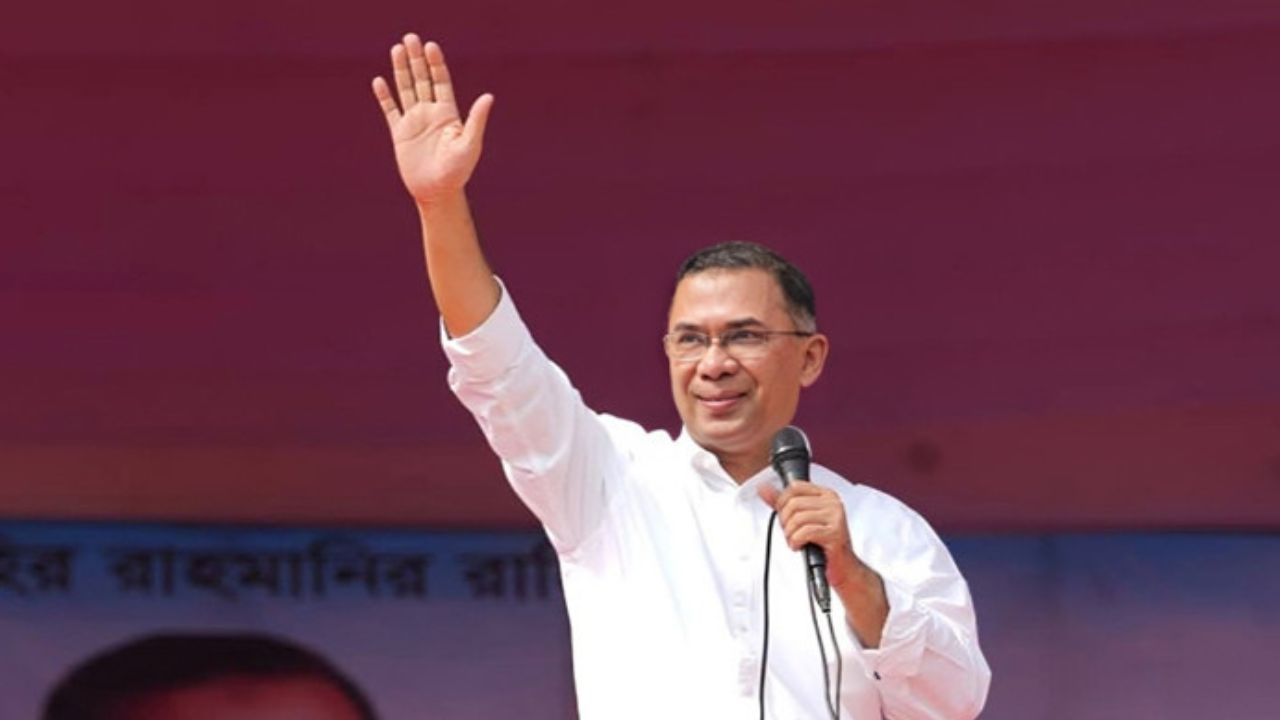
As Tarique Rahman prepares to take oath as prime minister, anxiety runs quietly through newsrooms. Many journalists are asking a question they would rather not have to ask: was Monday the last day of free journalism?
In his first interaction with the media on 10 January, the incoming prime minister offered words that many found cautiously reassuring. “Criticism is necessary. But not criticism for its own sake. What we need is criticism that helps solve the country’s problems,” he said.
The statement reflects an understanding that criticism is intrinsic to democratic life. Yet it also introduces an important tension: who determines what constitutes “constructive” criticism?
Governments often prefer accountability that aligns with their reform agenda. Journalists, however, define their role differently. Their duty is not to calibrate criticism for comfort, but to pursue truth—even when it is inconvenient.
The return of an elected political government after a prolonged interim period marks a decisive moment for the nation’s democratic trajectory. Elections determine who governs; press freedom shapes how they govern.
Once a society experiences a freer flow of information, expectations recalibrate. A rollback is no longer seen as routine friction between state and media, but as regression.
There are compelling reasons why a free press matters especially at this juncture.
First, legitimacy. The new administration comes to power with an electoral mandate. But legitimacy in a polarised society is strengthened by transparency. Independent scrutiny, rather than weakening authority, can reinforce it.
When policy successes and failures are reported openly, public trust rests on evidence rather than narrative management.
Second, accountability. Transitional moments are often accompanied by ambitious promises—anti-corruption drives, institutional reforms, economic restructuring. Without vigilant reporting, such pledges risk remaining rhetorical.
Investigative journalism serves as an early warning system, identifying gaps between commitment and implementation before they widen into crises.
Third, stability. The country’s political history demonstrates that suppressed dissent rarely disappears; it resurfaces in more volatile forms. A free media offers a structured platform for grievance and debate. Restrict that space, and discourse migrates to rumour, anonymous digital channels or the streets.
The path forward, however, is rarely linear. Political governments operate within party structures, coalition obligations and electoral calculations. Economic levers—advertising allocations, regulatory oversight, licensing—can shape media behaviour without formal censorship.
Even in the absence of explicit bans, subtle pressures can alter newsroom decisions.
This is where the prime minister’s words will be tested. If criticism is to be welcomed, even when sharp, then laws governing digital speech, defamation and national security will require careful review to ensure they are not deployed selectively. Structural guarantees matter more than rhetorical assurances.
There is also a responsibility on the media’s side. A freer environment demands rigorous verification and ethical standards. Sensationalism, misinformation and partisan amplification erode public trust and weaken the moral authority of the press. Freedom must be matched by professionalism.
Few nations have sustained democratic vitality without a vibrant media ecosystem. Investors, development partners and citizens alike assess governance quality through openness. A confident government does not fear scrutiny; it draws strength from it.
The past 18 months have shown that a less obstructed press is possible in Bangladesh. The silence of the phone on election night was not merely procedural—it was symbolic. It represented trust, or at least restraint.
Whether that silence endures will signal more than the health of journalism. It will reveal whether Bangladesh’s democratic reset matures into a durable culture of accountability, or whether the freedoms briefly expanded during interim rule recede under the weight of political expediency.
The newsroom will be watching—not as an adversary, but as an essential witness to power.
