


Climate change is no longer an abstract threat to future generations. It is a present‑day crisis reshaping lives, economies and ecosystems across the globe. Scientists now warn that the world remains severely unprepared for the scale and complexity of climate risks, urging a comprehensive global assessment to guide urgent policy action.
Despite decades of research and policy talks, there is still no internationally coordinated evaluation of the full spectrum of avoidable climate impacts. This leaves governments and communities without a clear roadmap to prioritise mitigation and adaptation strategies.


One of the most tangible consequences of a warming world is the rise in sea levels, driven by melting polar ice and the expansion of warmer ocean waters. A landmark study published this week in Nature reveals that global sea levels may already be substantially higher than previously estimated. On average, about 30 cm more, with some regions in Southeast Asia possibly facing up to 1.5 m higher levels due to modelling gaps.
These revisions imply that coastal flooding risks and storm surges will hit sooner and harder than anticipated, threatening millions of lives and critical infrastructure.

Across the world, rising temperatures are intensifying heatwaves, droughts and unpredictable rainfall patterns. Europe, Asia and the Americas all saw record‑breaking heat and extreme weather events in recent years. These incidents underscore that climate change is no longer a distant future but an ongoing global reality.
Without rapid cuts in greenhouse gas emissions and serious adaptation measures, average global temperatures are projected to climb well above safe limits, amplifying both environmental and socioeconomic instability.

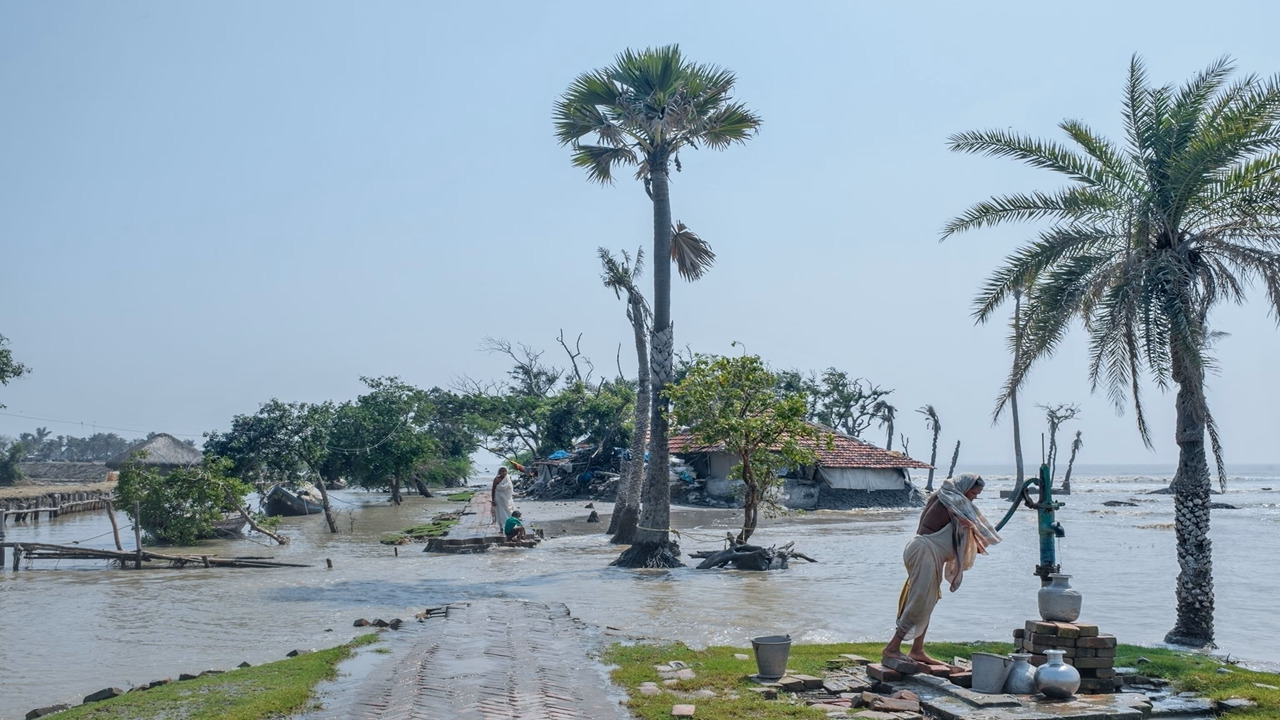
Nowhere is this more stark than in Bangladesh. Its low‑lying delta geography makes it particularly susceptible to rising seas, coastal erosion and saltwater intrusion. These forces are already degrading fertile agricultural land and contaminating freshwater sources. A one‑metre increase in sea level could submerge large portions of the country, displacing millions and fundamentally altering its landscape.

Beyond land loss, Bangladesh is grappling with more frequent and severe cyclones, heatwaves and erratic rainfall. These extremes not only devastate lives and livelihoods but also undermine food security, public health and economic productivity. Recent reports highlight that climate change has already contributed to tens of billions of dollars in lost productivity, particularly through heat‑related labour losses and increased disease risk.

Globally and in Bangladesh alike, the climate crisis is a multifaceted challenge. Climate change demands coordinated science‑based policy, resilient infrastructure investment and a dramatic shift toward renewable energy and sustainable development. What happens next, whether billions can adapt or millions will suffer, hinges on how urgently the world responds today.
