

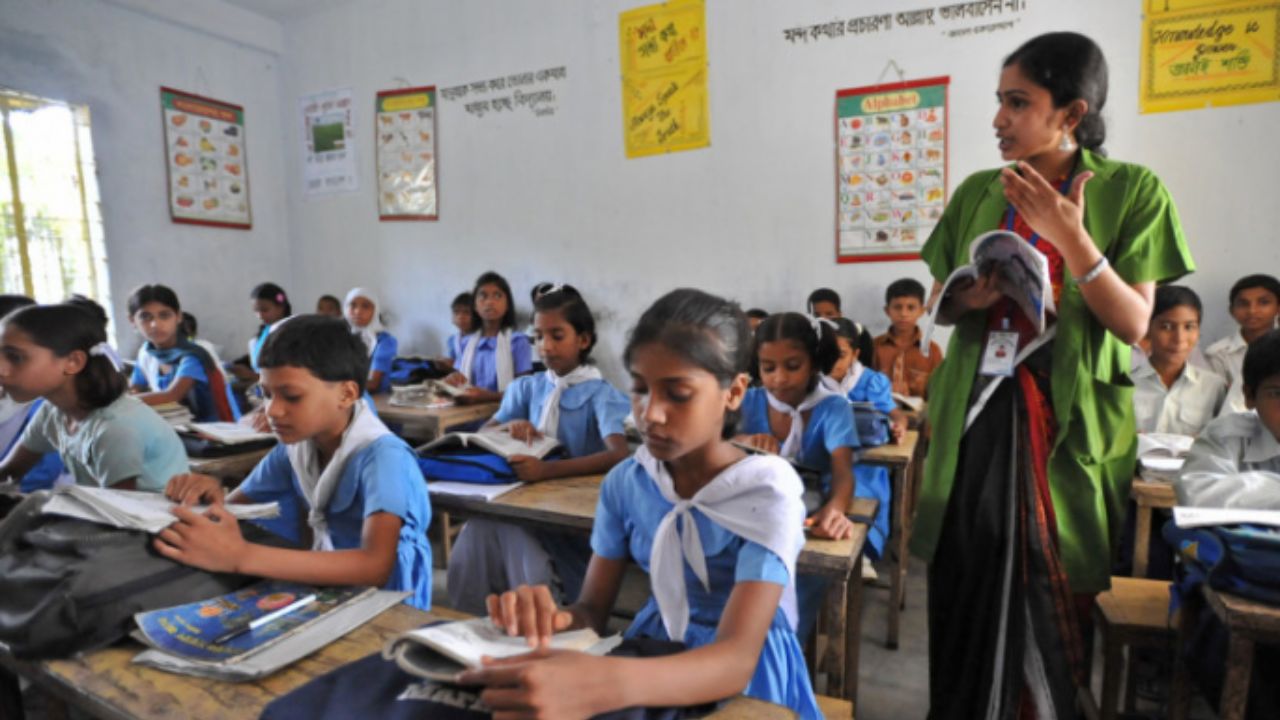

Despite official commitments to inclusive education, thousands of children with special needs in the country’s primary schools are receiving little meaningful support, raising questions about the government’s commitment to the policy.
Experts say at least 102,656 children with disabilities or special learning needs are currently enrolled in primary schools across the country, about half of them in government institutions.


Yet the absence of trained teachers, specialised teaching methods, and appropriate learning materials has left many of these children struggling to receive a proper education.
Education specialists warn that without urgent intervention, the future prospects of many of these students remain uncertain.
Bangladesh’s National Education Policy 2010 places strong emphasis on integrating children with disabilities into society and prioritises measures to support their education. However, analysts say that successive governments have taken little practical initiative to build a functioning inclusive education system.
An analysis of the latest primary education report published by the Bangladesh Bureau of Educational Information and Statistics shows that visually impaired, hearing-impaired and other children with special needs are attending classes without access to Braille, sign language, or specialised learning equipment.
This has raised serious concerns about the quality of education they are receiving.
What these children are actually learning, and how they are managing to follow classroom lessons without specialised support, remains unclear. Educationists, administrators and even teachers expressed little confidence that such nominal schooling will allow these students to continue their studies in higher levels of education.
Because of these shortcomings, Professor Manzoor Ahmed, who headed the Advisory Committee on Improving the Quality of Primary and Secondary Education formed during the interim government period, said the country’s inclusive education policy exists largely “on paper”.
“In reality, there is no genuine plan to implement inclusive education,” he told TIMES of Bangladesh.
“There are many different types and levels of disability, yet Bangladesh does not even have a proper system to identify them. Implementing inclusive education requires dedicated planning and investment,” he said.
He added that many children with disabilities also require medical treatment and counselling alongside their education, but such support systems remain largely unavailable.
Professor Manzoor also argued that not all children with special needs can be effectively accommodated within mainstream schools.
“Depending on the type of disability, some children require specialised institutions. Simply enrolling them in regular schools does not necessarily benefit them,” he said.
Official statistics show that at least 102,656 students with special needs are currently enrolled at the primary level across Bangladesh.
Of them, 47,689 are studying in government primary schools.
The data indicate that 16,973 students have physical disabilities, 4,630 are visually impaired, 1,348 have hearing impairments, and 6,644 have speech disabilities.
The largest group consists of 14,075 students with intellectual disabilities, while 1,388 students are autistic, 1,615 have learning disabilities, and 1,016 are recorded as having other forms of disability.
Despite the absence of specialised teaching materials or trained instructors, government primary schools enrol children with all types of special needs.
Authorities argue that integrating them into mainstream schools will help them adapt to normal social life.
In reality, however, the outcome is often the opposite.
Teachers from government primary schools in Gaibandha, Bogura, Rangamati, and several institutions in the capital Dhaka told TIMES that the government has instructed schools to ensure the enrolment of children with disabilities as part of efforts to integrate them into the mainstream education system.
As a result, schools admit these students even though they lack the capacity to teach them properly.
Teachers say students with severe disabilities often face difficulties in the classroom and sometimes become targets of ridicule from classmates.
Many eventually leave school after experiencing repeated embarrassment and exclusion.
Riaz Parvez, head teacher of Gendaria Mohila Samity Government Primary School in Dhaka, said a number of students with relatively mild disabilities are currently studying at his school.
“Many children with mild disabilities study here, but they generally fall behind compared with other students,” he said.
He added that for students with speech, hearing or visual impairments, as well as those with more severe intellectual disabilities, continuing their studies alongside regular students can be extremely difficult in practice.
Officials also acknowledge that the government’s efforts to implement inclusive education have faced significant shortcomings.
Abu Noor Md Shamsuzzaman, director general of the Directorate of Primary Education, admitted that government initiatives in this area have been limited.
“We have already ensured ramp facilities in 32,000 primary schools for physically disabled students,” he told TIMES.
“For other students with disabilities, a pilot programme is being implemented in three upazilas in Narsingdi and Sirajganj with the support of a non-government organisation to provide specialised education,” he said.
He added that a dedicated unit has also been established within the department to work towards improving inclusive education.
Teachers have been trained to provide additional care for students who can progress with some support, he said.
However, he noted that children with more severe disabilities may require preparation from their families before entering school.
“It would be better if specialised institutions could be arranged for those with more complex needs,” he said.
