

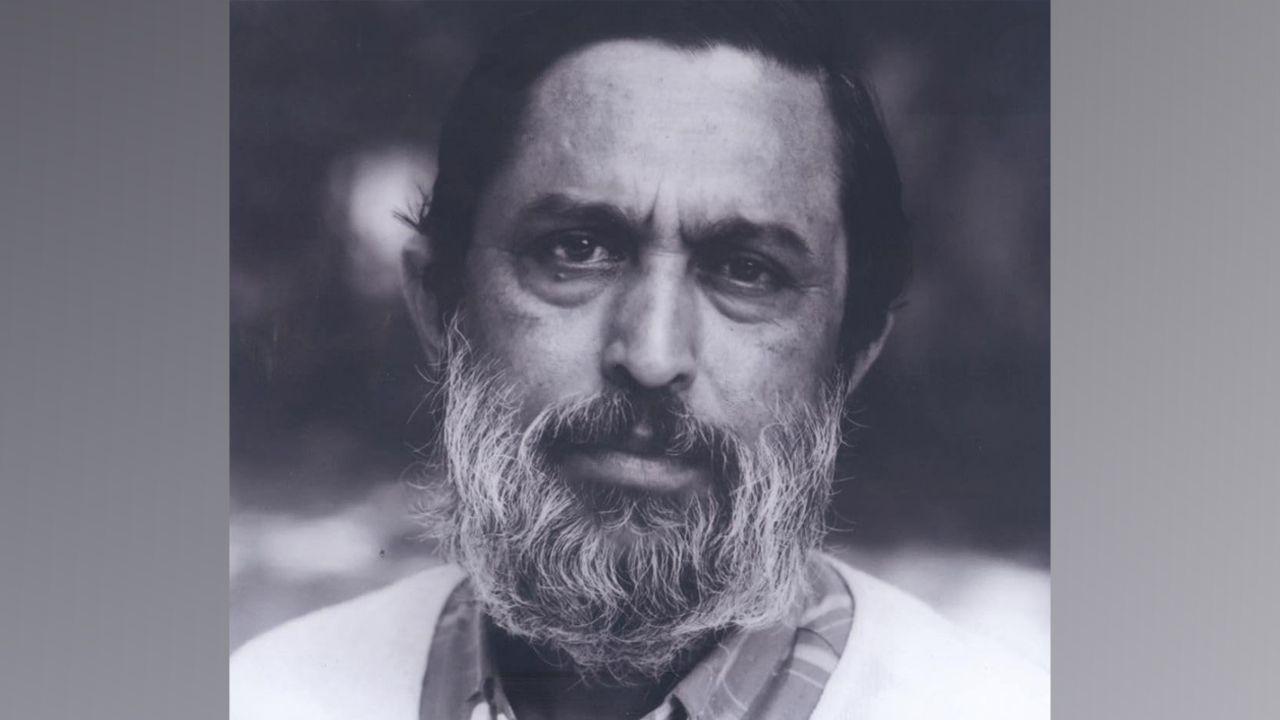
Badal Rahman, a freedom fighter, filmmaker and film movement activist born on June 4, 1949, is being remembered on the 16th anniversary of his death on 11 June through his landmark children’s film ‘Emiler Goenda Bahini’, which was released on 29 August 1980 and is widely regarded as the film that helped establish children’s cinema in Bangladesh.
Although films for children had been made in Bangladesh before its release, ‘Emiler Goenda Bahini’ is often credited with beginning a distinct tradition of children’s filmmaking in the country. The film was directed by Badal Rahman and adapted from German author Erich Kästner’s celebrated 1929 novel ‘Emil and the Detectives’, a work that captured the imagination of young readers around the world.

Rahman completed a diploma in film editing from the Film and Television Institute of India in 1973. A year later, he collaborated with Syed Salahuddin Zaki on his first film, ‘Prottashar Surjo’. Following ‘Emiler Goenda Bahini’, he directed ‘Kathal Burir Bagan’ and ‘Chhana O Muktijuddho’, both financed by Bangladesh Shishu Academy.

While studying film in India, Rahman had initially planned to adapt Abu Ishaq’s acclaimed novel ‘Surja Dighal Bari’ for the screen. He prepared a screenplay and secured the copyright from the author. However, when Masihuddin Shaker and Sheikh Niamat Ali moved forward with their own adaptation, Rahman stepped aside and turned his attention to ‘Emiler Goenda Bahini’.

In the book ‘Mukhomukhi Badal Rahman’ by Belayat Hossain Mamun, the filmmaker recalled how renowned playwright Al Monsur introduced him to Kästner’s novel. Rahman said that when the government first announced grants for filmmaking, Al Monsur handed him a copy of ‘Emiler Goenda Bahini’ while seeing him off at the airport, believing it would suit his interest in children’s programmes.

Rahman later developed the screenplay while living in Pune and submitted it for government funding, which he successfully secured. At the time, however, he was still focused on making ‘Surja Dighal Bari’. He had already selected locations and cast members when the ministry requested the screenplay for ‘Emiler Goenda Bahini’ and gave him seven days to submit it. He completed and submitted the script under considerable time pressure.
Speaking to Belayat Hossain Mamun, Rahman said the production itself presented few major difficulties. He originally intended to shoot the film in black and white, but Khaled Salahuddin, then Director of Operations (Technical) at the Bangladesh Film Development Corporation, encouraged him to make it in colour. Salahuddin had previously been associated with ‘Sangam’, Bangladesh’s first colour film.
The film was shot on 35mm stock. Its negatives were processed in laboratories in both Hong Kong and Bombay. However, after production was completed, problems emerged with the soundtrack. Rahman attributed this to technical limitations in Bangladesh at the time.
He explained that colour films required specific processing procedures that local facilities could not adequately support because the available equipment had been designed for black-and-white productions.
As a result, the soundtrack contained unwanted noise. Owing to these technical shortcomings, Rahman chose not to submit the film to international festivals.
When Rahman adapted ‘Emil and the Detectives’ into a feature film, it became the third cinematic adaptation of the novel worldwide. Besides the Bengali version, the story had previously been adapted into German, British and Swedish-language films.
