

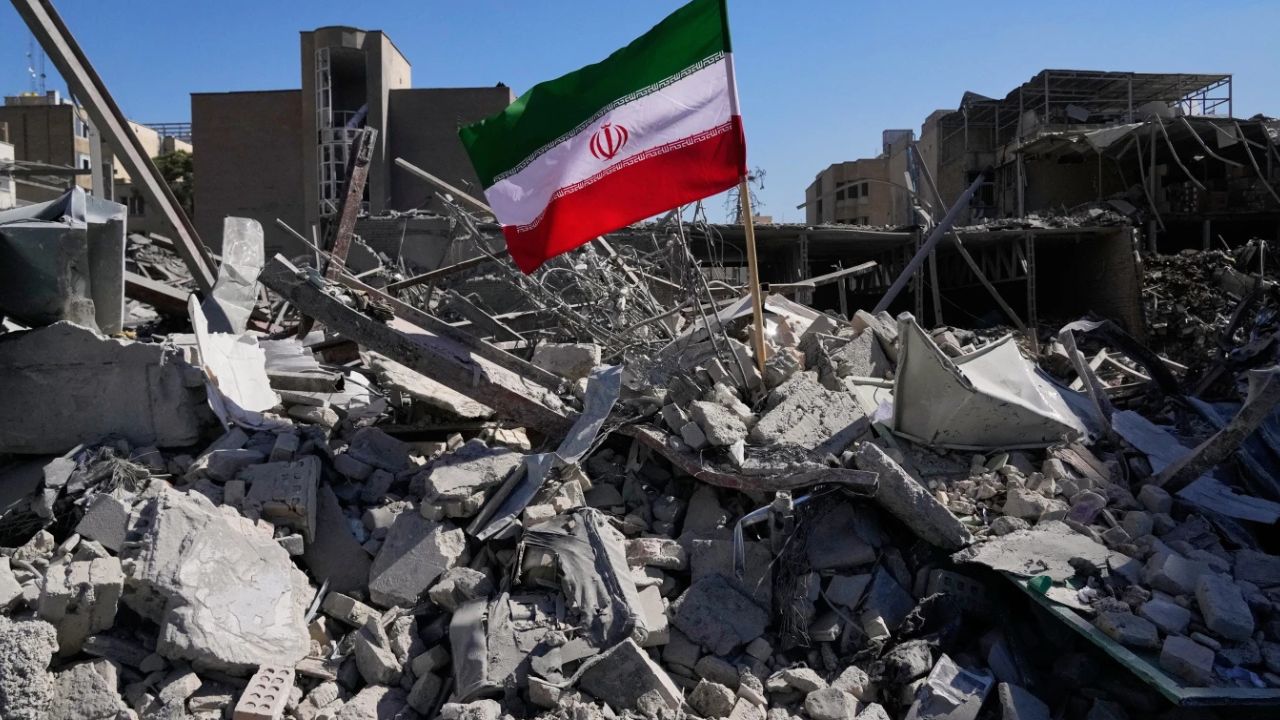
The world before the US-Israel military campaign against Iran and the one that has emerged after the 17 June agreement between Iran and the United States to end the conflict are markedly different. The Iran war has altered strategic calculations across the Middle East and beyond, with implications that extend far beyond the battlefield.
Whether one views Iran as the principal beneficiary of the conflict or not, the war has undoubtedly challenged long-held assumptions about American military dominance, regional power balances and the future of global security architecture.

For countries like Bangladesh, the implications are significant. The evolving geopolitical landscape is likely to influence diplomatic alignments, trade patterns, energy security and defence planning. It will also reshape relations among states and alter the global security architecture.

For Bangladesh, the ceasefire comes as a relief. A prolonged conflict would have intensified pressure on the country’s economy, energy imports, overseas employment and foreign relations. Although the short-term shocks to energy supplies, remittance flows and labour migration remained manageable, an extended war could have created far more serious challenges.
Governments around the world are now reassessing their strategies and adapting to the new geopolitical reality.

The new reality
The Iran war has transformed several key assumptions about international politics. It has challenged perceptions of US and Israeli military superiority, highlighted the growing importance of asymmetric warfare, altered international attitudes towards Israel, questioned the credibility of the existing security architecture and reshaped Middle Eastern power dynamics.
These developments are expected to affect foreign policy, trade, investment and diplomatic engagement across regions.
Military power and asymmetric warfare
For decades, the United States has maintained its position as the world’s leading military power. Israel has also been regarded as one of the region’s strongest military forces. Yet the conflict demonstrated that overwhelming military capability alone does not necessarily guarantee strategic success.
Despite sustained military operations by Washington and Tel Aviv, Iran continued to retaliate through drones, missiles and other relatively inexpensive indigenous weapons, demonstrating resilience and strategic endurance.
The conflict reinforced an important lesson in modern warfare: smaller powers may offset technological disadvantages through asymmetric tactics, preparation and the ability to absorb losses. It also highlighted the enormous economic and political costs that prolonged conflicts impose on militarily superior states.
Reports also suggested that Iran received varying degrees of political, intelligence and diplomatic support from China and Russia, reflecting the broader geopolitical competition surrounding the conflict.
Changing attitudes towards Israel
The conflict has also affected international perceptions of Israel.
For years, Israel enjoyed strong diplomatic backing from much of the Western world despite widespread criticism over its military operations in Gaza and elsewhere. However, the latest conflict exposed growing divisions among its traditional partners.
The United States itself publicly expressed frustration over some Israeli actions, while several European countries adopted increasingly critical positions regarding Israel’s military operations and humanitarian record.
Although Israel continues to enjoy some international support, its diplomatic standing has become more contested than at any time in the past.
Security architecture under question
The conflict has also raised questions about the credibility of the United States as the world’s principal security provider.
For decades, Washington has guaranteed the security of major maritime trade routes and maintained extensive military partnerships across the Gulf. Regional allies invested billions of dollars in American defence equipment and hosted US military bases largely on the assumption that Washington would ensure regional stability.
The Iran conflict has prompted Gulf states to reassess those assumptions. While there is no immediate indication that they will abandon their security partnerships with the United States, the conflict is likely to encourage greater strategic diversification and stronger emphasis on self-reliance.
Middle East power dynamics
The regional balance of power is also evolving.
Iran, long isolated diplomatically by many Arab states, has demonstrated considerable military capability despite years of sanctions and international pressure. Regardless of differing assessments of the conflict’s outcome, Tehran has reinforced its image as a major regional military power whose capabilities cannot be ignored.
Its influence through allied non-state actors, including the Houthis in Yemen and Hezbollah in Lebanon, continues to shape regional security calculations.
The changing strategic environment is likely to encourage regional powers to recalibrate their diplomatic and security policies.
Implications for Bangladesh
Bangladesh has managed the immediate economic fallout of the conflict reasonably well.
Higher energy prices and disruptions in the supply of key commodities, including fertiliser, created additional pressure on the new government. Assistance from friendly countries, including India, helped stabilise energy supplies during the crisis.
Remittance inflows remained strong. During the January-May period, Bangladesh received more than US$16.7 billion, compared with US$13.7 billion during the corresponding period last year. The increase may have reflected precautionary transfers by Bangladeshi expatriates in the Gulf amid uncertainty, as well as seasonal remittances associated with the two Eid festivals.
Labour migration, however, slowed considerably. Overseas employment in the Gulf declined to about 314,000 during the first five months of the year, while labour markets in the UAE, Oman and Bahrain remained largely closed to Bangladeshi workers. Saudi Arabia, Kuwait and Qatar continued to recruit workers.
The pace of overseas recruitment is expected to improve once Gulf economies recover from the economic disruptions caused by the conflict.
Diplomatically, Bangladesh maintained close engagement with Gulf states throughout the crisis. High-level contacts, including telephone conversations at the top level leaders, reflected Dhaka’s efforts to remain engaged with partners in the region. Adviser to the Prime Minister Humayun Kabir flew to almost all Gulf countries showing Dhaka’s solidarity with them, which was appreciated by them. It is expected that the Prime Minister is likely to undertake a visit to any of the Gulf country in the near future.
Bangladesh also supported international diplomatic initiatives aimed at ending the conflict.
Defence lessons for Bangladesh
Perhaps the most enduring lesson for Bangladesh lies in defence planning.
The conflict centred around the strategically important Strait of Hormuz has demonstrated the growing vulnerability of conventional naval forces in modern warfare. Large surface warships are increasingly exposed to precision missiles, drones, submarines and naval mines.
For maritime countries like Bangladesh, which must safeguard extensive coastal waters and maritime resources, recent conflicts underscore the need to reassess defence priorities.
Rather than relying primarily on expensive surface fleets, Bangladesh may benefit from adopting a more cost-effective maritime defence strategy centred on coastal missile systems, drones, submarines, surveillance capabilities and sea-denial assets tailored to the country’s geography.
Modern warfare increasingly rewards flexibility, resilience and affordability over sheer military size. For Bangladesh, the evolving security environment offers an opportunity to rethink defence planning while strengthening diplomatic engagement in an increasingly uncertain world.
