

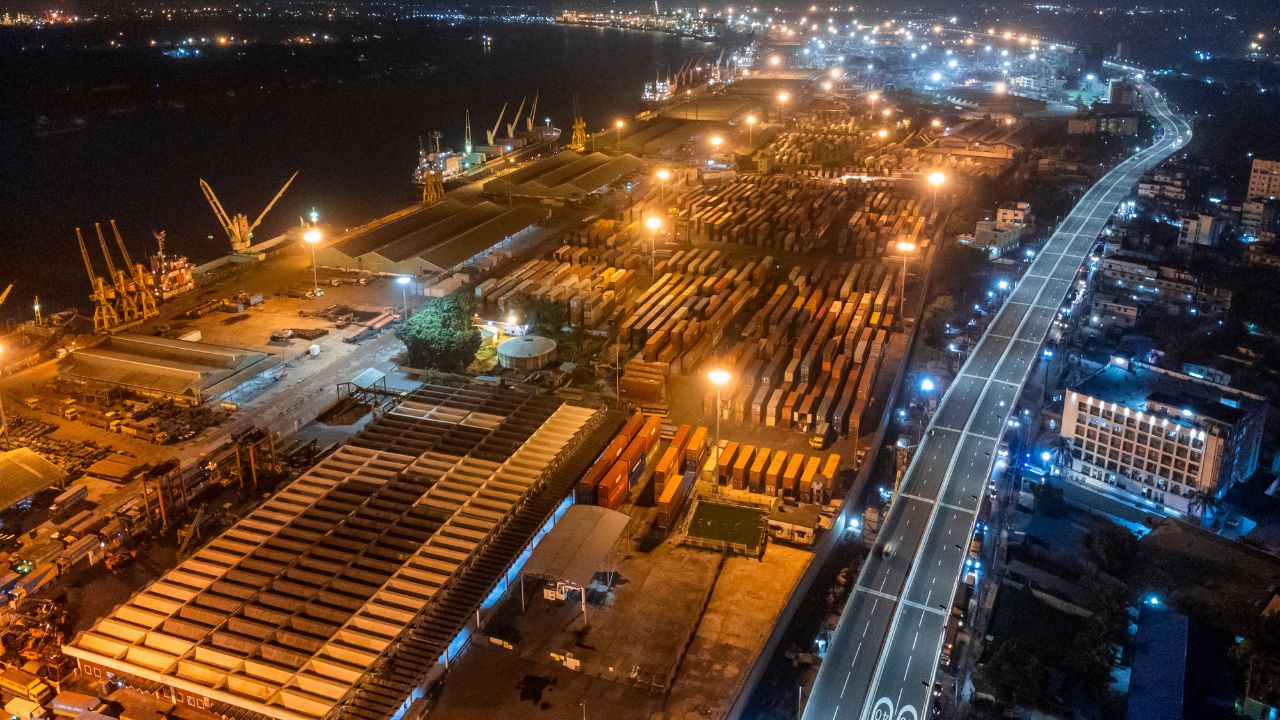
Bangladesh’s maritime sector is undergoing its biggest transformation in decades as the Bay Terminal in Chattogram, the Laldia Container Terminal at Patenga, the Matarbari Deep Sea Port in Cox’s Bazar and the rapid industrialisation of the Mirsarai Economic Zone (National Special Economic Zone) reshape the country’s port infrastructure.
To prepare for the expected growth in commercial shipping, the Chattogram Port Authority (CPA) has proposed expanding the port’s legal boundary (port limit) by 10 nautical miles, from the current 62 nautical miles to 72 nautical miles. The proposal has been submitted to the Ministry of Shipping for approval.

Port officials say the expansion is no longer merely an administrative exercise but a strategic necessity to accommodate future trade, ensure maritime safety and support Bangladesh’s expanding port infrastructure.

Around 4,200 international commercial vessels currently call at Chattogram Port each year.
That number is expected to rise substantially once the Bay Terminal, Laldia Container Terminal and Matarbari Deep Sea Port become operational. Additional port and logistics facilities are also expected around the National Special Economic Zone in Mirsarai, further increasing shipping activity along the coast.
Member (Harbour and Marine) of the Chattogram Port Authority Commodore Ahamed Amin Abdullah told TIMES of Bangladesh the port’s development plan is based on long-term projections.
As lighterage operations expand, a new deep-water anchorage will be required. By shifting the existing Alpha Anchorage slightly north and incorporating the proposed area into the port boundary, lighter vessels will be able to anchor safely and discharge cargo more efficiently.
He said the proposed area has an average water depth of about seven metres and lies adjacent to the National Special Economic Zone, making it suitable for dedicated lighterage and coastal vessel anchorages. The move would also improve navigation discipline and operational safety at the existing Alpha, Bravo and Charlie anchorages.
According to Commodore Ahamed Amin Abdullah, expanding the legal port boundary is essential before the CPA can provide dredging, navigational assistance, maritime security or other port services in the proposed area.
“Without extending the legal jurisdiction of the port, we cannot provide infrastructure support or maritime services there. Establishing the legal framework is therefore the first priority. The proposal is currently under review by the Ministry of Shipping and is going through legal scrutiny before being published in the official gazette,” he added.
Officials said the proposed area contains seven to eight nautical miles of navigable water with an average depth of about seven metres, allowing Alpha Anchorage to be shifted four to five nautical miles further north. This would enable deep-draft mother vessels, currently operating farther offshore, to conduct lighterage operations more safely and efficiently.
The CPA said the proposed expansion is closely linked to the future Bay Terminal, whose capacity is expected to be several times larger than the existing Chittagong Port. Once the Bay Terminal’s approach channel is developed, parts of the current anchorage system will need to be reorganised. The proposed area also offers navigational opportunities for vessels with drafts of up to 12 to 14 metres.
Port officials also pointed out that LPG carriers already operate as far north as Bhatiyari. However, without extending the port boundary, the CPA cannot legally provide dredging, navigational safety or other essential services in those waters. The proposal aims to establish an integrated maritime management system for the entire coastal corridor.
Senior Vice-Chairman of the Bangladesh Shipping Agents Association Md Ali Akbar said the proposal reflects the country’s future trade requirements.
“The number of ships calling at Chittagong Port continues to grow. The Bay Terminal alone will significantly expand handling capacity, while several other terminals are also under development. There is also strong potential for a new port along the coast adjacent to the Mirsarai Economic Zone. Considering all these developments, expanding the port limit is the need of the hour,” he told TIMES.
Business leaders, however, cautioned that expanding the port boundary alone will not solve operational challenges.
President of the Chattogram Chamber of Commerce and Industry Mohammad Amirul Haque said improving service quality should receive equal priority.
“Expanding the port limit is important, but unless service quality improves, the expected benefits will not be realised. As private terminals become operational, Bangladesh should also consider establishing an independent regulatory framework and increasing private sector participation in port management,” he said.
The proposed expansion would also benefit the country’s inland shipping network. More than 2,000 lighter vessels transport imported cargo from mother vessels anchored off Chittagong to more than 34 inland waterways across Bangladesh.
Parvez Ahmed, Vice-President of the Inland Vessel Owners Agent Association of Chattogram, said extending the port boundary to Mirsarai would make cargo transportation to industrial zones much easier while strengthening the country’s overall logistics capacity.
If approved, Chittagong Port’s jurisdiction will extend from the Matarbari Deep Sea Port area in the south to the Mirsarai Economic Zone and the Feni River estuary in the north.
The port’s jurisdiction has expanded steadily over the decades, from just 5.5 nautical miles in 1971 to seven nautical miles in 2007, before increasing to 62 nautical miles in 2019 to accommodate the Matarbari project. The latest proposal would represent the next phase of that expansion, reflecting Bangladesh’s ambition to build an integrated maritime corridor linking multiple ports, terminals and industrial hubs along its southeastern coastline.
