

When inflation climbed to 9.42 per cent in May 2026 – its highest reading since early 2025 – most commentary focused on the squeeze it places on household budgets. That is accurate.
But there is another story worth telling. Sustained inflation, paired with low credit access, does not only create hardship. It creates demand. In Bangladesh, that demand is landing in a market almost entirely unprepared to meet it through formal, Shariah-compliant channels.

The numbers tell the story clearly. Despite a population of 175 million, Bangladesh has only around 2.8 million credit cards in circulation – a penetration rate of roughly 1.6 per cent. Among adults aged 15 and above, credit card ownership stands at just 0.62 per cent, against a global average of more than 22 per cent.

For a large segment of the population – devout Muslims who avoid interest-bearing products on religious grounds – conventional credit cards have never been an option. In a country where more than 90 per cent of the population is Muslim, the gap between financial need and Shariah-compliant supply is striking.
This is where Islamic buy now, pay later (BNPL) enters and why it could become one of the fastest-growing retail finance products in Bangladesh over the next three to five years if built on the right foundations.
Markets that moved first offer useful lessons. Malaysia – ranked first in the Global Islamic Economy Indicator for 11 consecutive years – has seen its BNPL market reach 6.5 million active users as of the first half of 2025, with Islamic digital banks expanding Shariah-compliant financing for merchants and consumers alike.
Indonesia’s Islamic fintech market is growing at 20 per cent annually, backed by a regulatory roadmap that prioritises digital access. In India, BNPL is projected to reach $32.33 billion in gross merchandise value by 2029, built largely on digital payment infrastructure comparable to Bangladesh’s Bangla QR network.
The pattern across all three markets is consistent – digital payment rails, embedded credit and a disciplined focus on underserved customer segments.
Global Islamic finance assets stand at $4.93 trillion and are projected to reach $7.53 trillion by 2028. The Murabaha structure is expected to grow faster than any other Islamic finance instrument through 2032. With its fixed profit rate, transparent terms and absence of interest, it is also the structure most naturally suited to BNPL.
The regulatory environment is now moving to match the opportunity. On May 11, 2026, Bangladesh Bank issued its e-loan circular, allowing all scheduled banks to offer fully digital loans of up to Tk50,000 from onboarding to recovery without requiring customers to visit a branch.
Where banks use Bangladesh Bank’s refinancing scheme under BRPD Circular No. 11/2022, the lending rate is capped at 9 per cent. The central bank has also extended its digital nano-loan refinancing fund until June 2028. This is not routine policy. It is an open invitation for Islamic banks and mobile financial service providers to develop Shariah-compliant credit products and move decisively.
But regulatory space and consumer demand alone are not enough. Credit risk remains the real test.
During periods of high inflation, people use deferred-payment products not only for convenience but also out of necessity. Debt burdens rise. Defaults follow. The global BNPL industry learned this the hard way, with several Western platforms reporting sharp increases in delinquencies when economic conditions tightened.
Bangladesh cannot afford to repeat that pattern. The platforms most likely to succeed will be those that build AI-powered credit intelligence from the outset, assessing consumers through mobile financial service transaction behaviour, digital payment history and cash-flow signals rather than relying primarily on credit bureau records, which remain limited for much of the population.
Ticket-size limits, dynamic exposure controls and digital collections are not optional features. They are the foundation.
The most compelling model for Bangladesh is BNPL positioned primarily as a payment product, with credit operating quietly in the background.
Consider the use cases that matter most to ordinary households – a family buying a refrigerator or washing machine in three instalments, a student purchasing a laptop before the semester begins, a household covering grocery or medicine expenses during a difficult month, or a patient managing a diagnostic bill without exhausting savings.
Across home electronics, essential goods, healthcare and education, both consumers and merchants benefit. Merchants receive full payment immediately from the platform, while consumers repay in fixed, transparent instalments without hidden charges or riba. The structure itself provides reassurance.
With 133 million internet subscribers and smartphone adoption at 72.8 per cent, the infrastructure required to deliver BNPL at scale already exists. Bangladesh’s BNPL market was projected to reach $1.42 billion by 2028 even before inflationary pressures widened the financing gap further. That projection may now prove conservative.
But scale without discipline has undermined better-funded markets than Bangladesh. The platforms that endure will be those that treat Islamic BNPL as an ecosystem commitment, embedding credit intelligence, merchant depth and Shariah integrity from the outset rather than adding them later in response to emerging problems.
The opportunity is no longer whether Islamic BNPL can work in Bangladesh. The more important question is which institution can combine Shariah integrity, AI-driven underwriting and merchant reach quickly enough to define the market before someone else does.
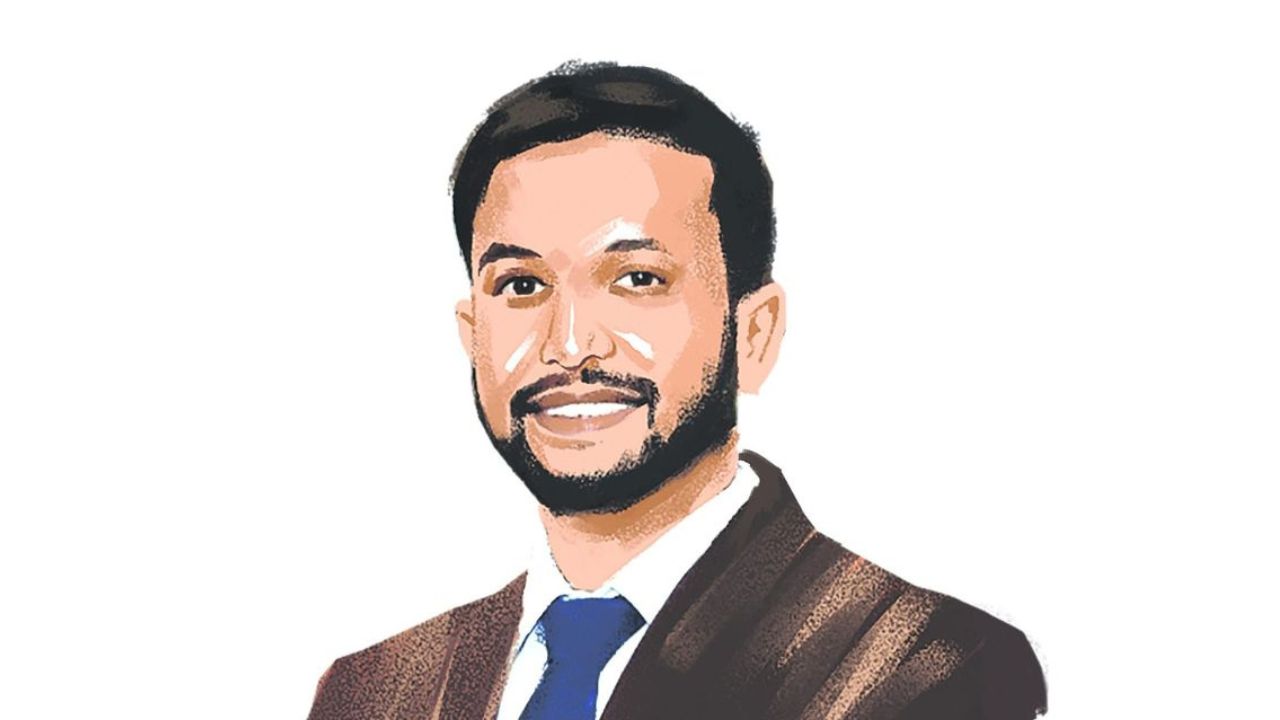
The author is a digital banking and fintech strategist working at the intersection of financial inclusion, platform economics and digital transformation in Bangladesh, and author of From Cash to Code. He is reachable at [email protected]
Views expressed in the article are solely those of the author.
