

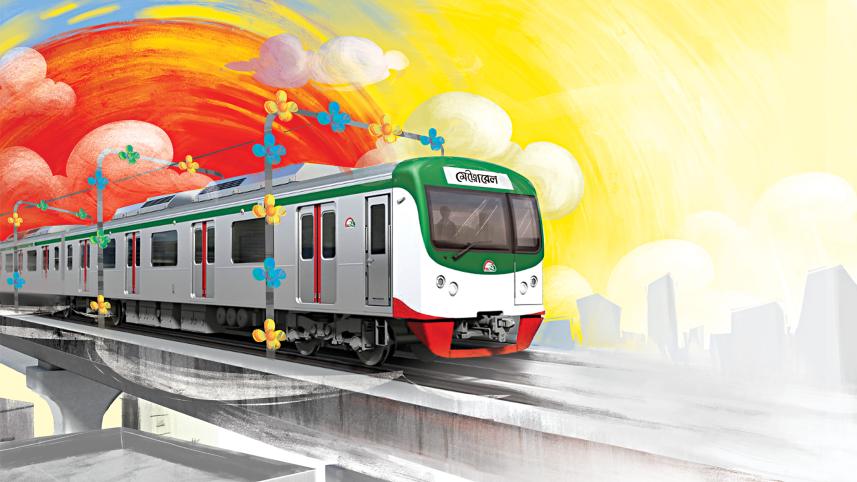
The government has decided to reconnect Narayanganj city with the capital city Dhaka under the Mass Rapid Transit (MRT) Line-2 project, after previously dropping it from the plan. According to the latest progress report by Dhaka Mass Transit Company Limited (DMTCL), the Narayanganj section has been reconsidered and recommended for the final project report.
As a result of this new decision, four stations in Narayanganj are being re-added to the proposed metro rail route from Dhaka’s Gabtoli. These stations are Bhuighar, Jalkuri, Shibu Market, and Narayanganj Sadar. Once operational, this route will significantly reduce travel time and costs between Dhaka and Narayanganj, while freeing commuters from severe traffic jams.
According to DMTCL sources, two alternative routes were considered in the project’s feasibility study. Based on opinions from the Physical Infrastructure Division and recommendations from the Dhaka Transport Coordination Authority (DTCA), the route including Narayanganj has been resent to the Road Transport and Highways Division for final approval.
Earlier, during the interim government, the Narayanganj section was dropped from this metro line to cut costs. The plan at that time was to end the line at Tarabo Bishwa Road via Demra. However, the new government that came to power recently took the importance of the industrial zone into consideration and changed the decision back in favor of Narayanganj.
According to preliminary estimates by the metro rail authority, the length of the path would have been 23.50 kilometers without Narayanganj. However, with Narayanganj city included, the total length of this metro rail route will now be 34 kilometers. The total cost to build this entire line is estimated to be around 60,837 crore BDT.
Officials and experts noted that the government changed its plan due to strong demands from various political, social, and civic organizations in Narayanganj, as well as local Members of Parliament. Connecting the industrial city of Narayanganj to the metro rail network will reduce population pressure on the capital and boost the economy. However, how fast the project starts will now depend on final approvals and funding.
