

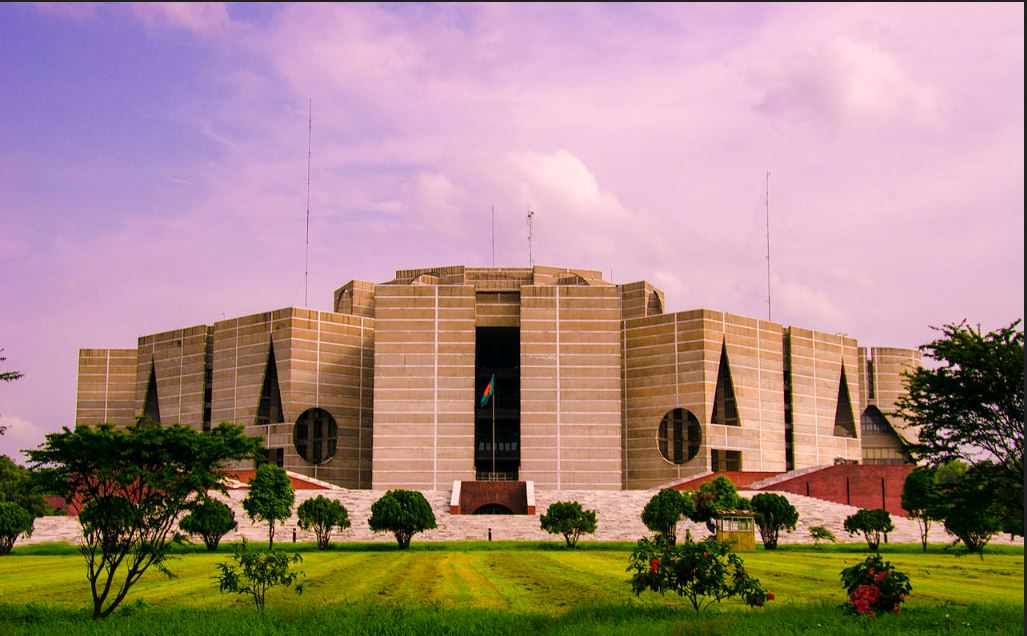
From a war-ravaged nation, Bangladesh has emerged as one of South Asia’s fastest-growing economies. Over the past five decades, it has achieved significant success in agriculture, healthcare, women’s empowerment, disaster management, poverty reduction, and the ready-made garment industry. These achievements reflect the resilience, determination, and aspirations of the Bangladeshi people.
Yet sustaining this progress and achieving long-term prosperity will require more than economic growth alone. In a world increasingly shaped by innovation and technology, countries must invest in knowledge, research, and human capital to remain competitive. For Bangladesh, building a self-sustainable future depends on prioritising quality education, scientific research, technological innovation, and skilled workforce development.

The global economy is undergoing rapid transformation. Technological advancement, digitalisation, and innovation are now the primary drivers of growth. Countries such as South Korea, Singapore, Japan, and China have demonstrated how investments in education and research can transform national economies. Their experiences show that economic success is closely linked to the development of scientific knowledge, technological capability, and skilled human resources. Bangladesh can also benefit from this model by investing strategically in its people and institutions.

Quality education is the foundation of sustainable development. While Bangladesh has expanded educational access and improved literacy rates, the quality of education remains a major concern. Many students complete their studies without acquiring the practical skills, analytical abilities, and technological knowledge required by modern industries. The education system often focuses on memorisation and examination performance rather than creativity, innovation, and problem-solving.

To address this challenge, educational reforms should begin at the primary level. Science, technology, engineering, mathematics, and digital literacy should receive greater emphasis throughout the curriculum. Students should be encouraged to think critically, ask questions, and explore new ideas. Modern science laboratories, computer facilities, internet access, and interactive learning tools should be gradually introduced in schools across the country. Programmes in coding, robotics, and digital skills can further prepare young learners for future opportunities. Quality education cannot be achieved without competent and motivated educators. Continuous professional development, access to modern teaching resources, and the integration of technology into classroom instruction are essential. Teaching methods should encourage participation, experimentation, and independent thinking rather than relying solely on traditional lecture-based approaches.

Alongside education, research and innovation are critical drivers of national progress. Countries that invest substantially in research and development are often leaders in economic growth and technological advancement. Research contributes to productivity, creates new industries, and helps solve social, economic, and environmental challenges. Despite its development achievements, Bangladesh still allocates a limited share of resources to research and innovation. Many universities and research institutions face shortages of funding, equipment, laboratory facilities, and opportunities for international collaboration.
To build a self-reliant economy, Bangladesh must increase investments in research across strategic sectors, including agriculture, healthcare, renewable energy, climate adaptation, information technology, and industrial development. Collaboration among universities, government agencies, and private industries can generate practical solutions to national challenges. Young scientists, researchers, and innovators should be supported through scholarships, research grants, fellowships, and mentorship programmes that encourage creativity and technological exploration.
Science and technology have the potential to transform every sector of the economy. In agriculture, technological innovation can improve productivity, strengthen food security, and increase resilience to climate change. Smart irrigation systems, biotechnology, precision farming, climate-resilient crops, and digital agricultural services can help farmers increase yields while reducing production costs. Given Bangladesh’s vulnerability to floods, cyclones, salinity intrusion, and rising temperatures, scientific research is essential for protecting rural livelihoods and ensuring sustainable agricultural growth.
Industrial modernisation is equally important. While the garment industry has been a major contributor to economic growth and export earnings, Bangladesh cannot depend indefinitely on labour-intensive manufacturing. The global industrial landscape is being reshaped by automation, artificial intelligence, robotics, and advanced manufacturing technologies. To remain competitive, the country must embrace technological transformation and diversify its industrial base. Greater investment is therefore needed in high-tech industries, software development, electronics manufacturing, biotechnology, AI, and green technologies. The government and private sector should work together to establish technology parks, innovation centres, startup incubators, and research hubs. Such initiatives can encourage entrepreneurship, stimulate innovation, create high-quality employment opportunities, and attract domestic and foreign investment.
Regular science and technology fairs can also play a valuable role in promoting innovation. Organising annual fairs in divisional cities would provide students, researchers, and young inventors with opportunities to showcase their ideas, inventions, and scientific projects. Government institutions, educational organisations, and private companies should provide financial support, mentorship, scholarships, and technical assistance to promising innovators. Bangladesh has already made considerable progress through expanded internet connectivity, digital financial services, e-governance initiatives, and online public services. However, disparities remain between urban and rural areas in access to technology and digital infrastructure. Ensuring affordable, reliable, and nationwide internet access is essential for promoting inclusive development.
With appropriate training and digital access, millions of young Bangladeshis can participate in online education, freelancing, software development, e-commerce, and digital entrepreneurship. The digital economy offers significant opportunities for employment generation, foreign exchange earnings, and economic diversification. Continued investment in digital infrastructure and technological skills development is therefore essential.
Although Bangladesh has made notable progress in women’s empowerment, female representation in scientific research and technology-related professions remains limited. Climate change presents another major challenge that requires scientific and technological solutions. Bangladesh is among the countries most vulnerable to climate-related disasters, including floods, cyclones, river erosion, and sea-level rise. Building climate resilience must therefore become a national priority. Investments in renewable energy, sustainable infrastructure, environmental conservation, and climate research can help reduce risks while supporting long-term development.
Bangladesh now stands at a critical juncture in its development journey. Future competitiveness will depend less on cheap labour and more on knowledge, innovation, technology, and skilled human resources. To achieve genuine self-sustainability and secure its place in the global economy, the country must prioritise quality education, scientific research, technological innovation, and human capital development.
These investments are essential for the nation’s future. By allocating greater resources to science, technology, and education, Bangladesh can strengthen economic resilience, improve living standards, address environmental challenges, and enhance its global competitiveness. With strategic planning, effective implementation, and long-term commitment, Bangladesh can transform its human potential into scientific excellence, technological capability, and innovative leadership, paving the way for a prosperous, self-reliant, and sustainable future.
The views expressed in this article are solely those of the author
The author is a freelance writer
