

Aedes mosquito larvae have been detected in 8–10 per cent of households in Sylhet City Corporation areas, raising concerns over a renewed risk of dengue transmission even as case numbers remain comparatively low in the region.
City health officials say the findings point to widespread breeding of Aedes mosquitoes inside domestic environments, particularly in stagnant water collected in everyday household containers.

On Monday alone, Sylhet City Corporation (SCC) health teams inspected 693 households across wards No 15, 16, 17 and 18 and found larvae in 62 homes. Since 1 July, inspections covering around 1,500 households have shown a consistent pattern, with larvae present in roughly 8–10 per cent of houses surveyed.

Officials said most breeding sites were identified in plastic drums, water buckets, flower pots and trays placed under plant pots—common household items that often retain stagnant water.
Health workers warned that such conditions are turning residential areas into active breeding grounds, increasing the risk of dengue transmission as the monsoon season continues.
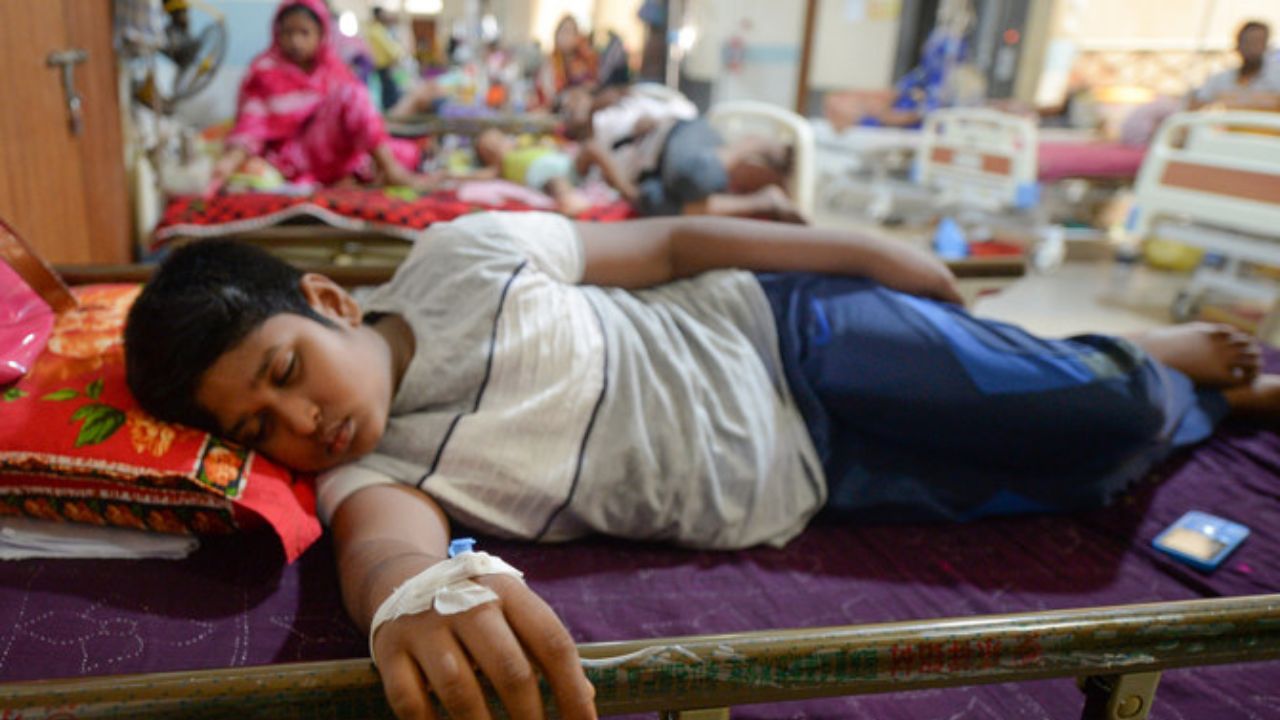
According to Directorate General of Health Services (DGHS) data, six dengue patients are currently receiving treatment in hospitals across Sylhet. Four new cases were recorded recently, bringing the total number of confirmed infections in the division to 67 so far this year.
Of these, 12 cases have been reported in Sylhet district, 14 in Sunamganj, six in Moulvibazar, 32 in Habiganj, and three in other districts. While the overall caseload remains lower than in other parts of Bangladesh, health authorities say the presence of larvae indicates a potential for rapid escalation if preventive measures fail.
The Sylhet City Corporation has been conducting mosquito control drives since early July. However, questions have emerged over the scale and effectiveness of its operations.
Official figures show that around 40 workers are deployed for mosquito control across 42 wards, covering an estimated population of about 10 lakh people. This effectively means there is less than one dedicated worker per ward.
A significant portion of these workers are daily-wage employees with limited prior experience in vector control, although the city corporation maintains that they receive training before deployment.
SCC health officials have acknowledged operational constraints, citing manpower shortages as a major barrier to sustained mosquito control. Dr Md Jahidul Islam, chief health officer of Sylhet City Corporation, said it is not feasible to conduct simultaneous anti-mosquito operations across all wards with the current workforce.
He stressed that fragmented spraying drives are insufficient to contain dengue risks. “Short, isolated campaigns will not control Aedes mosquitoes effectively. A continuous, city-wide intensive programme over at least two months is required to disrupt the breeding cycle,” he said.
He also urged residents to take preventive action at household level, including regular cleaning of water storage containers. “We are encouraging people to clean their homes at least twice a week. Our control activities are ongoing, but community participation is essential,” he added.
