

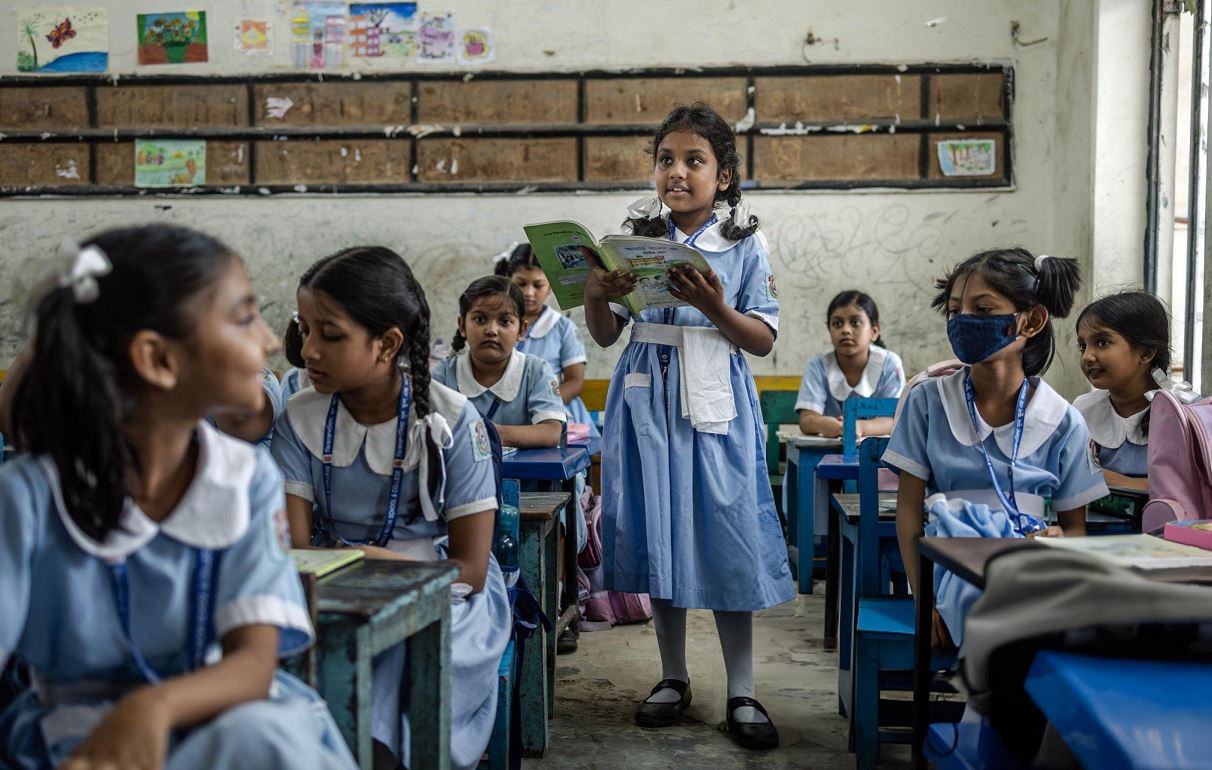

The BNP government has moved to reintroduce music education in primary schools and make sports compulsory in the national curriculum, reversing an earlier decision taken under pressure from religious groups.
The previous interim administration led by Muhammad Yunus had scrapped plans to create posts for music and physical education teachers in government primary schools following protests by religion-based organisations.


However, the current government is now preparing to reinstate music teacher positions and introduce music as a subject alongside regular coursework. At the same time, work is underway to revise the education curriculum to make sports mandatory from the next academic year under the supervision of the Ministry of Education.
Speaking to reporters after an event at University of Dhaka on Tuesday, Cultural Affairs Minister Nitai Roy Chowdhury confirmed the development.
He said that following BNP’s formation of government, a decision had already been taken to expand cultural activities in schools at district and upazila levels. The Ministry of Cultural Affairs has submitted a proposal to the Ministry of Education regarding the recruitment of music teachers.
Under the proposal, the cultural affairs ministry would oversee the selection process, while salaries and benefits would be provided by the education ministry.
Chowdhury added that music education would be delivered through cluster-based activities at the upazila level, allowing multiple institutions to benefit from shared resources.
He also said that similar to sports competitions organised by the Ministry of Youth and Sports, initiatives are being taken to hold competitions in music to expand students’ cultural engagement.
Earlier, on 28 August last year, the government issued the Government Primary School Teacher Recruitment Rules 2025, creating two assistant teacher posts in music and physical education. The move triggered protests from several religious organisations demanding the cancellation of the policy.
On 16 September, Syed Mohammad Rezaul Karim, leader of Islami Andolan Bangladesh, called for the removal of music teacher posts and instead demanded the recruitment of religious teachers in primary schools.
Leaders from groups including Bangladesh Jamaat-e-Islami, Khelafat Majlish, Bangladesh Khelafat Andolon and Hefazat-e-Islam Bangladesh also voiced strong opposition at a discussion in the capital the same day.
Protests continued at venues including the National Press Club in Dhaka and elsewhere across the country. Facing sustained pressure, the interim government issued a revised regulation on 2 November cancelling the decision to appoint music and physical education teachers.
The move drew widespread criticism nationwide, prompting the interim administration to issue a statement on 4 November. It said there had initially been a plan to recruit an equal number of music and physical education teachers across 2,500 clusters of primary schools.
However, based on recommendations from a committee of secretaries, the Ministry of Primary and Mass Education withdrew from that decision. The committee suggested that the creation of such posts across all schools could be reconsidered in the future, subject to the availability of funds.
Meanwhile, the government has also prioritised students’ physical and mental wellbeing, citing concerns over the impact of internet use and drug abuse on young people.
Prime Minister Tarique Rahman has instructed authorities to place greater emphasis on mental health. As part of this effort, the government has decided to make sports compulsory from grade four onwards to ensure students’ physical and psychological development.
Responding to a question in parliament on Sunday, State Minister for Youth and Sports Aminul Haque said the programme would initially include seven sporting disciplines, with plans to expand further over time.
The prime minister reiterated the policy on Monday during the inauguration of a sports allowance and sports card distribution programme at his office.
Officials said that, in line with government directives, the Ministry of Education has already begun revising the curriculum to incorporate mandatory sports.
