

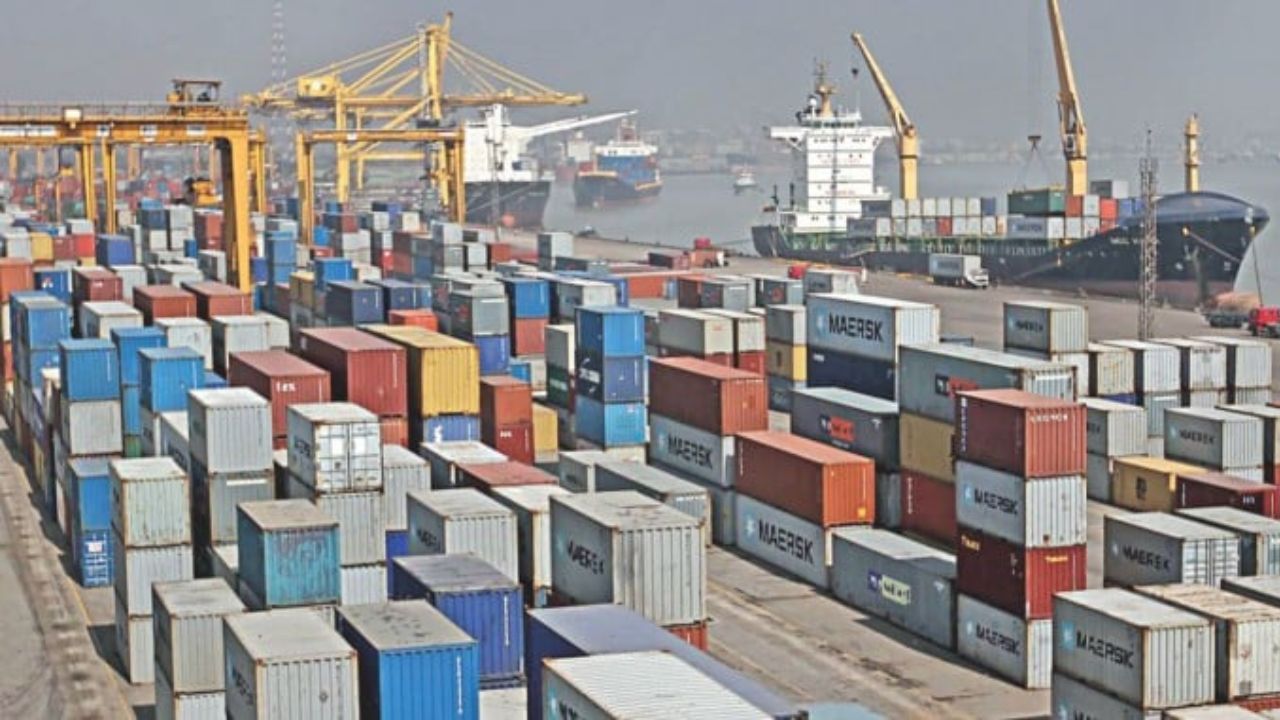

The plan to hand over the New Mooring Container Terminal (NCT) of Chattogram Port to Dubai-based DP World is facing renewed scrutiny, despite clearing legal hurdles, as the newly formed government reassesses one of the country’s most strategically significant infrastructure decisions.
Sources linked to the Ministry of Shipping indicated that the government is in no rush to proceed.


Joint Secretary (Ports) Firoz Ahmed confirmed that no directive regarding the NCT has been issued since the new administration assumed office.
“Following the court’s verdict, the government will now take a decision,” he said, signaling a shift from procedural clearance to policy reconsideration.
Sources said, at the core of the review lies a fundamental question: how to balance efficiency with sovereignty. Officials say the government is evaluating whether alternative management models, particularly those involving domestic operators could deliver comparable performance without transferring operational control of a critical national asset.
The stakes are exceptionally high. Chattogram Port handles around 92 percent of Bangladesh’s total import-export trade, making it the country’s primary economic gateway. In 2025, the port recorded a historic milestone, handling over 3.4 million TEUs (twenty-foot equivalent units)—the highest in its history.

Within this ecosystem, the NCT stands as the operational backbone. With five berths and modern handling facilities, it accounts for an estimated 40–50 percent of the port’s container throughput, often processing the bulk of vessel traffic.
Its performance metrics underscore its criticality: in August 2025 alone, the terminal handled a record 122,517 TEUs, significantly exceeding its average monthly volume of around 100,000 TEUs. On a daily basis, the port processes 8,000–9,000 TEUs, with a substantial share routed through NCT.
The court dismissed key objections related to procedural irregularities and public interest concerns, ruling that the agreement did not violate existing laws or constitutional provisions. While the judgment settled the legal question, it did not end the broader policy debate, leaving the final decision to the government’s discretion in light of national interest considerations.
Against this backdrop, the proposal to transfer operations to a foreign entity has long been contentious.
Momentum toward finalising the deal accelerated during the final phase of the previous interim government.
Negotiations that had stalled for years were revived, and key technical and financial terms were reportedly finalised. However, the subsequent political transition has effectively slowed the process.
The BNP-led government has so far maintained strategic silence. Even ministers representing Chattogram constituencies have refrained from public comment, suggesting a cautious and calibrated approach.
A cabinet minister, speaking on condition of anonymity, emphasised the broader implications: “This is not just a commercial contract—it involves national interest, long-term control, and economic security. The government will take a carefully considered decision.”
For now, the NCT remains under the supervision of the Bangladesh Navy, maintaining the existing operational structure pending a final policy decision.
The origins of the debate trace back to structural challenges within the port system. The NCT was developed to address chronic congestion and rising trade volumes, eventually becoming central to Bangladesh’s port expansion strategy.
As trade grew, so did concerns over efficiency, vessel turnaround time, and global competitiveness, prompting policymakers to consider partnerships with experienced international operators such as DP World.
Proponents argue that such collaboration could introduce advanced logistics systems, reduce turnaround times, and strengthen global connectivity – critical factors as Bangladesh seeks to position itself as a regional trade hub.
Yet opposition remains entrenched.
Critics have consistently raised concerns over sovereignty, revenue sharing, and the long-term risks of dependency on foreign operators. These concerns culminated in a legal challenge at the High Court. Although the court ultimately ruled in favour of the agreement, removing legal barriers, the political landscape has since shifted, reopening the debate in a new policy context.
Domestic stakeholders have become increasingly vocal. Industry leaders argue that local firms, if supported by coherent policy and investment, can achieve international standards.
Tarfadar Ruhul Amin, managing director of Saif Power Tech, previously involved in NCT operations and now working under Bangladesh Navy supervision, said that domestic operators have already demonstrated capacity in handling complex port logistics and could scale further. He expressed confidence that local management could handle up to 1.8 million TEUs annually.
The issue now reflects a broader strategic dilemma: whether Bangladesh should prioritise global efficiency through foreign expertise or retain operational control by strengthening domestic capacity.
Despite court clearance and finalised contractual terms including a proposed 15-year agreement with an annual handling capacity of 1.5 million TEUs the NCT deal remains in limbo.
With billions of dollars in trade flowing through the terminal each year, the government’s decision will extend far beyond a single contract. It will shape the future of Chattogram Port and set a precedent for how Bangladesh manages its most critical economic infrastructure in an increasingly competitive global trade environment.
