

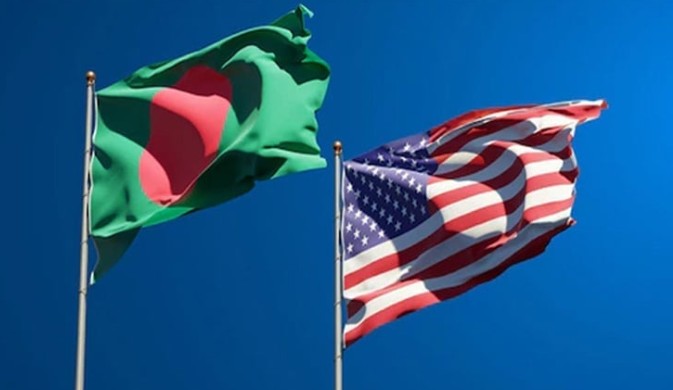

Questions surrounding Bangladesh’s recently signed trade agreement with the United States have intensified after a senior government minister revealed that major political parties had been informed about the deal before it was concluded.
Foreign Minister Khalilur Rahman said now ruling BNP and official opposition Jamaat-e-Islami were aware of the agreement prior to its signing on 9 February by the country’s interim government. His remarks have prompted debate among analysts and economists, not only about the substance of the agreement but also about the political response from key political parties.


Khalilur served as the national security adviser in the interim administration led by Muhammad Yunus and is widely reported to have played a significant role in negotiations that led to the trade agreement. While the commerce ministry formally signed the deal, critics say Khalilur was closely involved in shaping the discussions with Washington.
Neither BNP nor Jamaat-e-Islami has directly challenged the minister’s assertion that they had been informed beforehand. When journalists asked BNP standing committee member Abdul Moyeen Khan about the issue, he declined to comment in detail.
Jamaat’s Nayeb-e-Ameer Syed Mohammad Abdullah Taher struck a more measured tone, saying the agreement contained several “positive aspects”. He said the party would not oppose those provisions but added that Jamaat would object if any clauses were found to harm Bangladesh’s interests.
The reaction from the two parties has attracted attention among political observers. Some analysts allege that both BNP and Jamaat chose not to strongly oppose the agreement despite being aware of it, arguing that the parties may have sought to avoid antagonising Washington in the run-up to national elections.
Neither party has publicly addressed those allegations.
Economic concerns
Beyond the political debate, economists have also raised questions about the possible economic implications of the agreement.
Some analysts argue that certain provisions could constrain Bangladesh’s trade flexibility by requiring closer alignment with US export controls and trade restrictions. Others have pointed to provisions related to intellectual property rules and tariff structures, warning that they may create challenges for domestic industries if implemented without safeguards.
Supporters of the agreement, however, say deeper trade cooperation with the US could offer new opportunities for investment and export growth. Bangladesh is preparing for its graduation from least-developed country (LDC) status, and some policymakers see closer economic ties with major markets as part of that transition.
Debate over transparency
Another major point of contention is the process through which the agreement was concluded.
Critics argue that the deal was signed with limited public debate or consultation with industry stakeholders. In many countries, major trade agreements are subject to parliamentary scrutiny or extensive consultation before being finalised.
The agreement was signed just days before Bangladesh’s parliamentary election, a timing that has also drawn scrutiny from political commentators.
Contrasting political responses
The subdued reaction from the major political parties has been noted by analysts who compare it with their responses to other international policy issues.
Last year, for example, several political parties strongly opposed proposals for a humanitarian corridor to assist civilians in Myanmar’s Rakhine State, citing concerns about sovereignty and national security.
The contrast between that strong political mobilisation and the relatively muted response to the trade agreement has fuelled debate among commentators about how political parties weigh economic policy, foreign relations and electoral considerations.
A broader political context
For some analysts, the controversy surrounding the trade deal highlights a broader pattern in Bangladesh’s political landscape, where questions of national interest and foreign policy often intersect with electoral calculations.
Others argue that the focus should remain on evaluating the economic merits of the agreement itself.
Whether the deal ultimately benefits Bangladesh’s economy will likely depend on how its provisions are implemented and how policymakers balance international commitments with domestic economic priorities.
For now, the agreement has opened a wider conversation—not only about trade policy, but also about transparency, political positioning and Bangladesh’s evolving relationship with major global powers.
